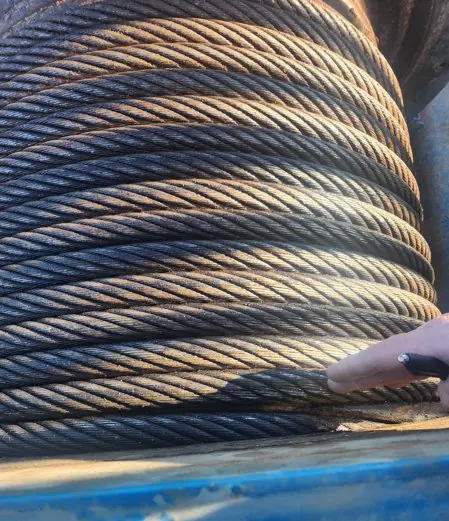
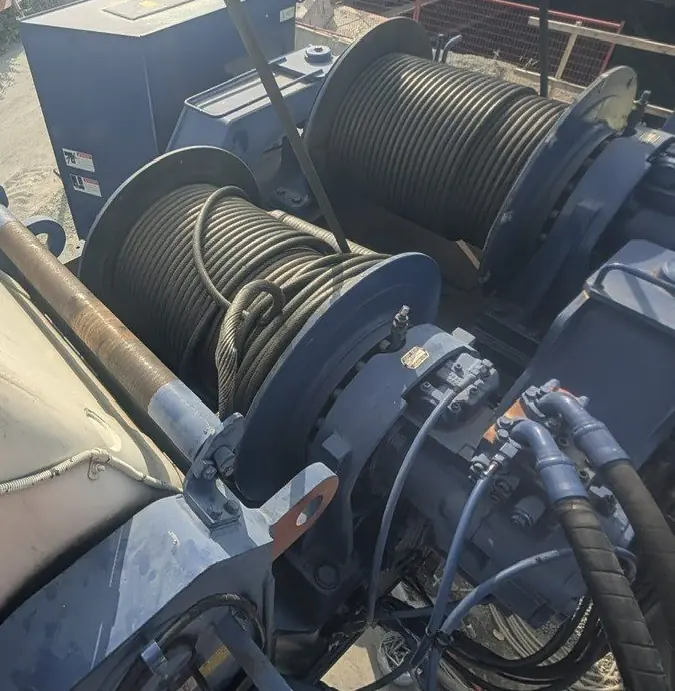
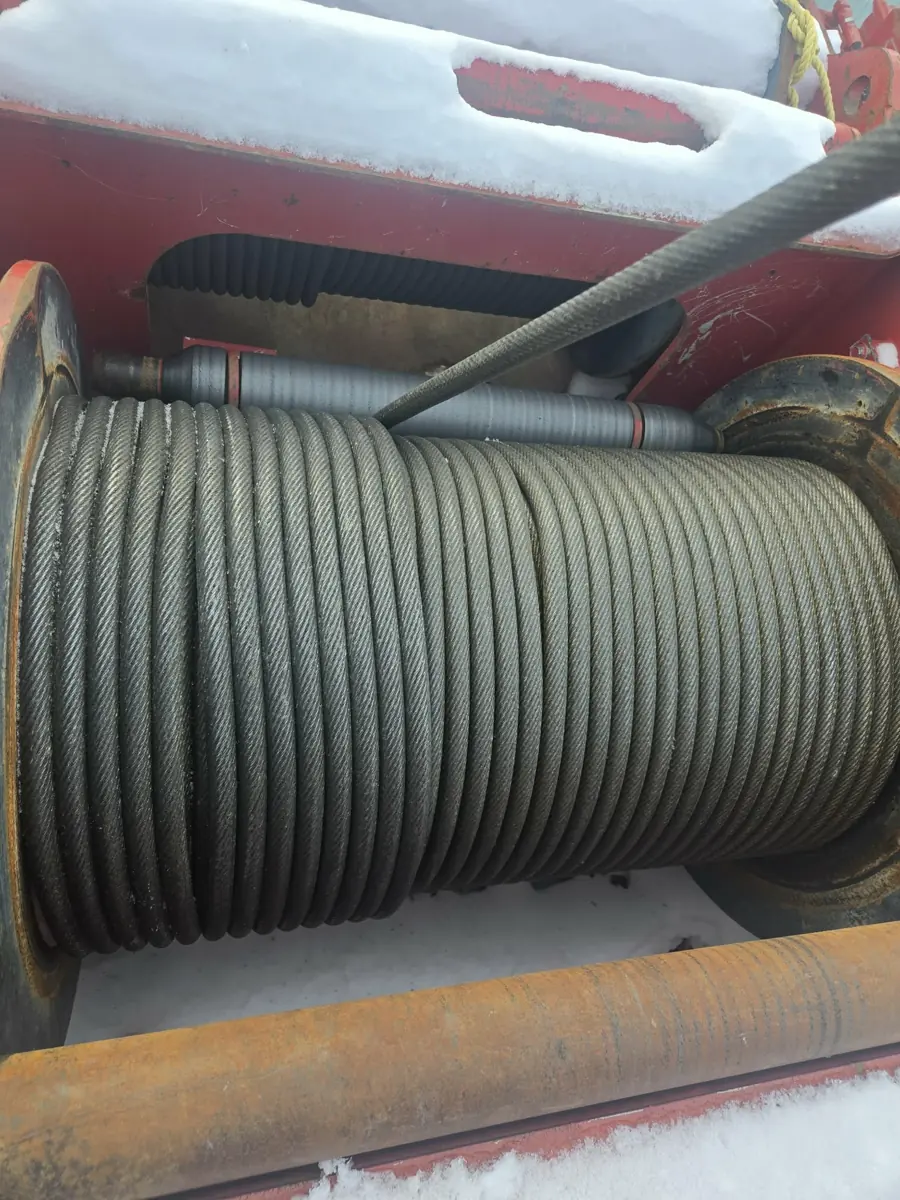
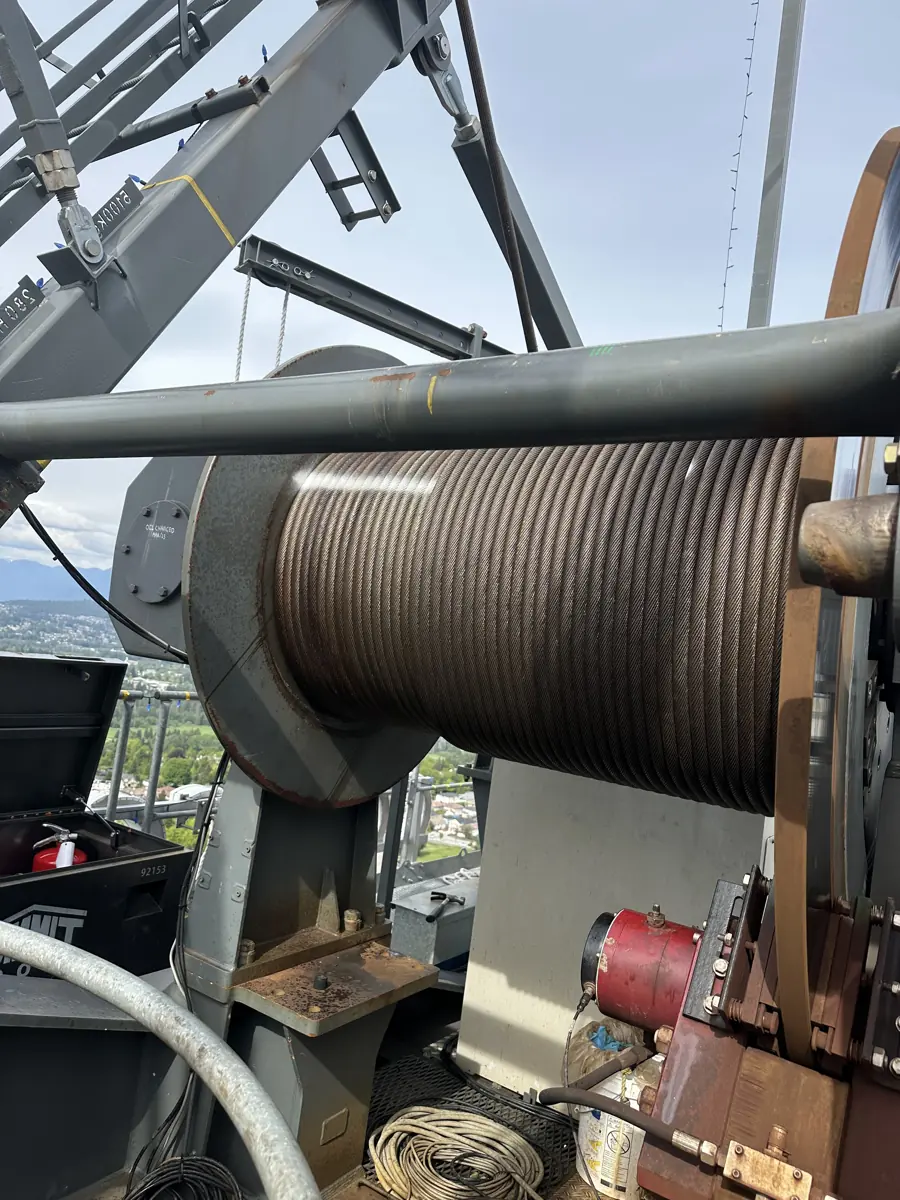
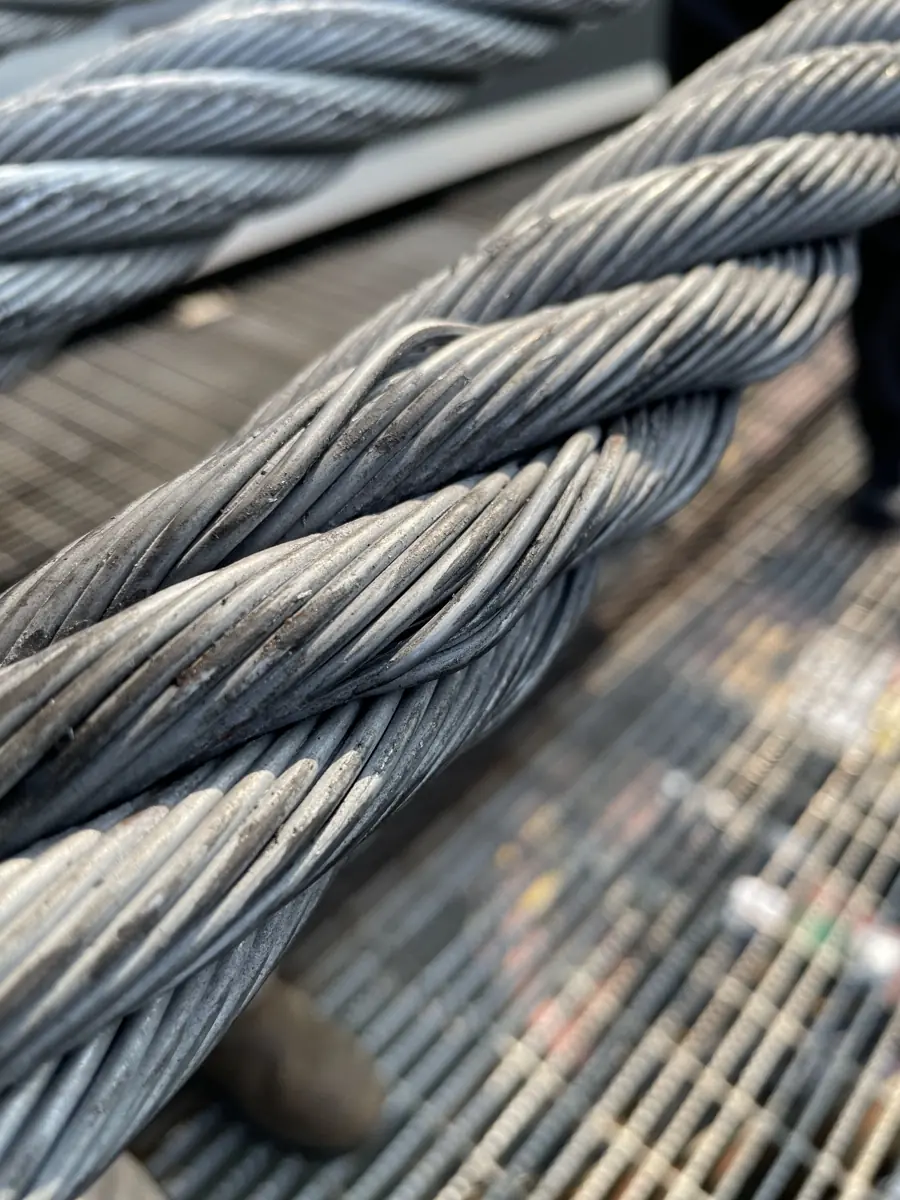
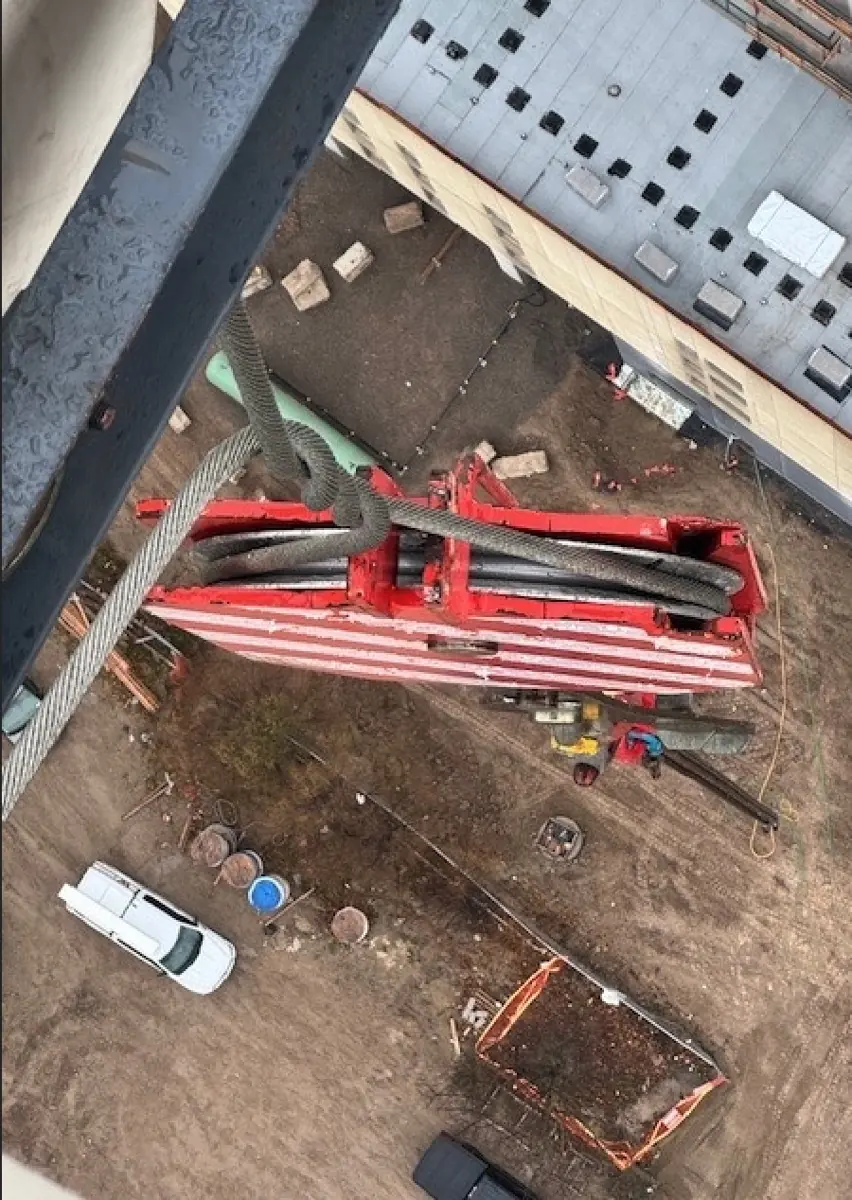
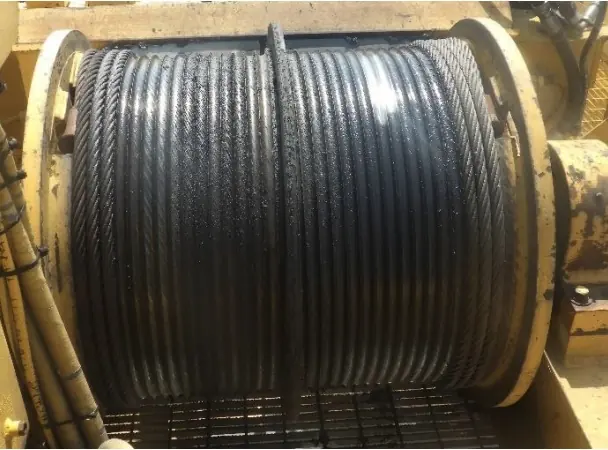
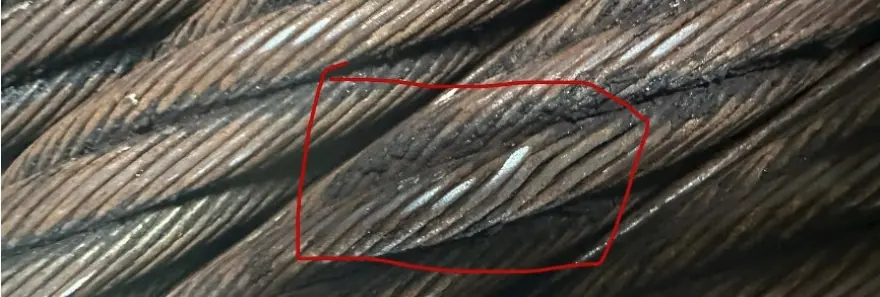
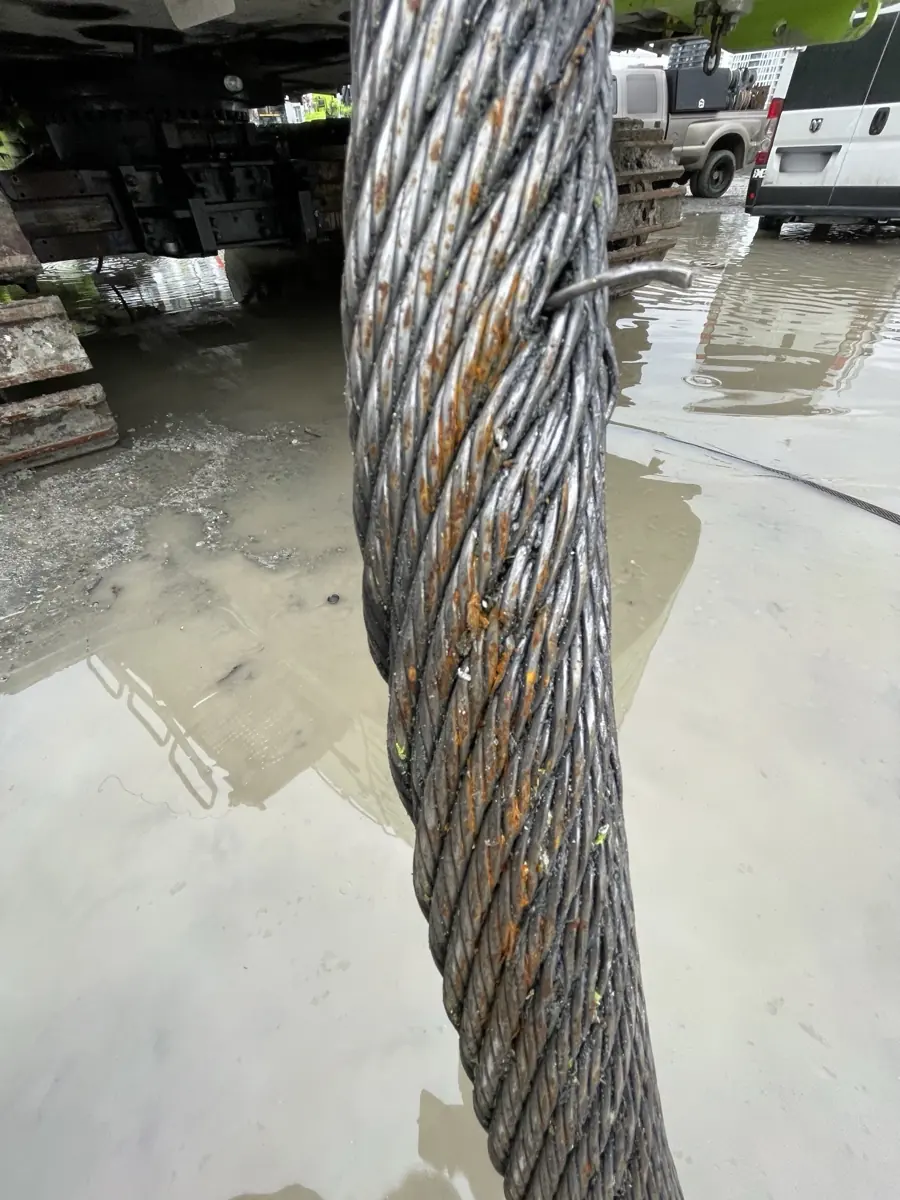
Every photo on this page was taken during our own rope and sheave inspections on mobile, crawler, tower and offshore cranes. Click a photo to see it full size. To judge whether a rope you have inspected should be retired, use the discard calculator.
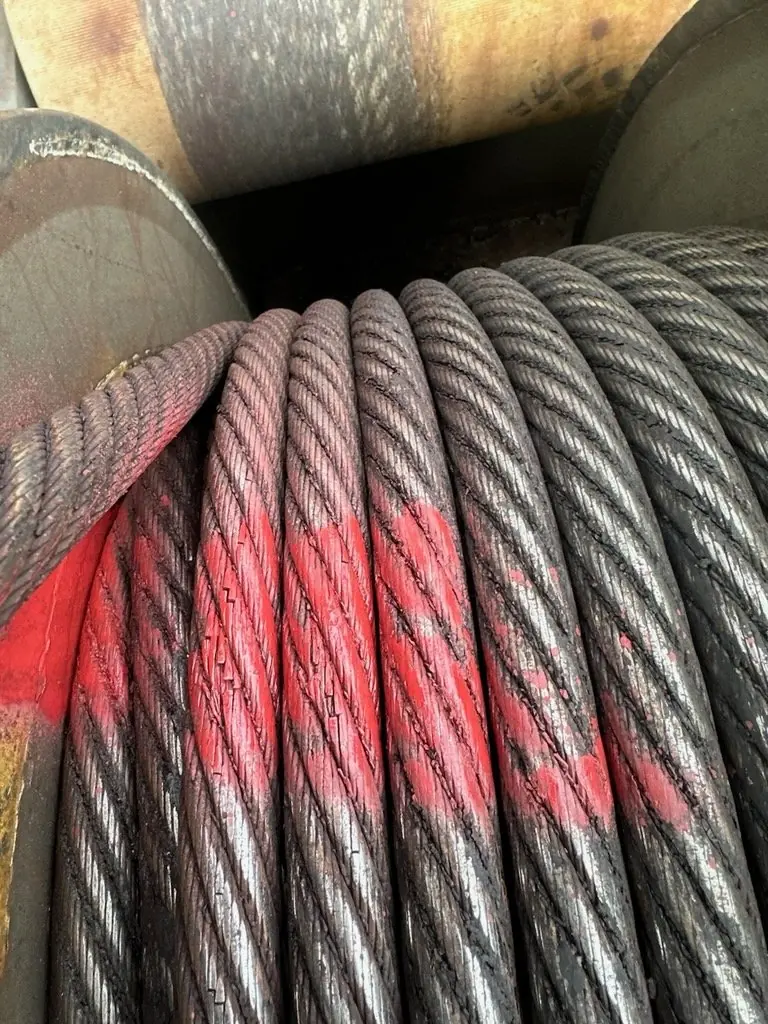
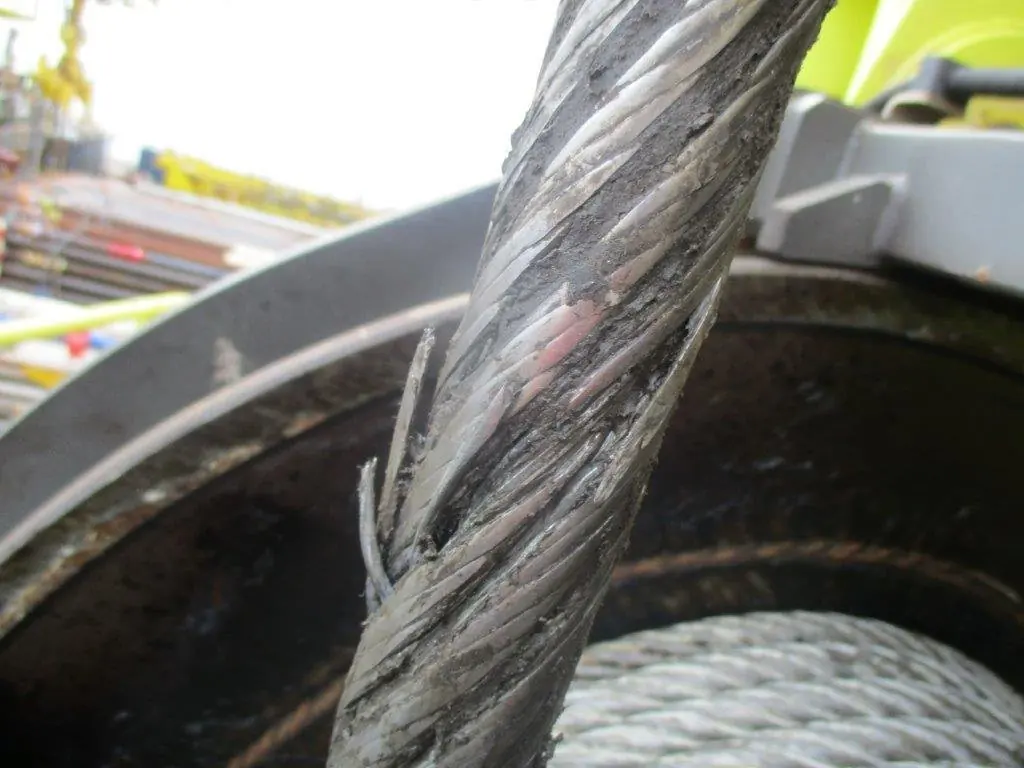
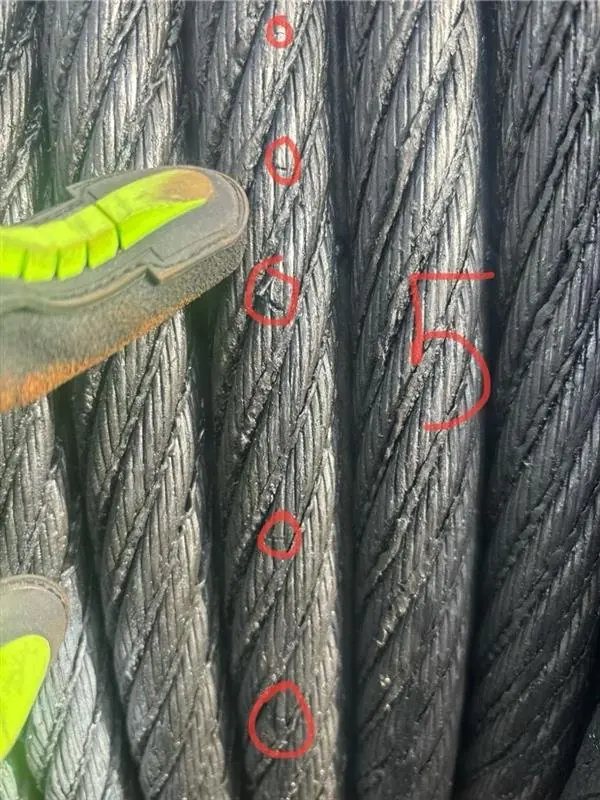
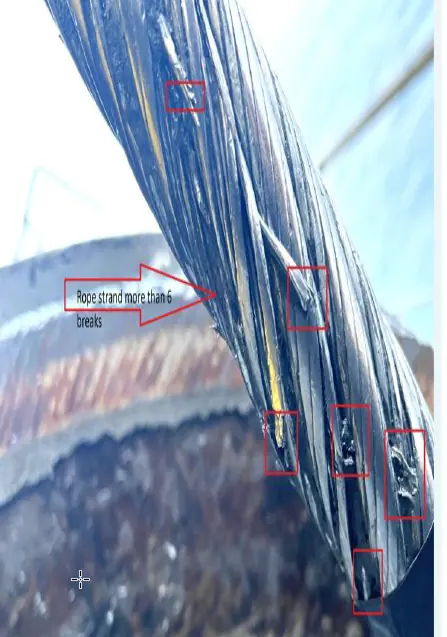
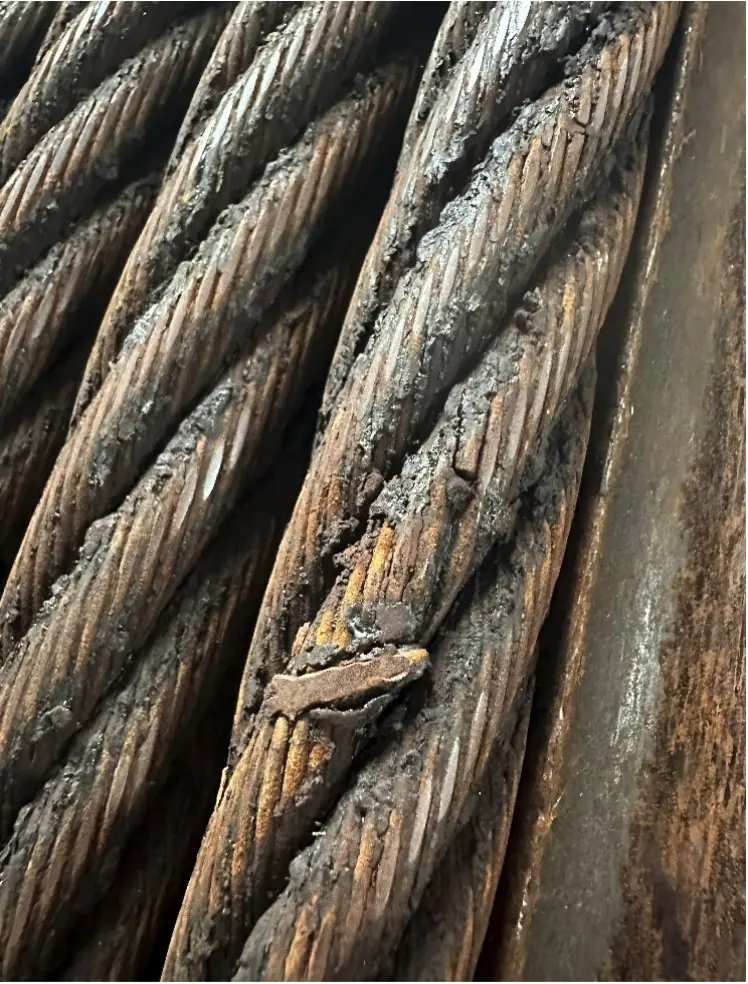
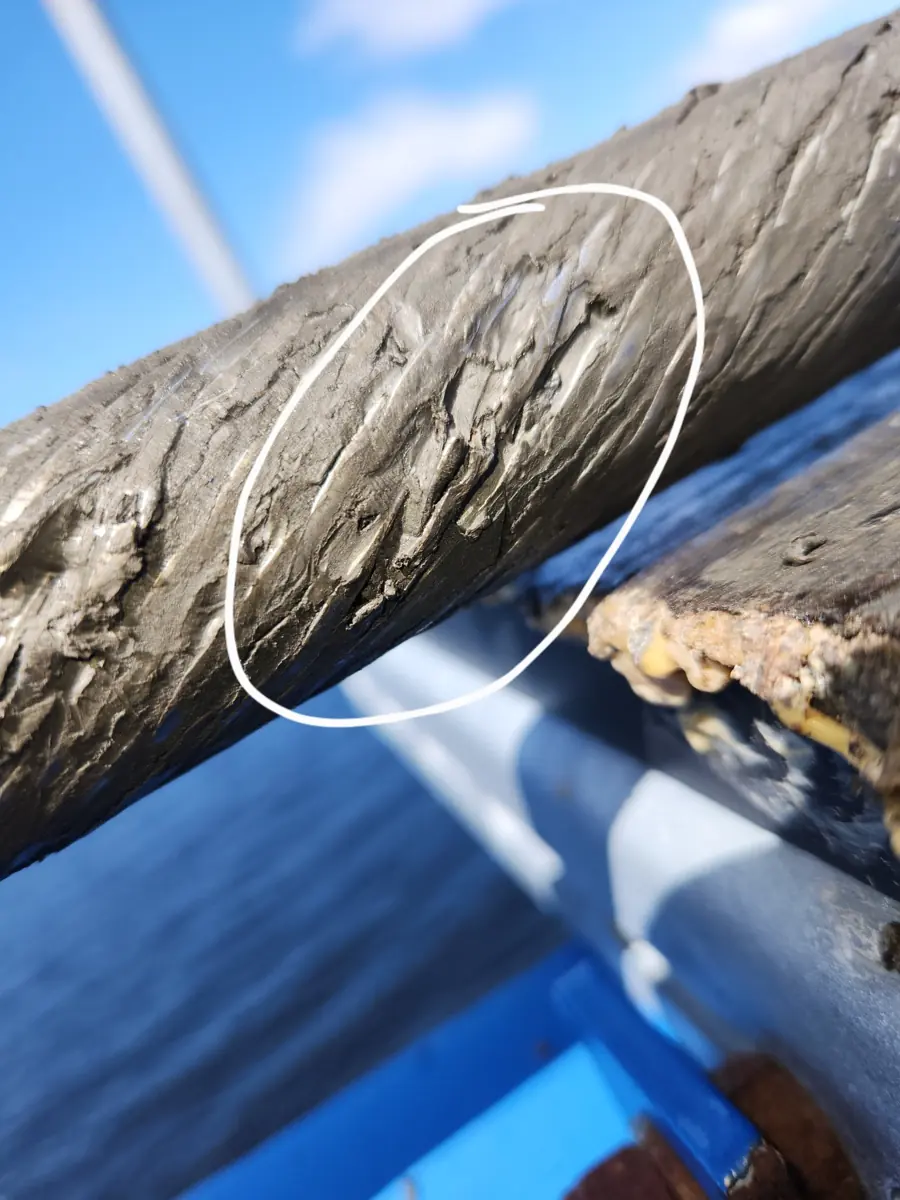
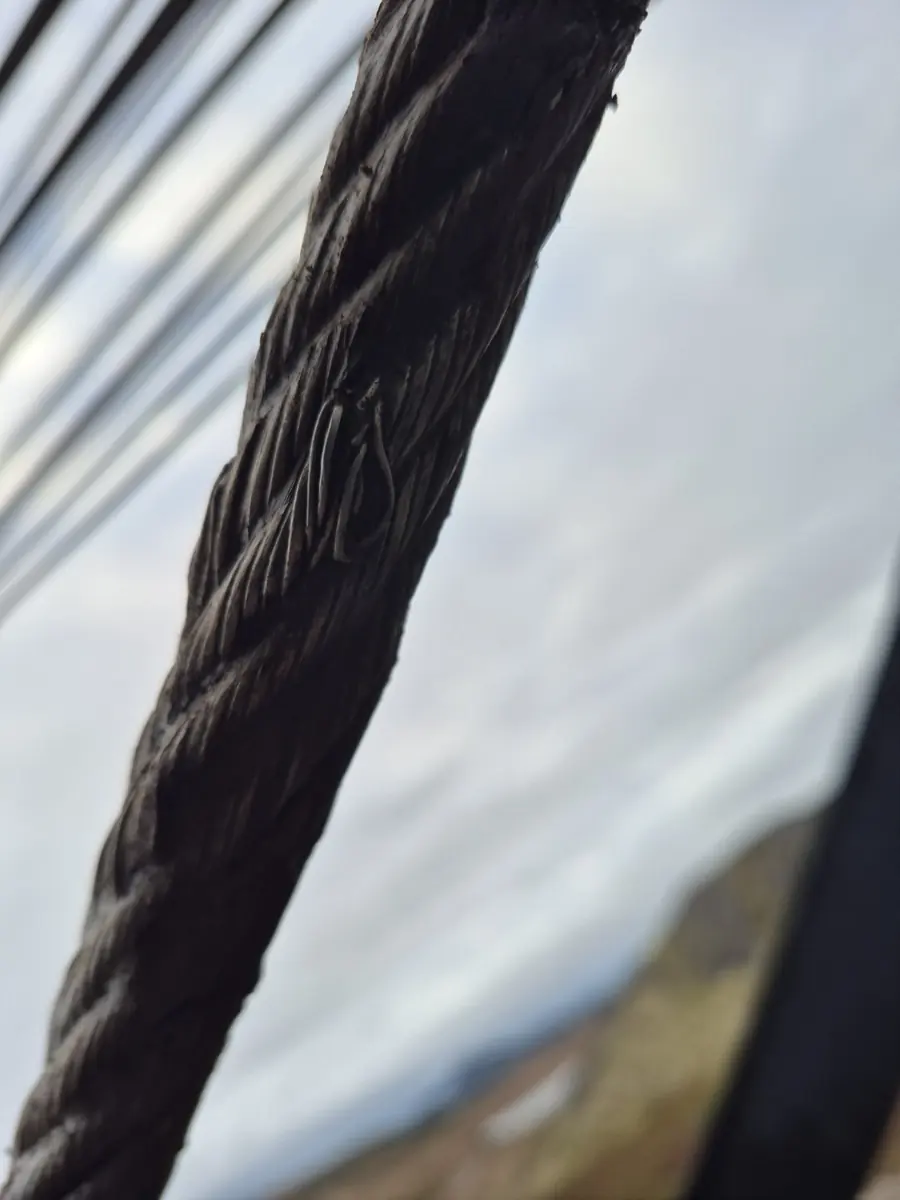
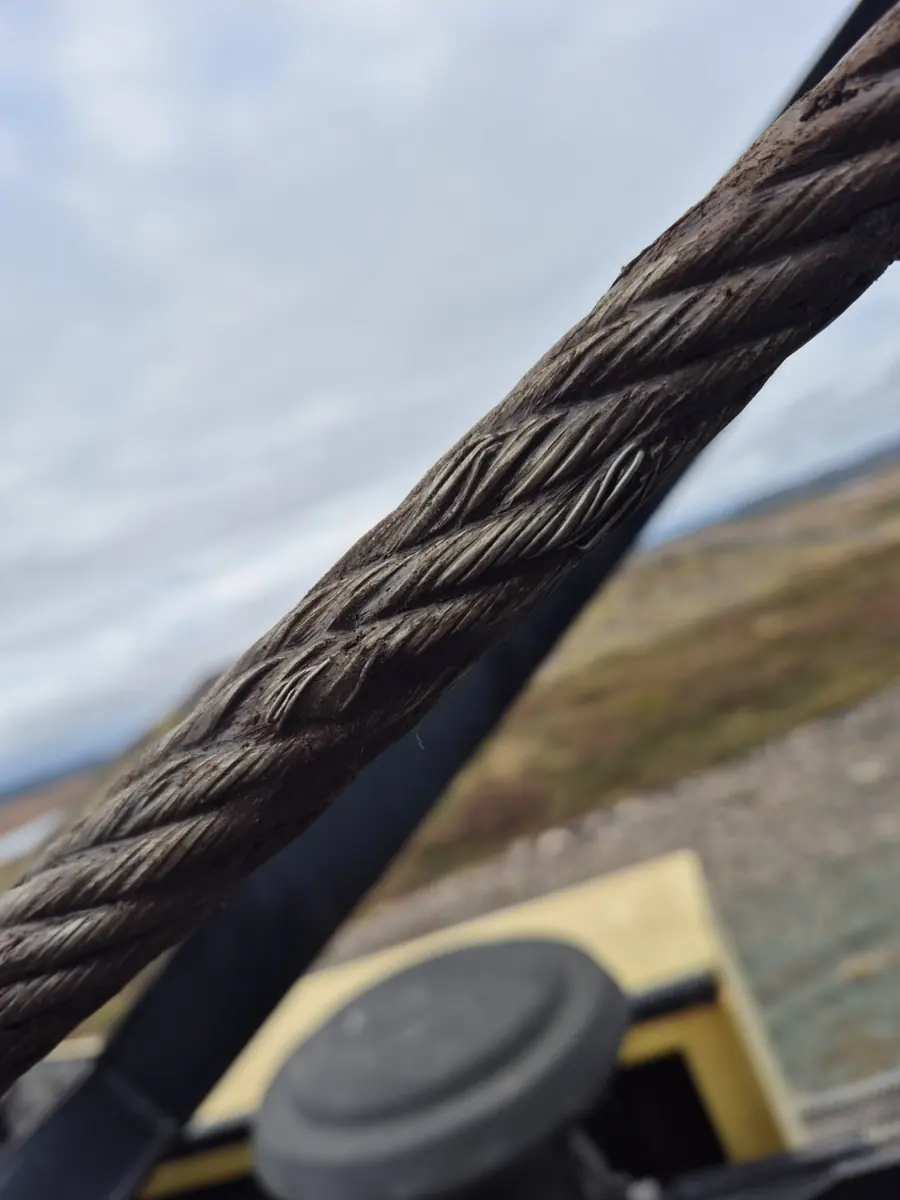
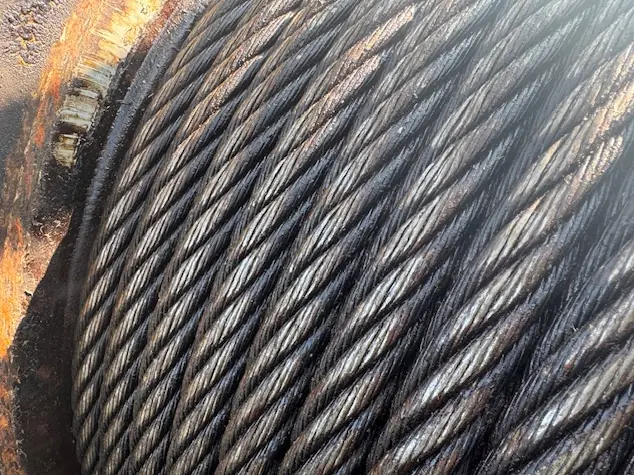
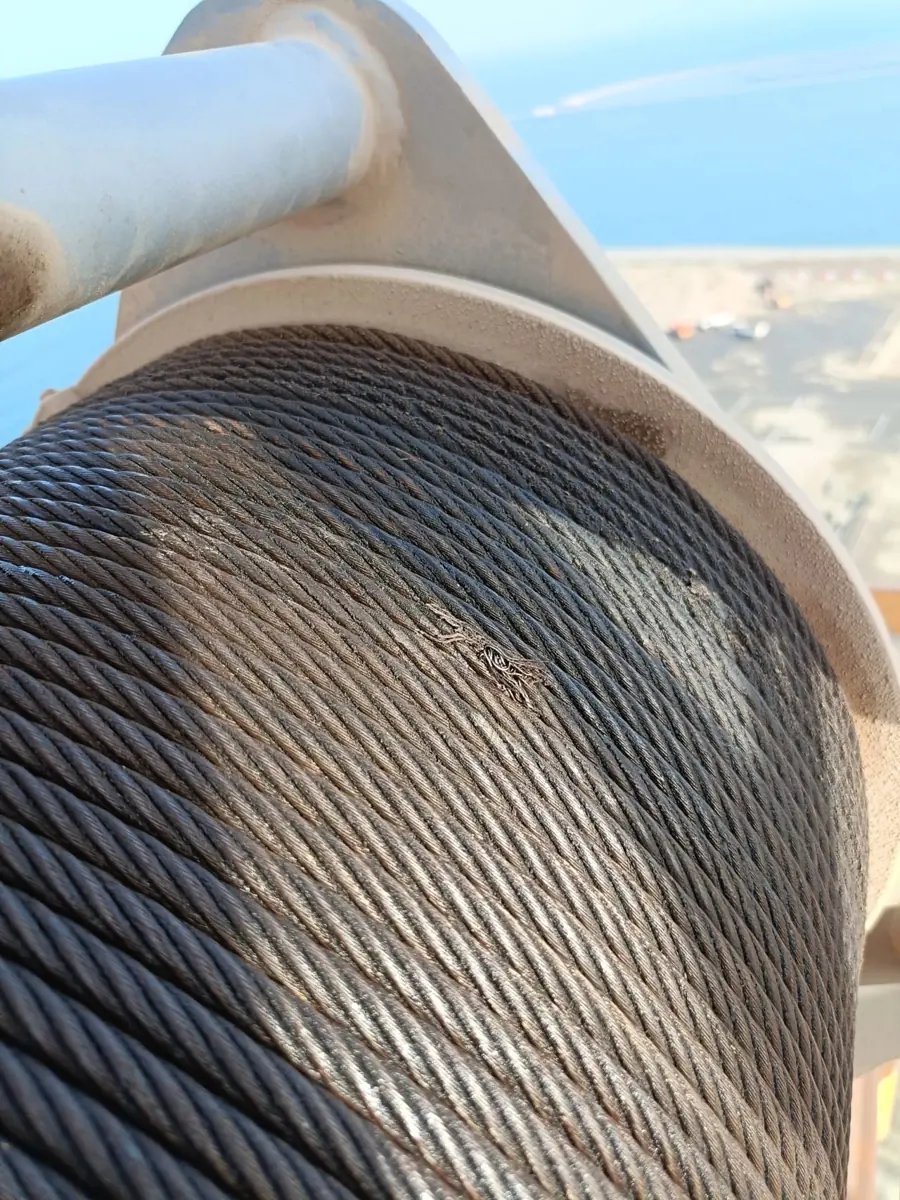
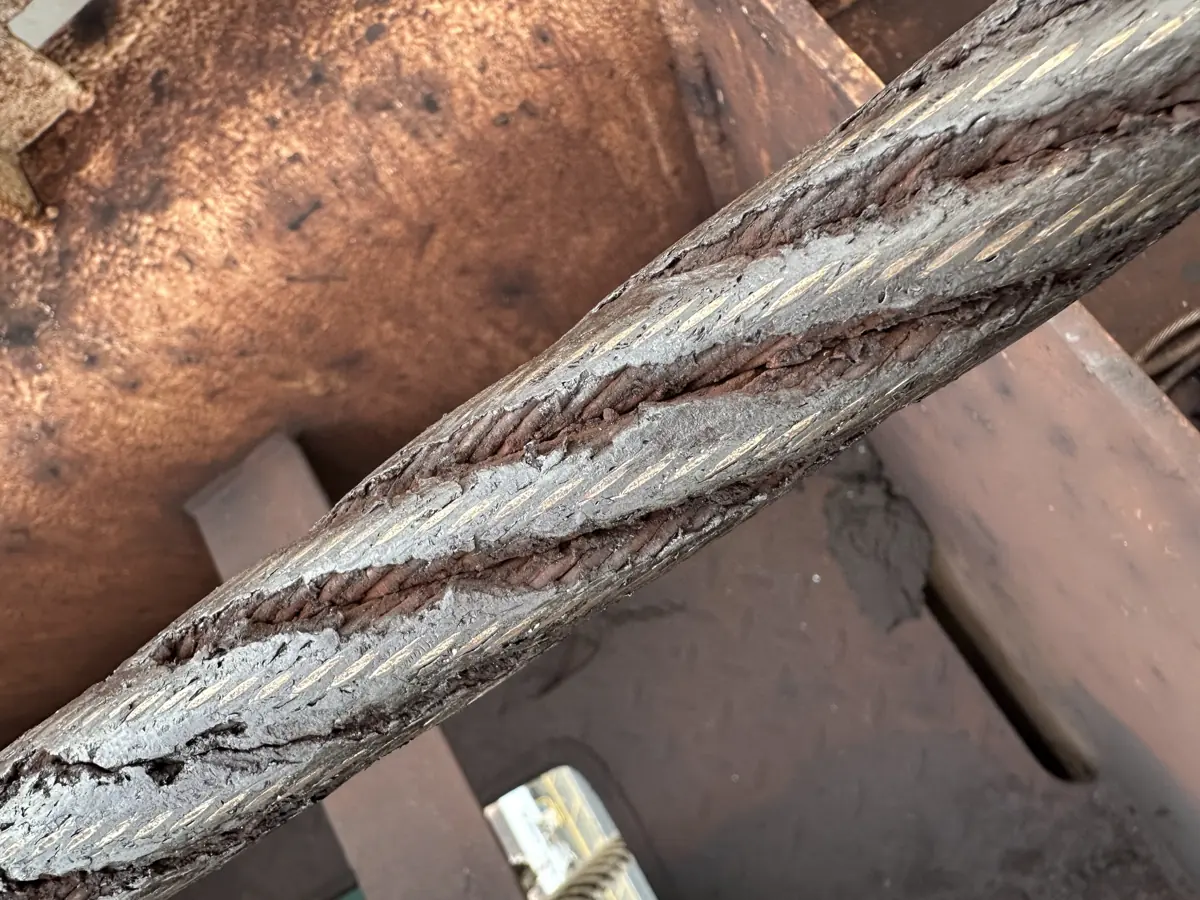
Broken wires are the most common reason a crane rope is retired. Where they appear tells you why. Crown breaks on the outside of the strands come from bending fatigue over sheaves and drums, and are the normal way for a rope to wear out. Breaks in the valleys between strands, or breaks concentrated at the drum cross-over zone, point to internal wear, a tight groove or poor spooling. Count the breaks over 6 and 30 rope diameters and compare them with the discard criteria for your rope type and standard.
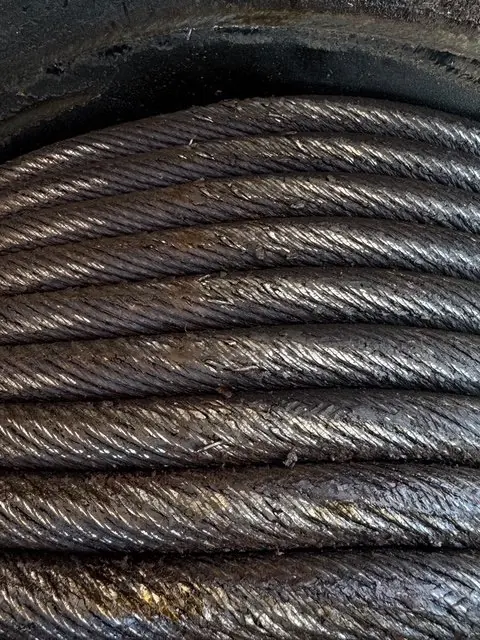
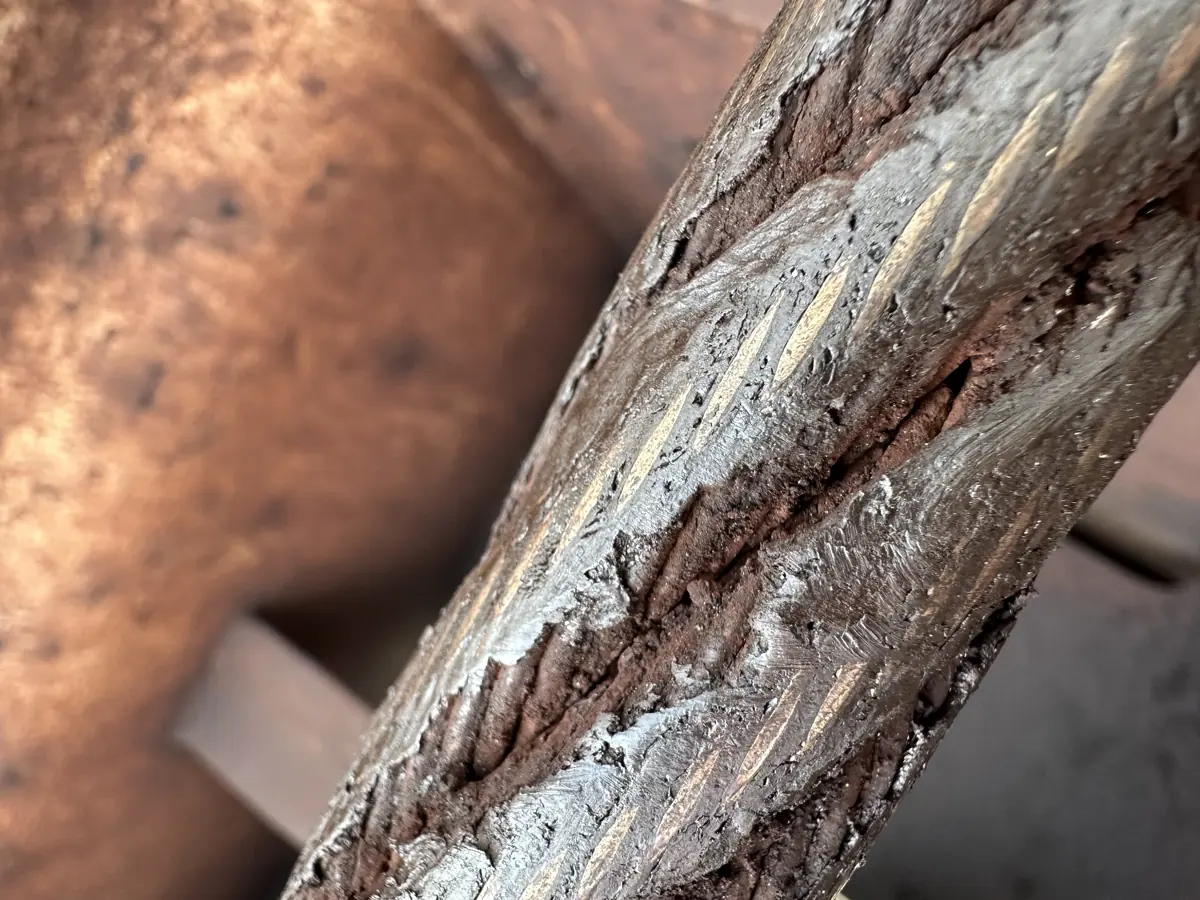
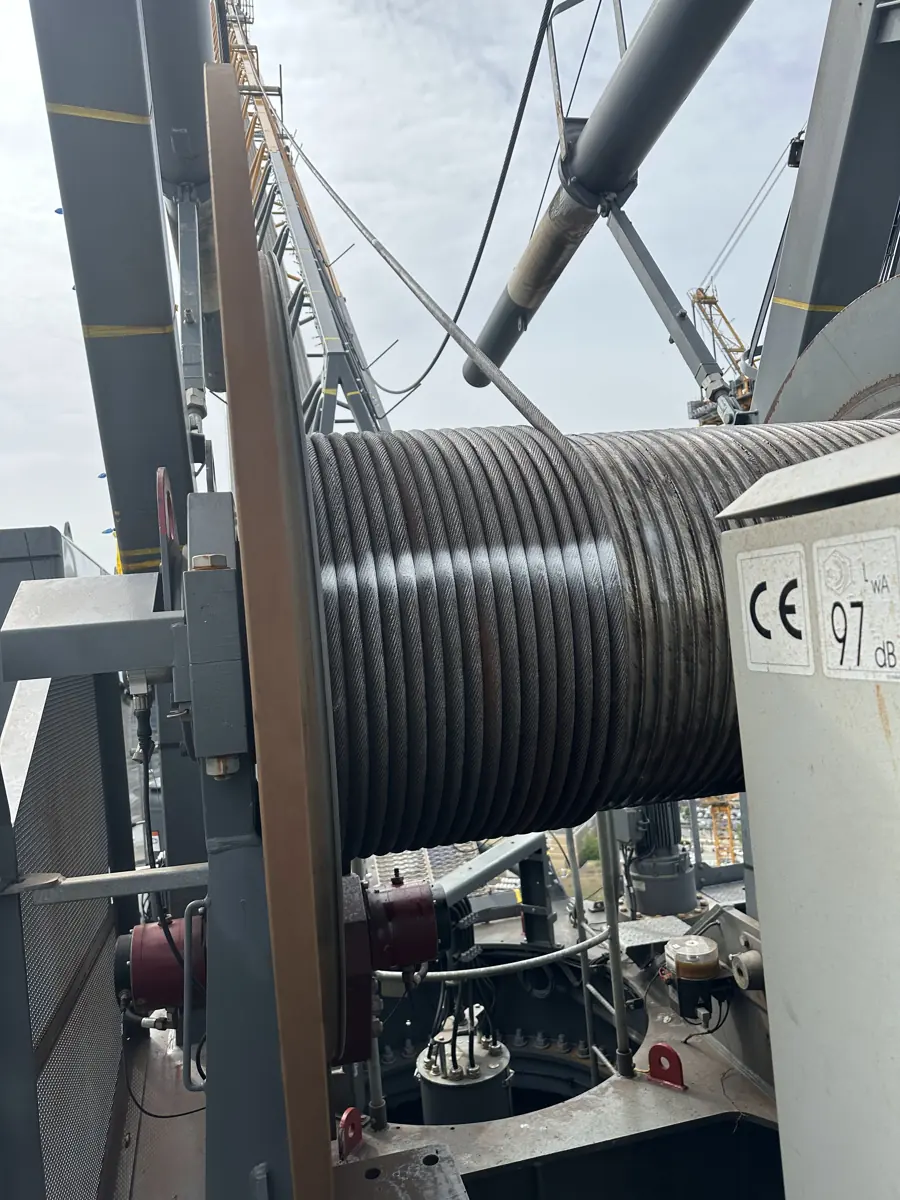
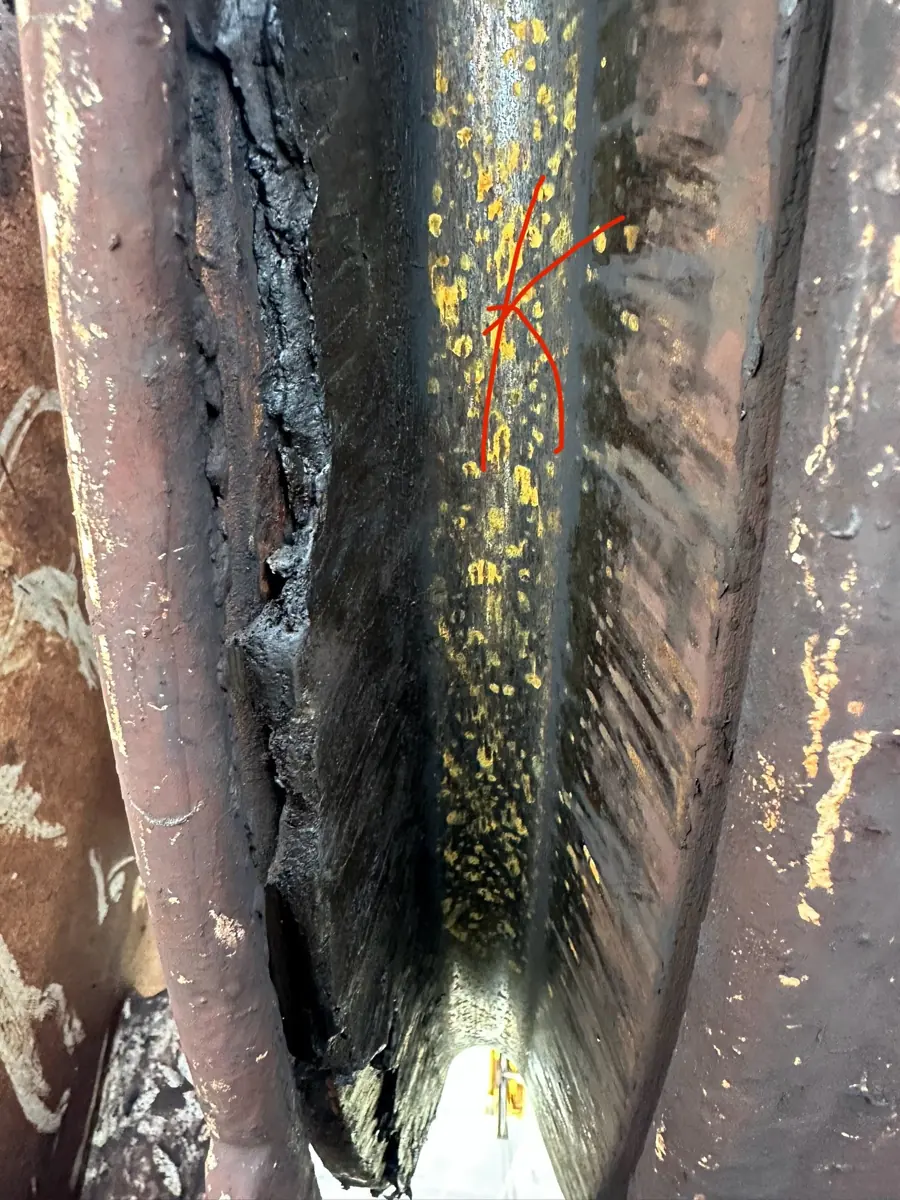
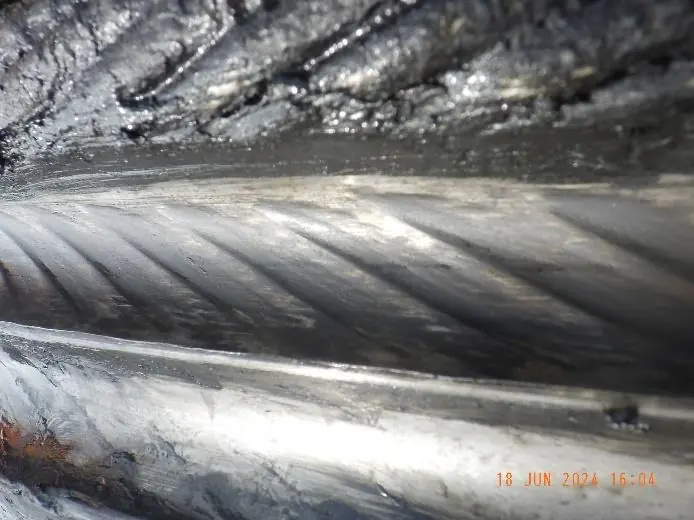
Liebherr HS 8100 duty cycle crane, boom hoist ropeWire breaks marked in red paint where the boom hoist rope crosses over on the Lebus drum. Check the cross-over zones first.Liebherr BOS 4200 offshore crane, Lang's lay luffing ropeBroken wire ends standing out of a Lang's lay luffing rope just above the winch drum.Demag CC 3800-1 crawler crane, rotation-resistant hoist ropeCrown wire breaks on the lower-layer wraps of a rotation-resistant hoist rope, in the drum cross-over zone.Liebherr 357 HC-L tower crane, luffing ropeFive fatigue wire breaks circled on one wrap of the luffing rope.Liebherr BOS 4200 offshore crane, luffing ropeWire breaks marked along the luffing rope; one strand has more than six breaks.Konecranes quay craneCrown wire breaks and corrosion: a broken outer wire lifting off the strand crown, with rust along the rope.
Corkscrew and waviness
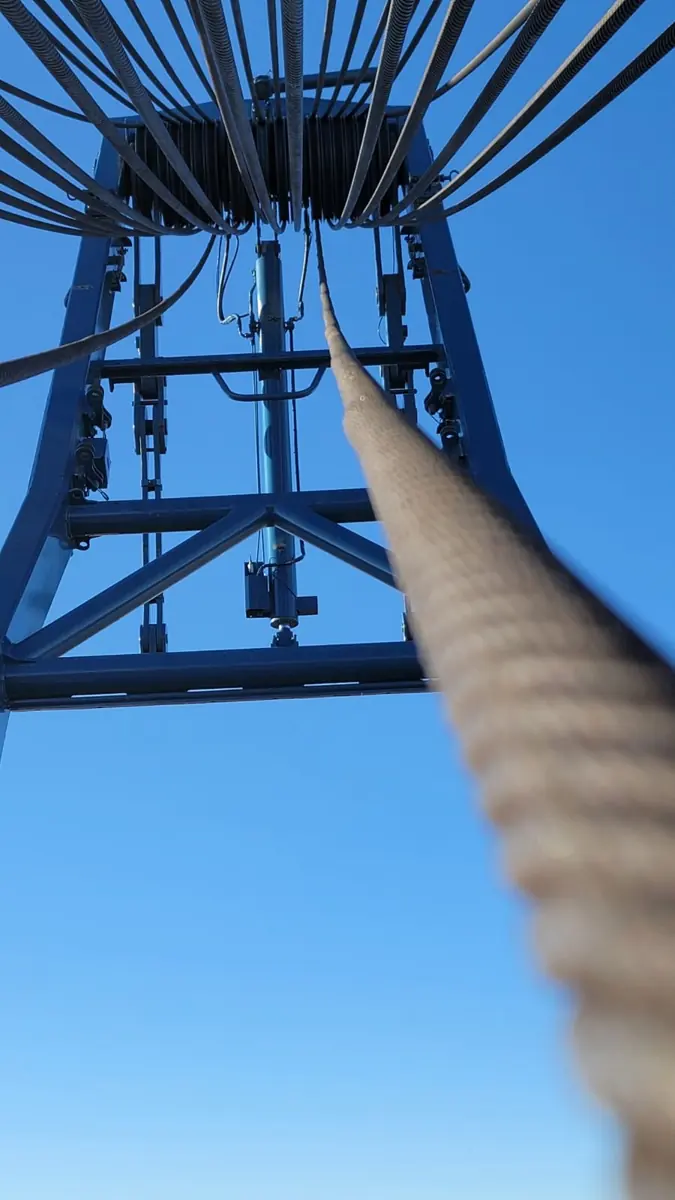
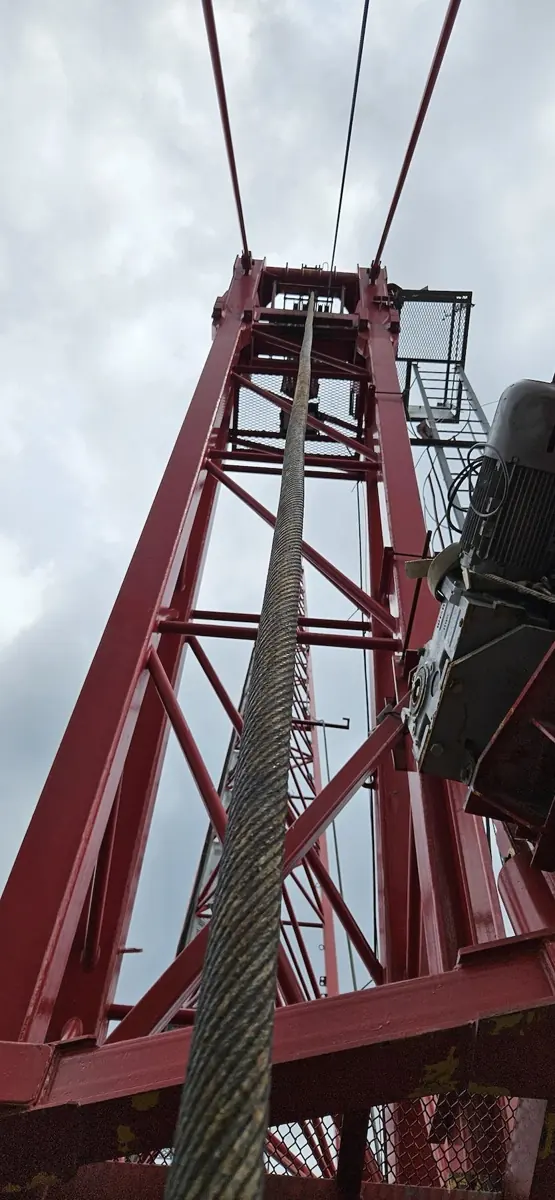
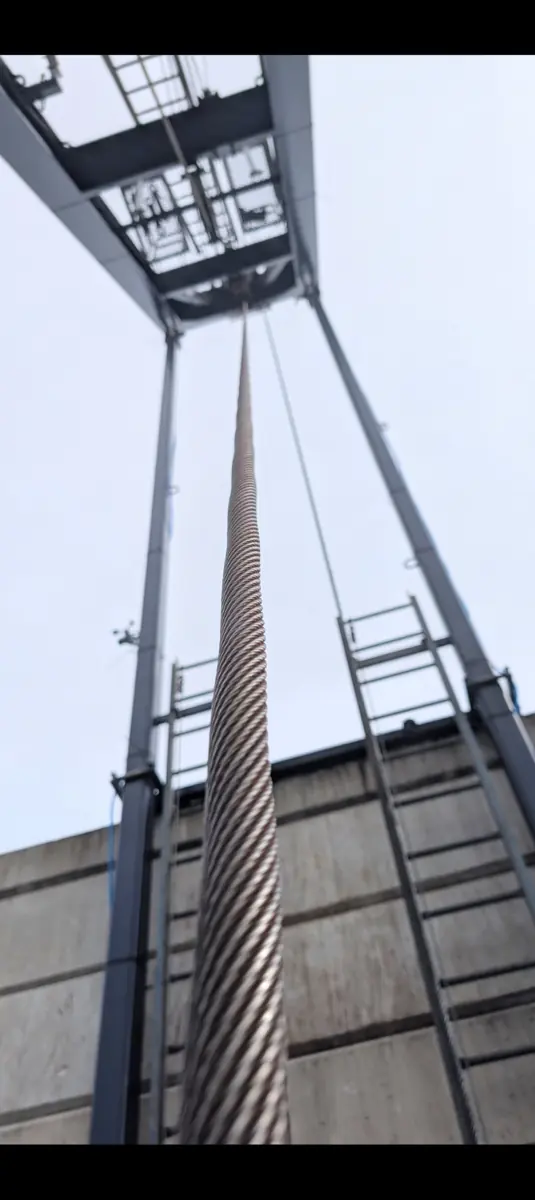
The centre line of the rope takes a spiral shape. It is usually caused by twist put into the rope at installation, by a groove that is too tight, or by the rope being pulled over an edge. Waviness is a discard criterion in ASME, CSA and ISO standards once it passes the limit for your rope, so measure it rather than judge it by eye.
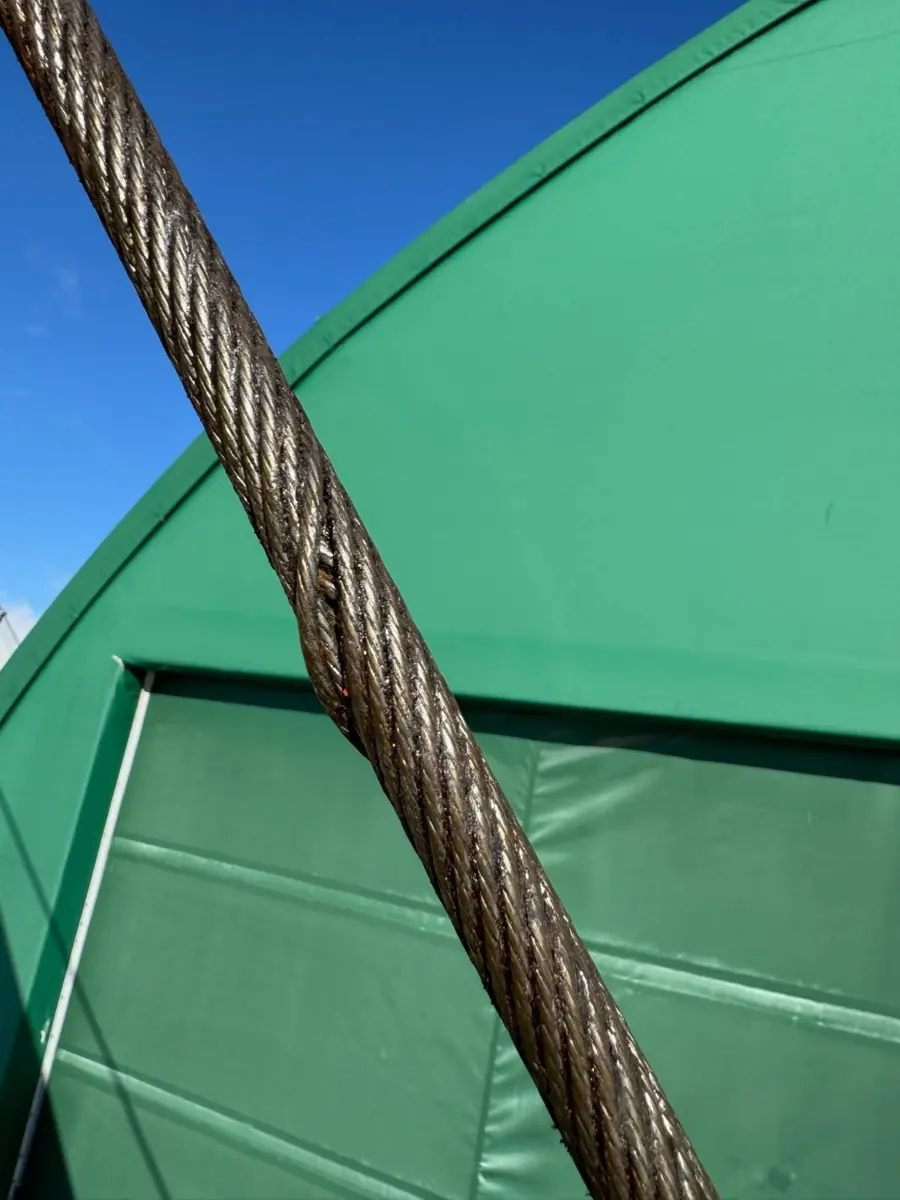
Liebherr LR 1600/2 crawler crane, winch 4 ropeCorkscrew waviness in the winch 4 rope running up to the head sheaves.Potain MR 615 luffing tower crane, 34 mm hoist ropeCorkscrew deformation in the hoist rope hanging inside the tower mast.Jaso J380PA luffing tower crane, 35x7 hoist ropeCorkscrew deformation along a 35x7 rotation-resistant hoist rope hanging below the jib.Clyde barge craneRope actively being forced into a corkscrew and waviness by tight sheaves.Clyde barge craneRope actively being forced into a corkscrew and waviness by tight sheaves: look along the falls for the spiral.
Crushing and flattening
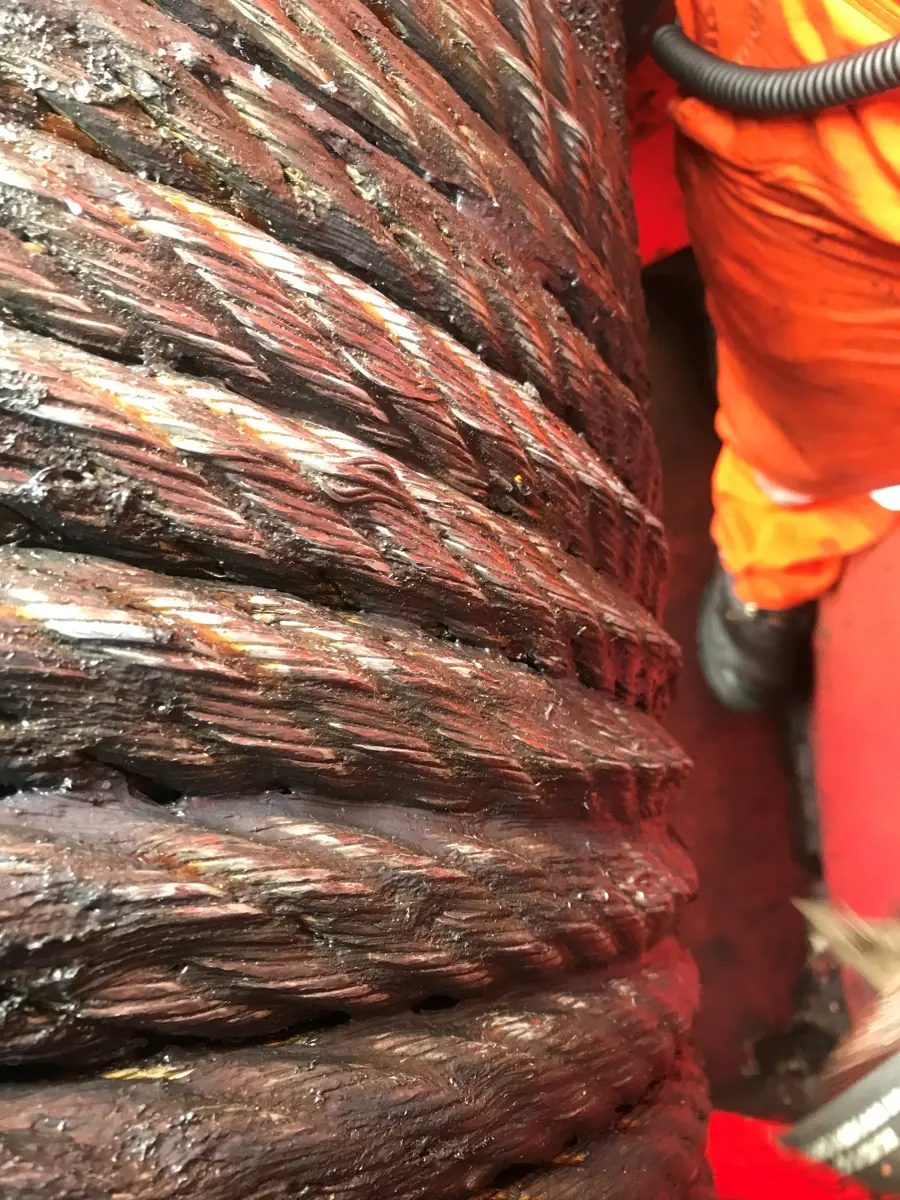
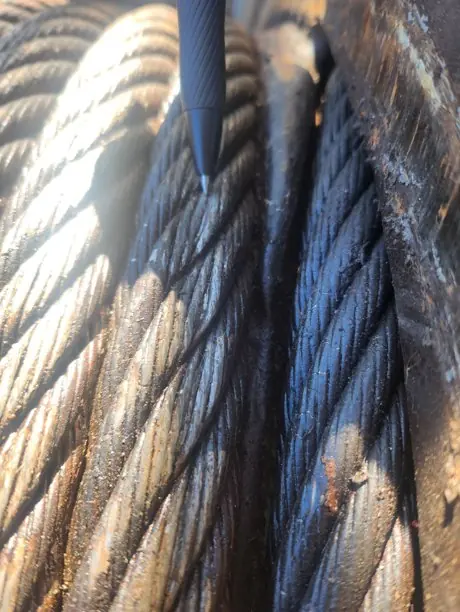
Flattened wires and strands, most often on multi-layer drums where lower layers are loose or the rope crosses over itself. Compacted ropes resist crushing better than round-strand ropes. Getting the spooling tension and diameter tolerance right prevents most of it.
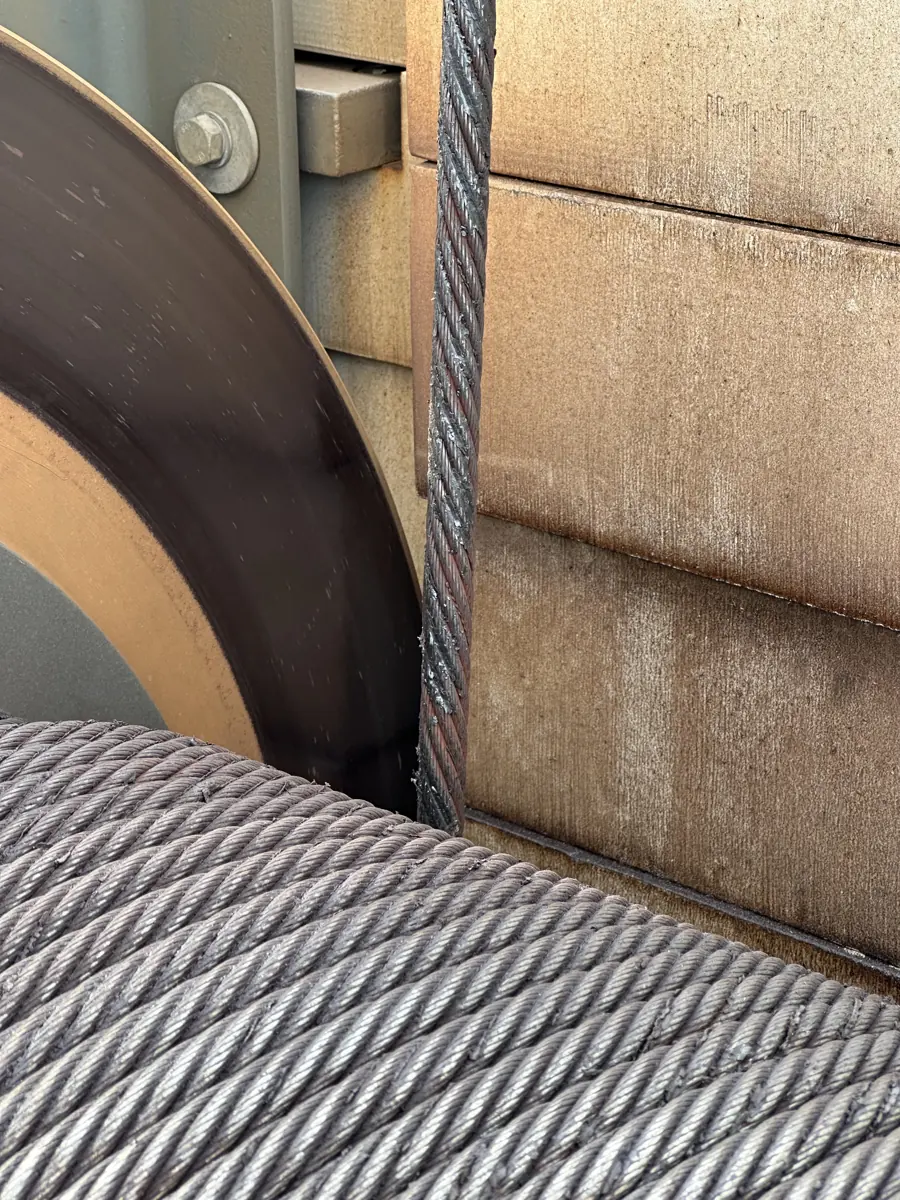
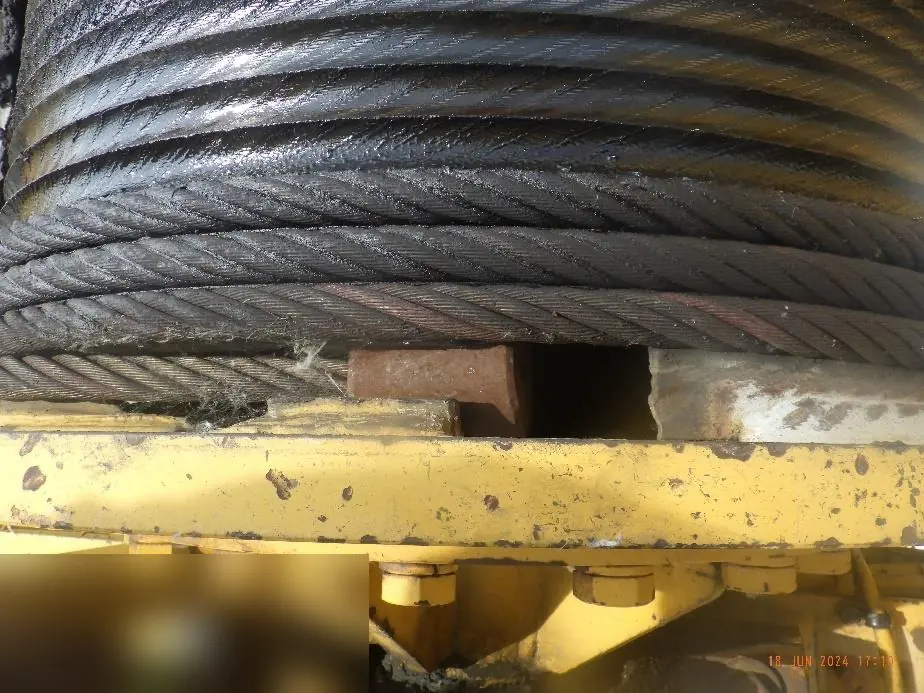
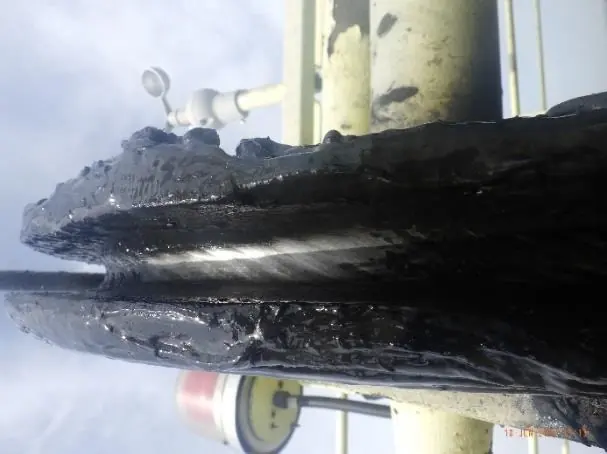
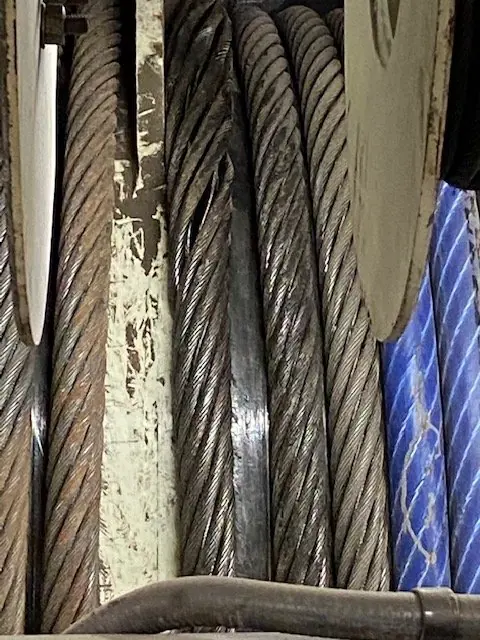
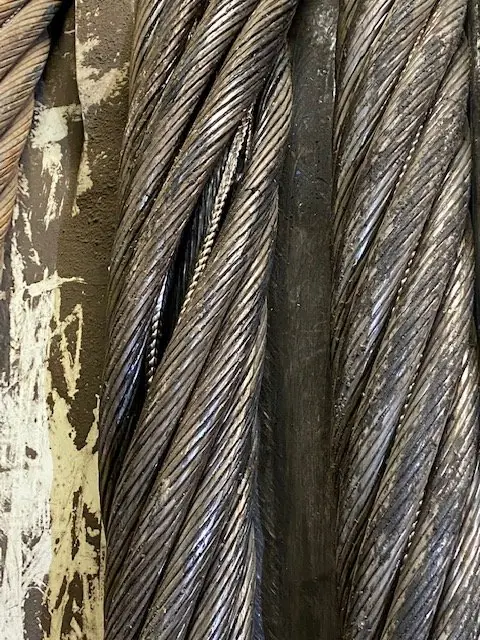
Seatrax offshore crane, boom hoist rope on a plain drumCrushed, distorted wraps in the lower layers of a boom hoist rope on a plain (ungrooved) drum.Manitowoc 2250 crawler crane, winch ropeMinor crushing on the bottom-layer wraps, at the pen tip.Fixed port cargo crane, hoist ropePeened, flattened outer wires from a worn drum flange and a bad fleet angle.Manitowoc 999 crawler crane, boom hoist ropeMechanical damage on the boom hoist rope: distorted, crushed strands and loose wires.Manitowoc 999 crawler crane, boom hoist ropeA flattened, crushed strand from wraps that were spooled loosely on the drum.Liebherr LG 1750, winch 4 ropeFlat spots on the rope wraps from lack of maintenance: the rope was not re-tensioned after a wind maintenance job, there was no slip and cut, and the cheapest OEM rope that meets the spec was chosen.
Core protrusion and birdcaging
The outer strands open up and the core or inner strands push out. Causes include a sudden release of load, twist, and running the rope through a groove that is too small. Core protrusion and birdcaging mean immediate discard under every major standard.
Stacker reclaimer, 8-strand boom hoist ropeCore protruding between the outer strands of the boom hoist rope on the drum.Terex Explorer 5800, rotation-resistant ropeA birdcage in a rotation-resistant rope, caused by reeving the rope over the top of a sheave keeper pin.
Corrosion
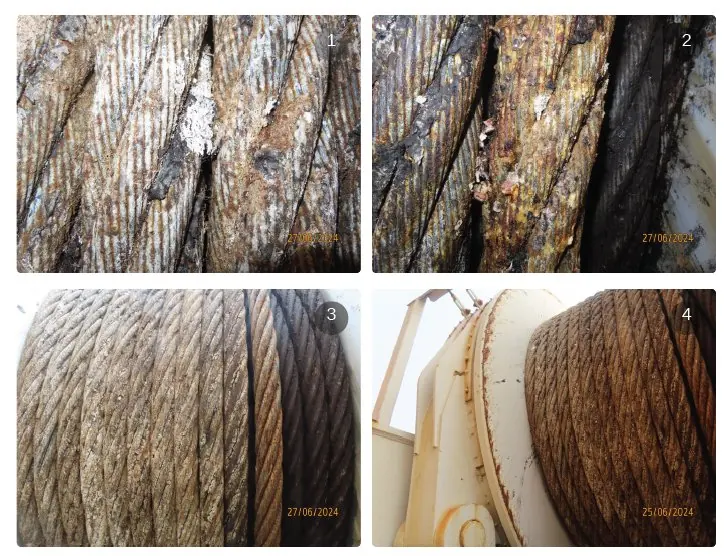
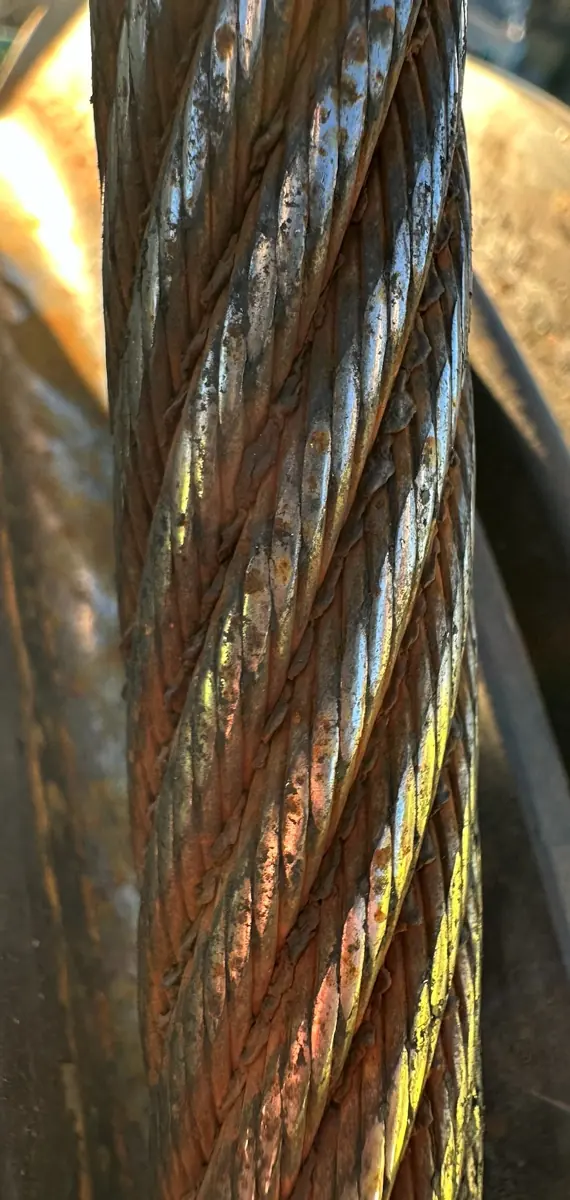
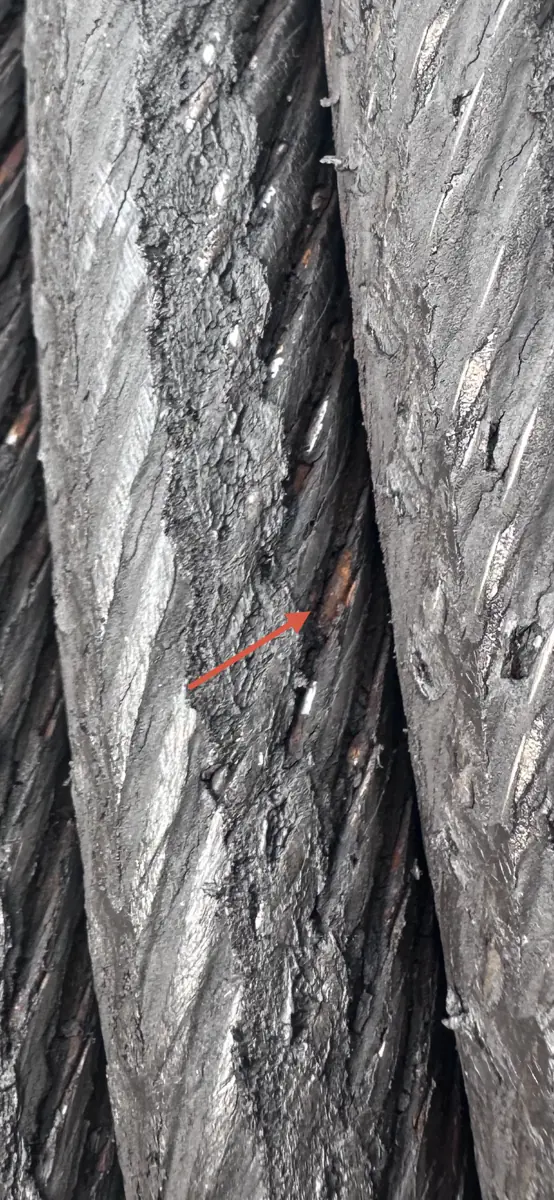
Surface rust is easy to see. Corrosion inside the rope, in the valleys and around the core, is the dangerous kind because it hides behind the lubricant. Keep the rope lubricated and look for rust weeping out of the valleys.
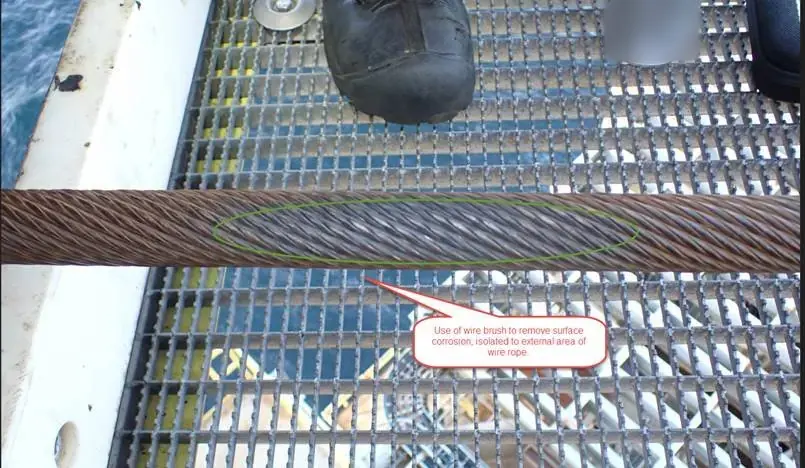
Manitowoc 999 crawler crane, boom hoist ropeExcess grease and dirt built up on the boom hoist wraps. Grit held in old grease wears the rope and hides its condition.Subsea anchor winch, 83 mm ropeHeavy corrosion and pitting on a subsea anchor winch rope.Terex CTL 630 tower crane, luffing ropeCorrosion in the valleys between the strands of the luffing rope.Liebherr BOS 4200 offshore crane, auxiliary ropeSuperficial surface corrosion. The marked area was cleaned with a wire brush to show it had not gone into the rope.Jaso J380PA tower crane, hoist ropeExcess grease hiding an unknown amount of corrosion between the strands (arrow).ZPMC ship-to-shore craneGreasing over dangerously corroded wire rope. Fresh lubricant slows new corrosion but does not undo what is already there.ZPMC ship-to-shore craneGreasing over dangerously corroded wire rope: the corrosion still shows through the fresh grease.Demag CC 2400 crawler craneHoist rope corroded during storage. Store rope under cover and off the ground, and keep it lubricated.Luffing tower craneValley corrosion: rust between the strands, where the rope wears from the inside.
Spooling problems
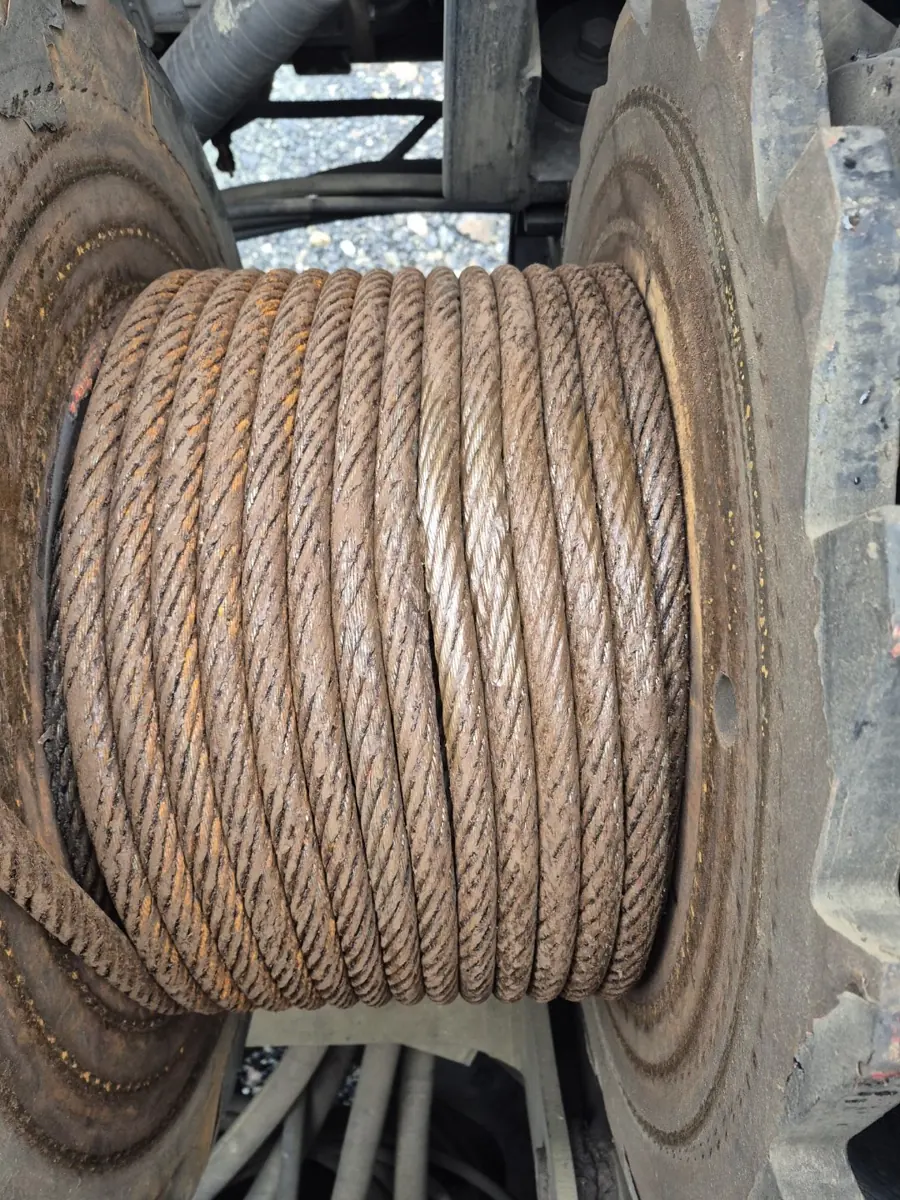
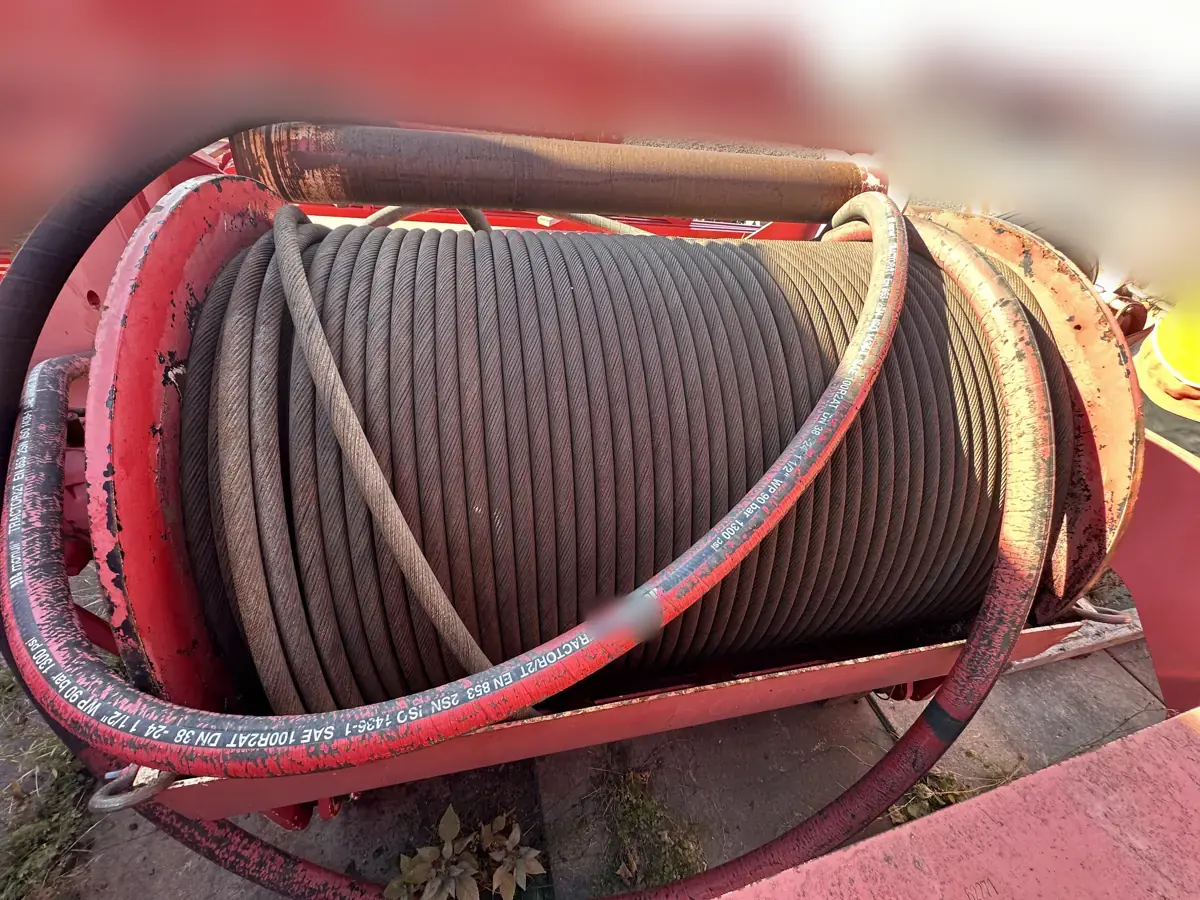
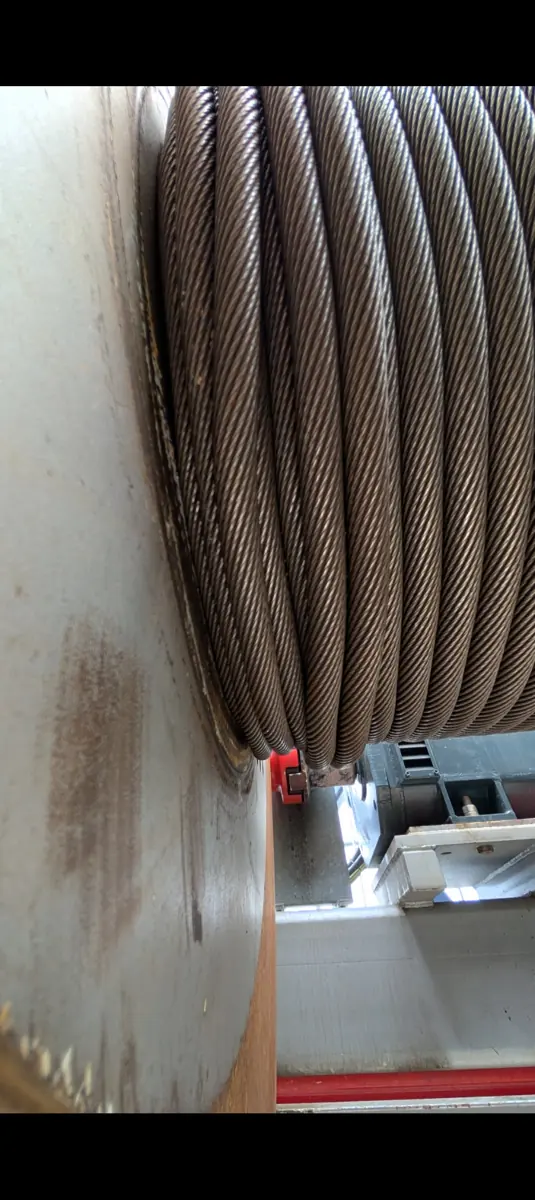
Loose wraps, gaps between wraps and uneven layers on the drum. Spooling problems lead straight to crushing and rat's nests. The usual causes are uneven tension between layers, a rope outside the drum's diameter tolerance, or a metric and imperial mix-up.
Jaso J380PA tower crane, hoist ropeUneven spooling at the drum flange after the hoist rope lost its tension.Liebherr LG 1750, winch 4 ropeGaps and irregular wraps in the rope layers on the winch 4 drum.Tadano GR-1000XL rough-terrain crane, winch ropesRope diving and distortion from loose wraps, after the rope was reeved with more parts of line than the lift needed.Tadano GR-1600XL rough-terrain crane, 19 mm hoist ropeLoose, uneven wraps of 19 mm hoist rope on the winch drum.Liebherr 280 HC-L luffing tower craneMarking hoist rope tension on the hoist drum.Liebherr 280 HC-L luffing tower craneMarking hoist rope tension on the hoist drum.
Measuring diameter and wear
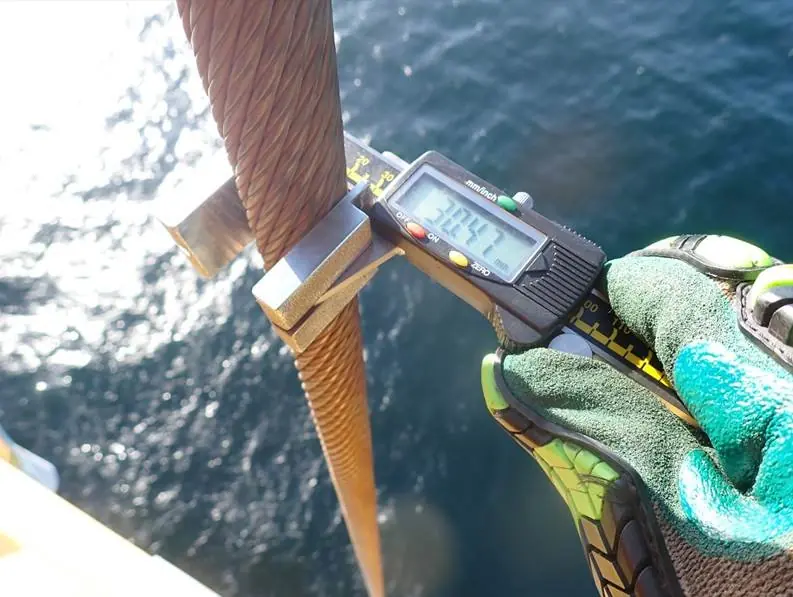
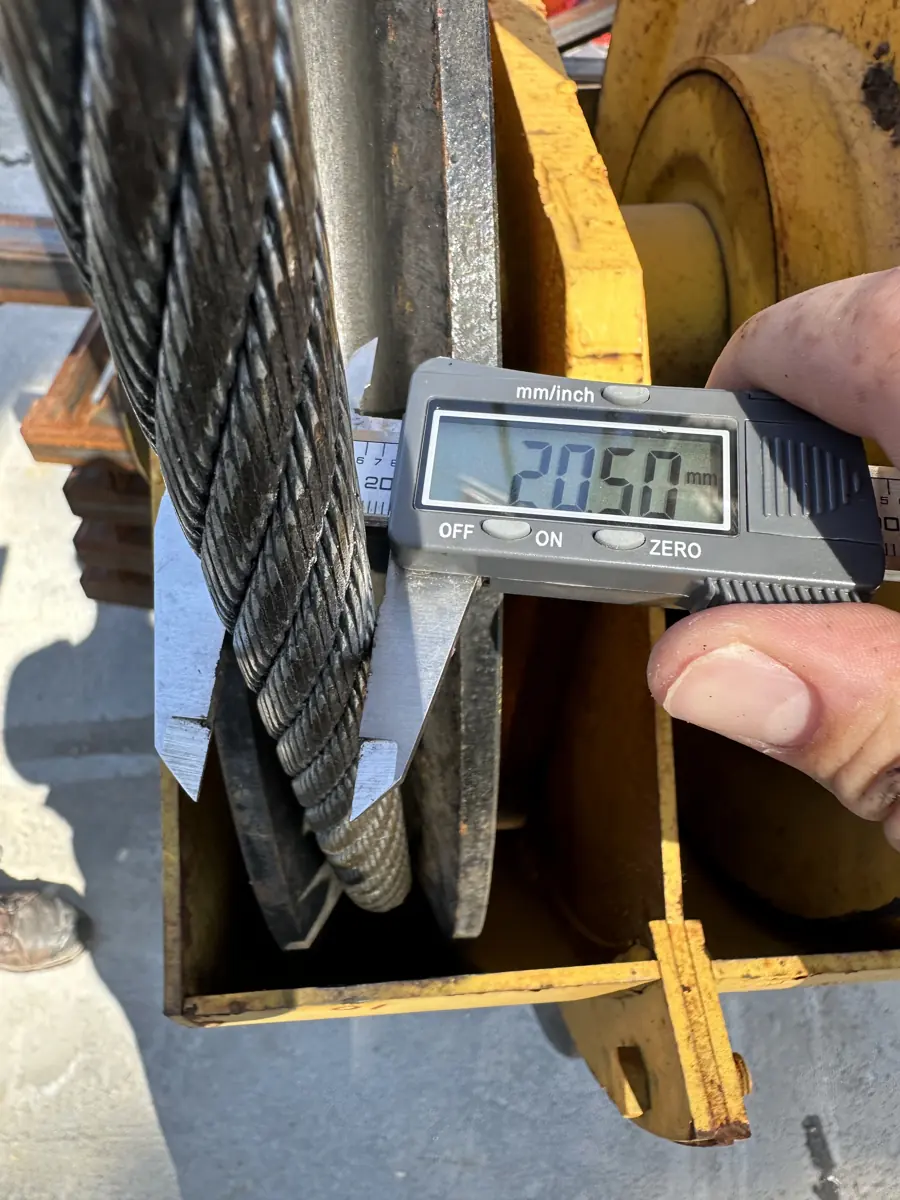
Measure the rope across the crowns of opposite strands with a caliper, in several places, and compare it with the diameter you recorded when the rope was new. A local drop in diameter can mean internal wear or core failure.
Offshore crane, hoist ropeChecking the hoist rope diameter with a digital caliper.Overhead bridge craneMeasuring rope diameter with a caliper across the strand crowns.
End terminations
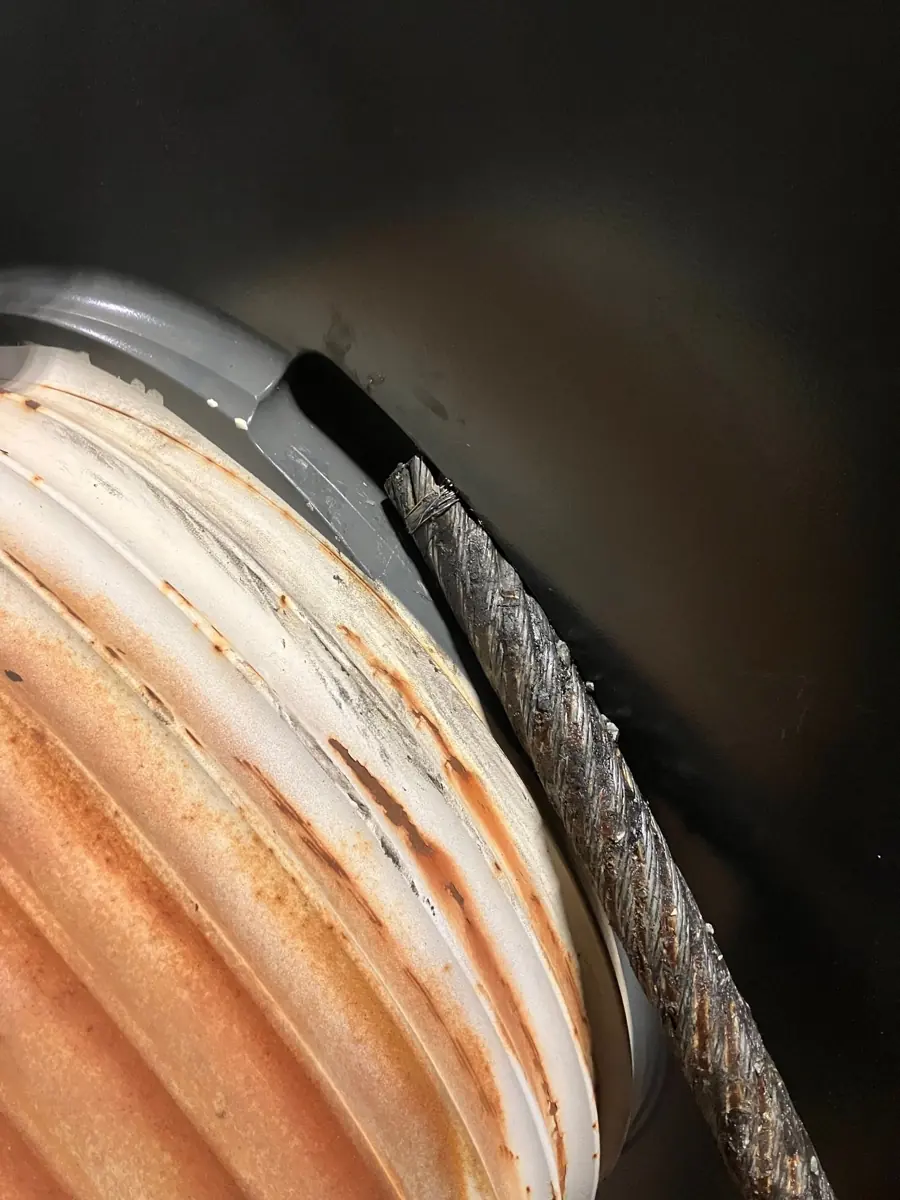
Rope ends and fittings: poor seizing lets strands loosen and the rope unlay from the end.
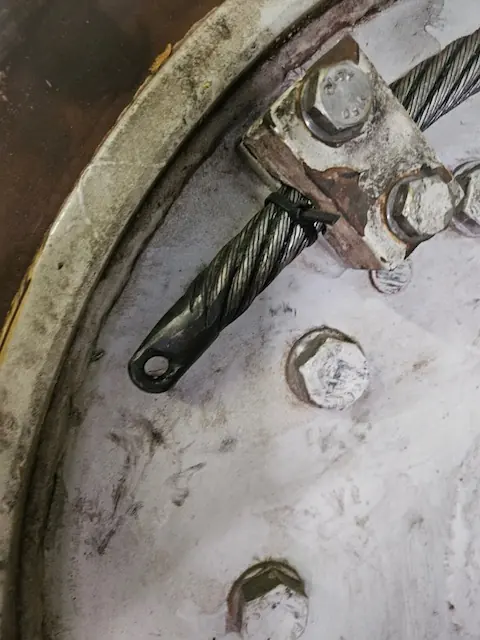
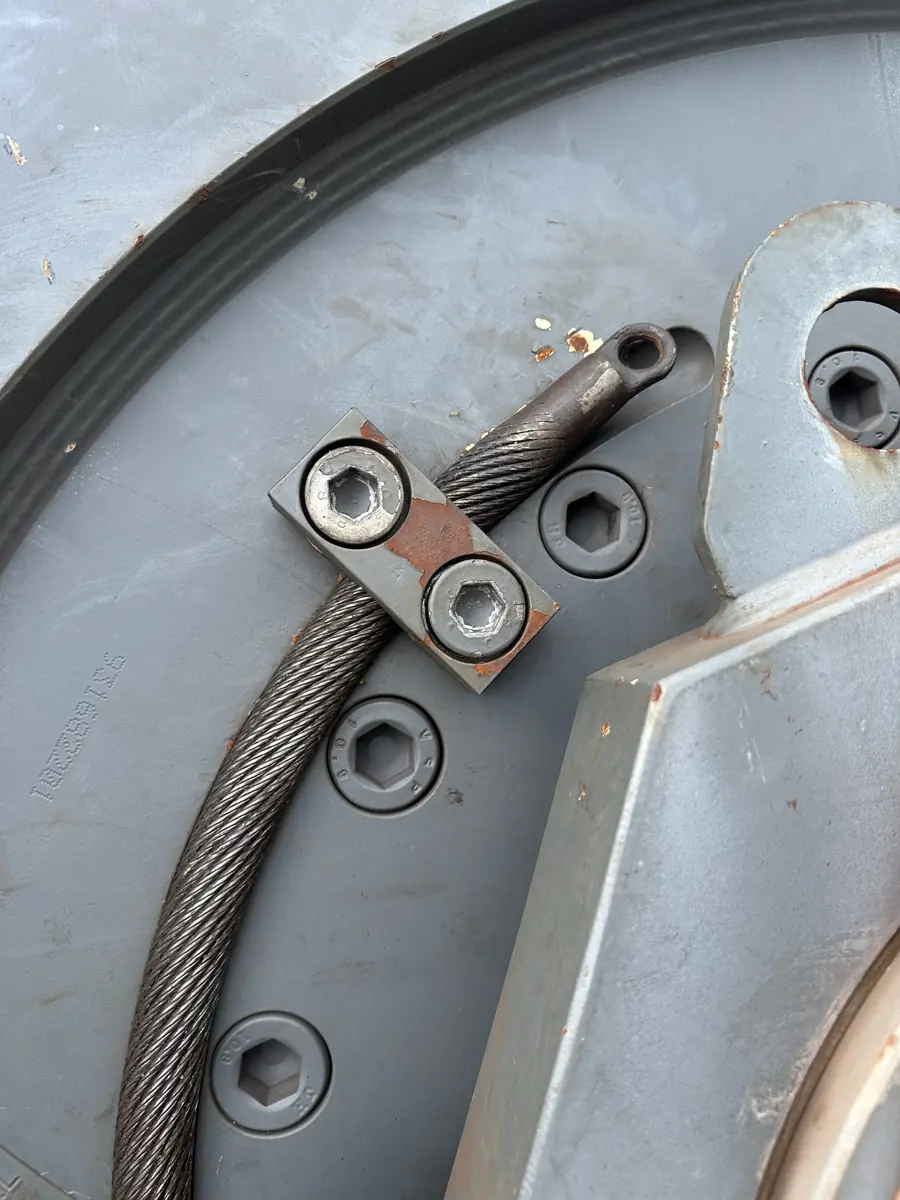
Rope end at the drumImproper end seizing: the strands are starting to loosen at the rope end.Rope end at the drum anchorA welded pulling eye on the rope end, clamped at the drum anchor.Liebherr 280 HC-L luffing tower craneWelded pulling eye used for hoist rope installation.LeTourneau RTG craneNon-standard swaged rope end at the drum anchor. Order the replacement to the exact end dimensions in the OEM specification, not by the rope size alone.
Sheaves and drums
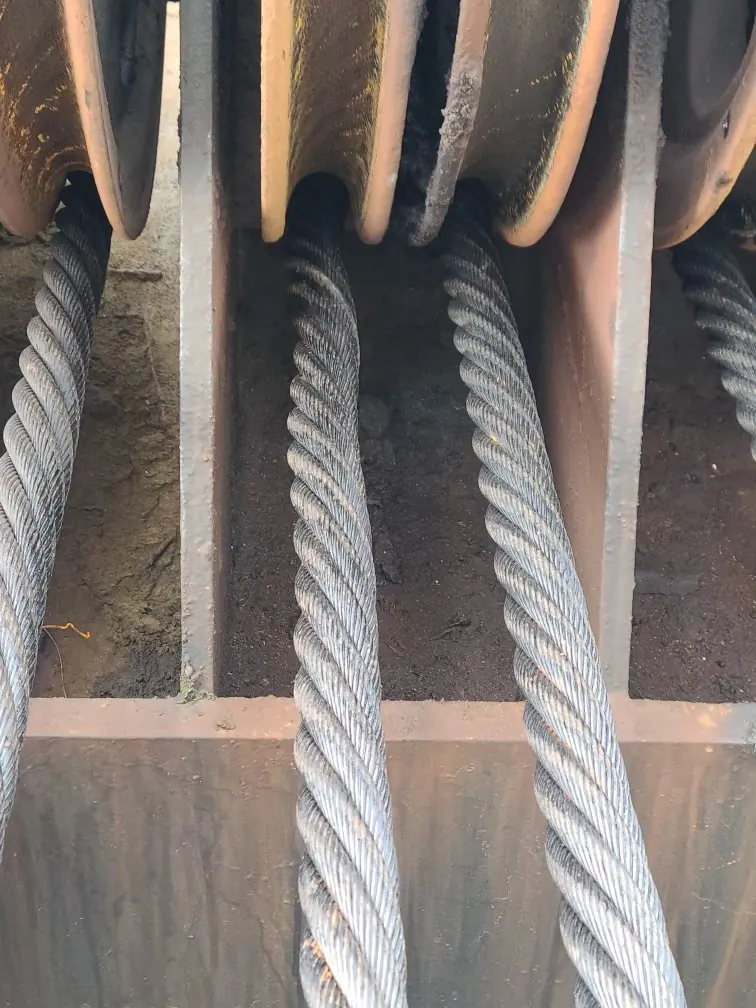
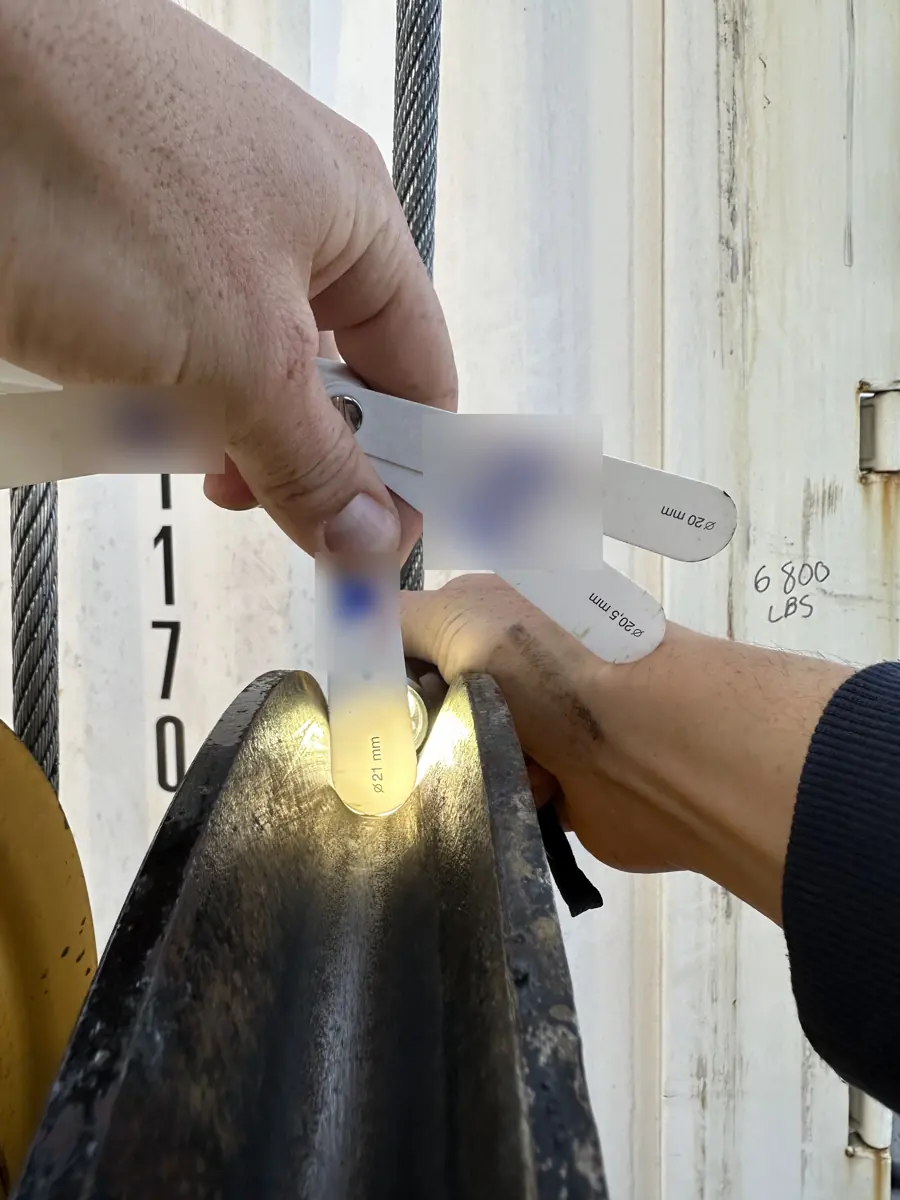
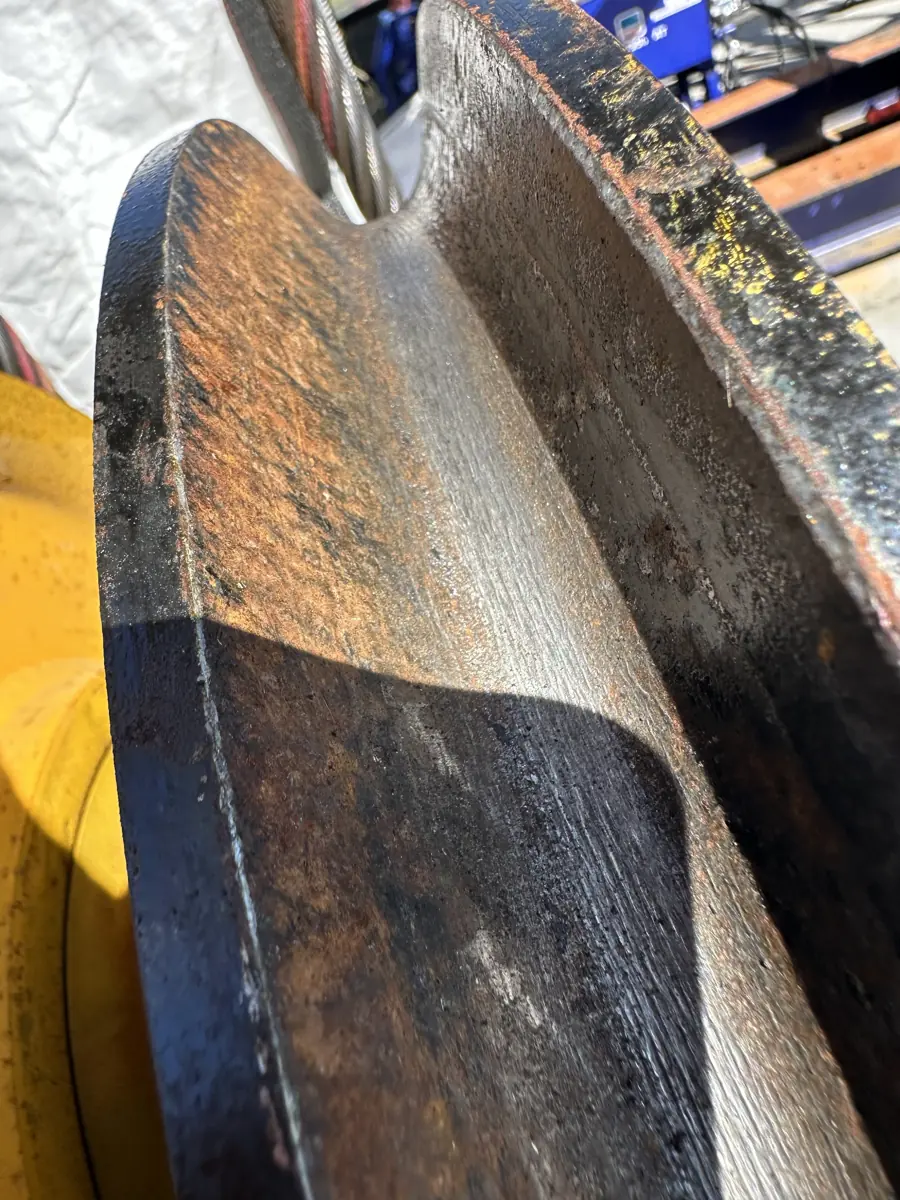
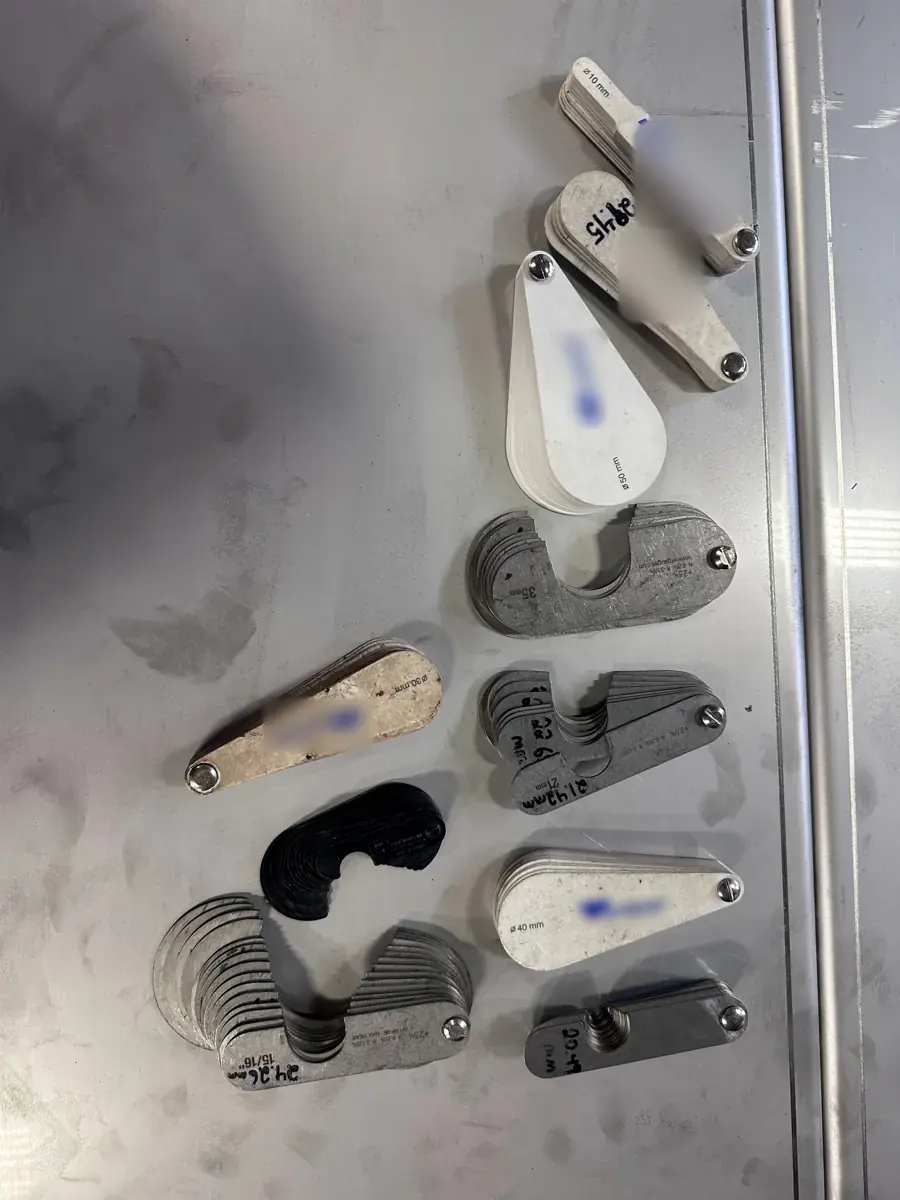
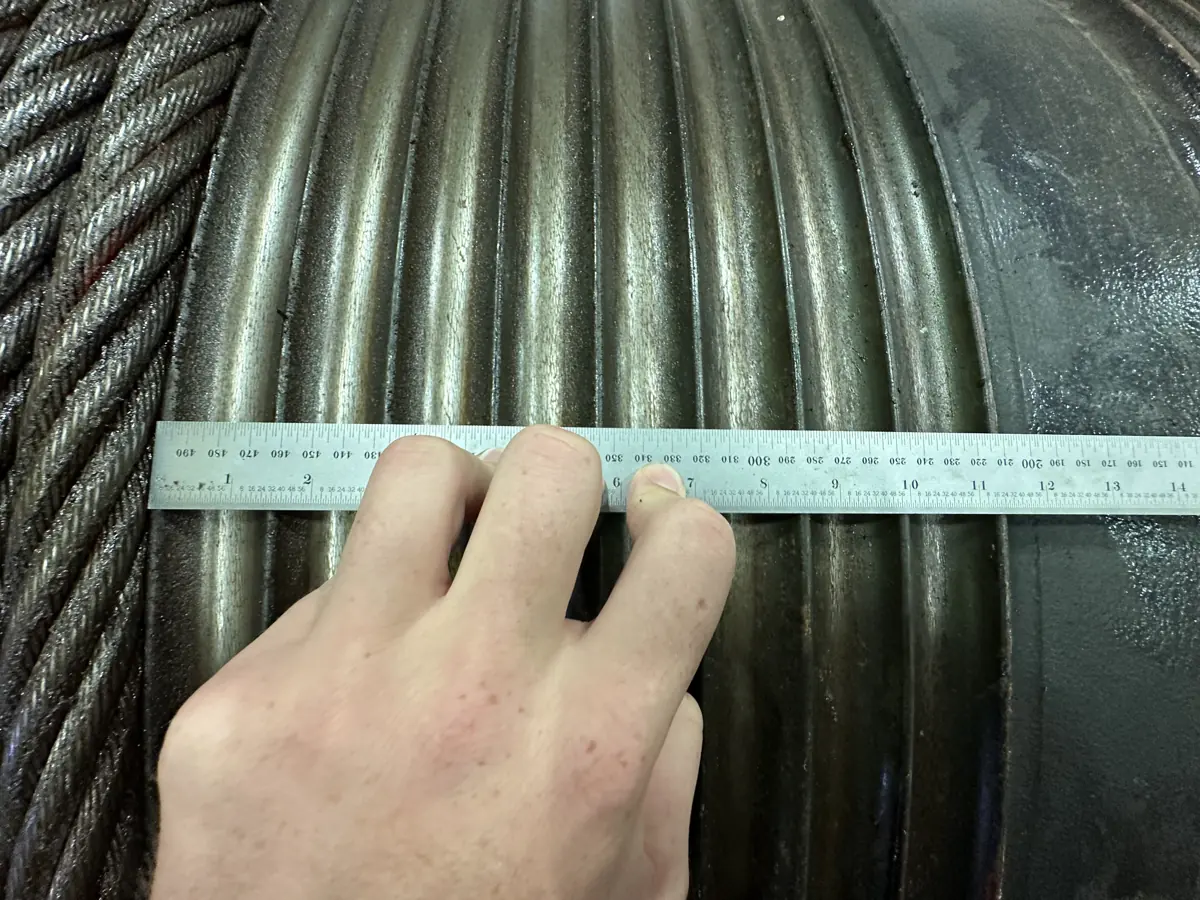
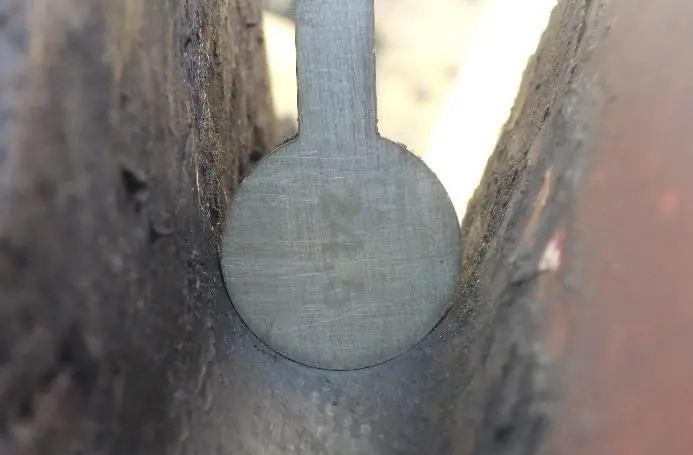
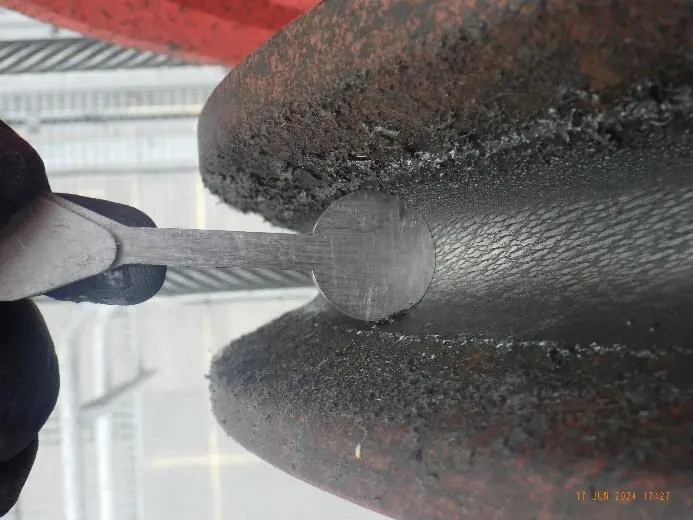
Worn, pitted or grease-packed grooves and damaged drums destroy new rope. These are the sheave and drum checks from our inspections, done with groove gauges in 0.25 mm steps and a straight edge across the drum grooves.
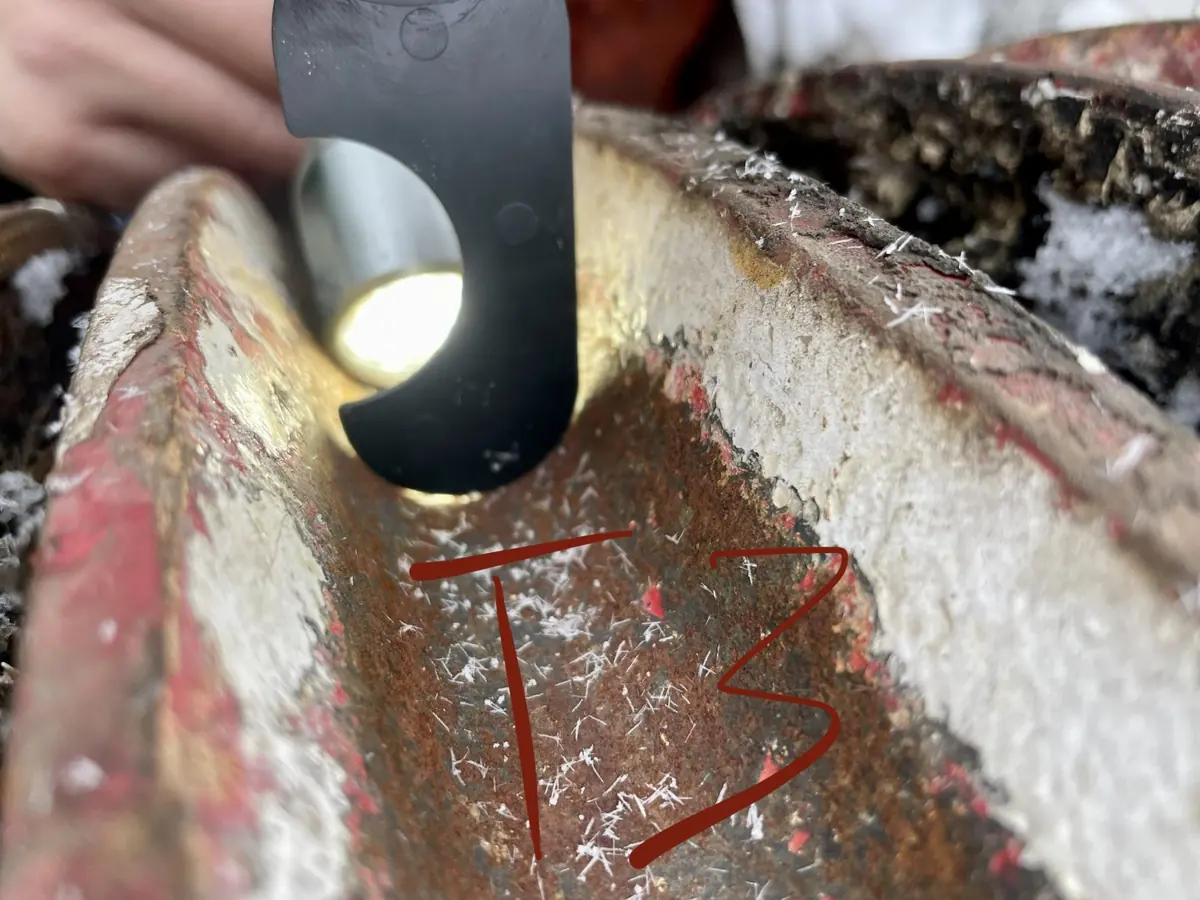
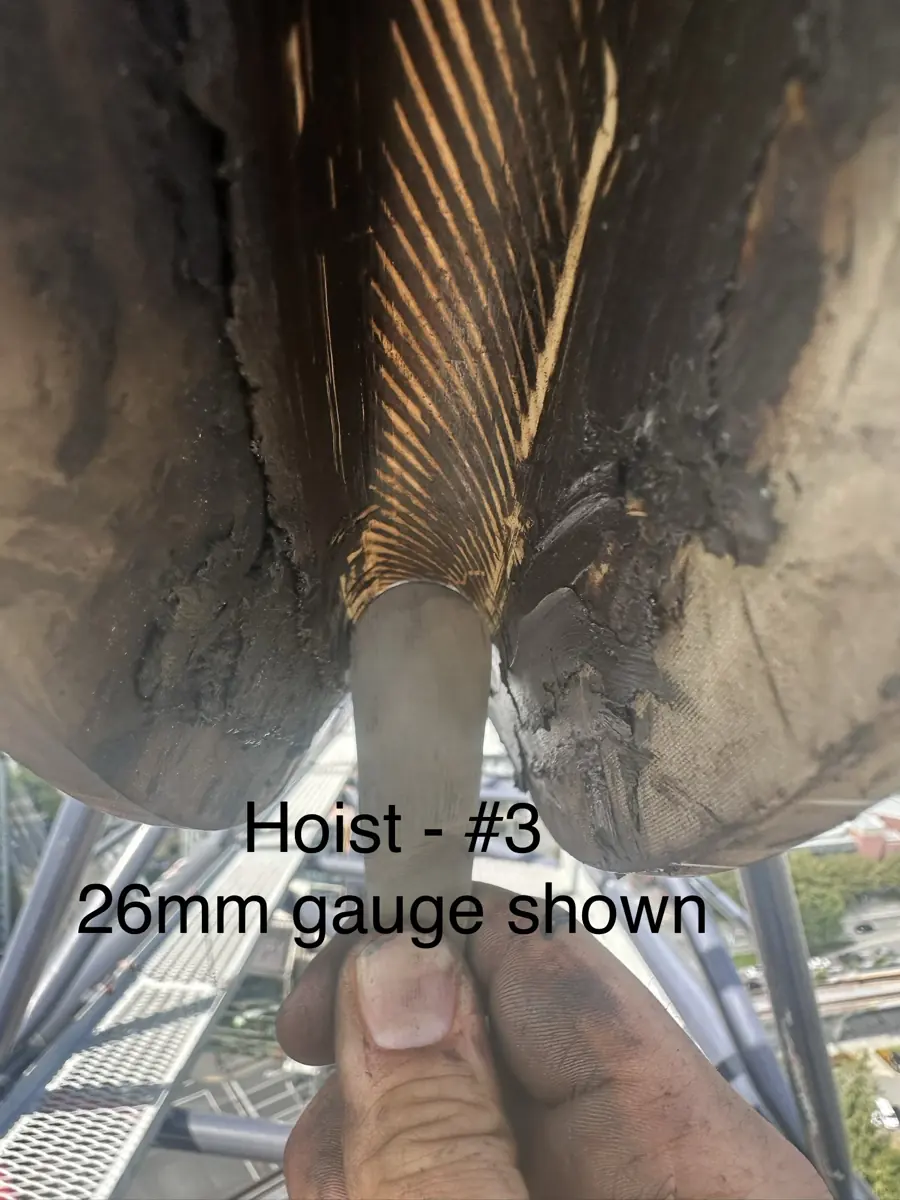
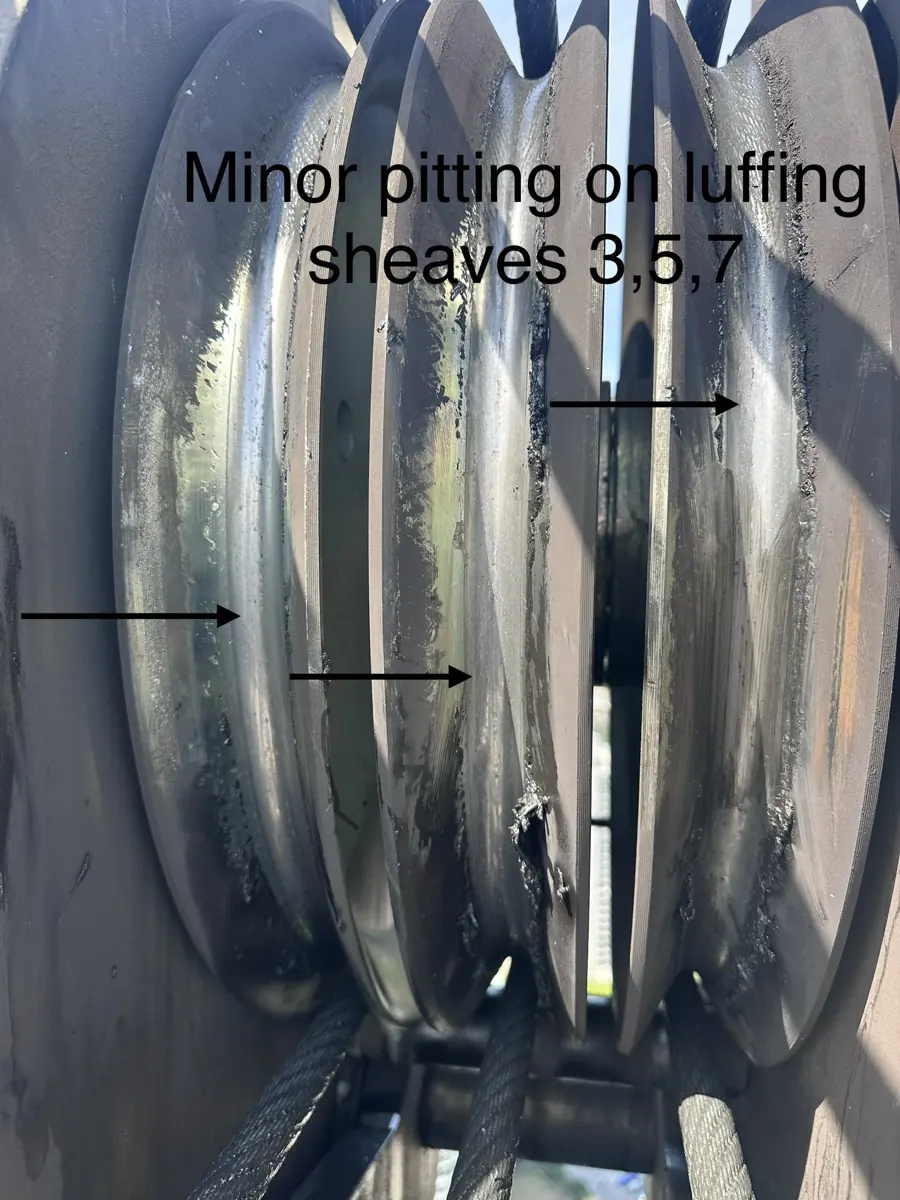
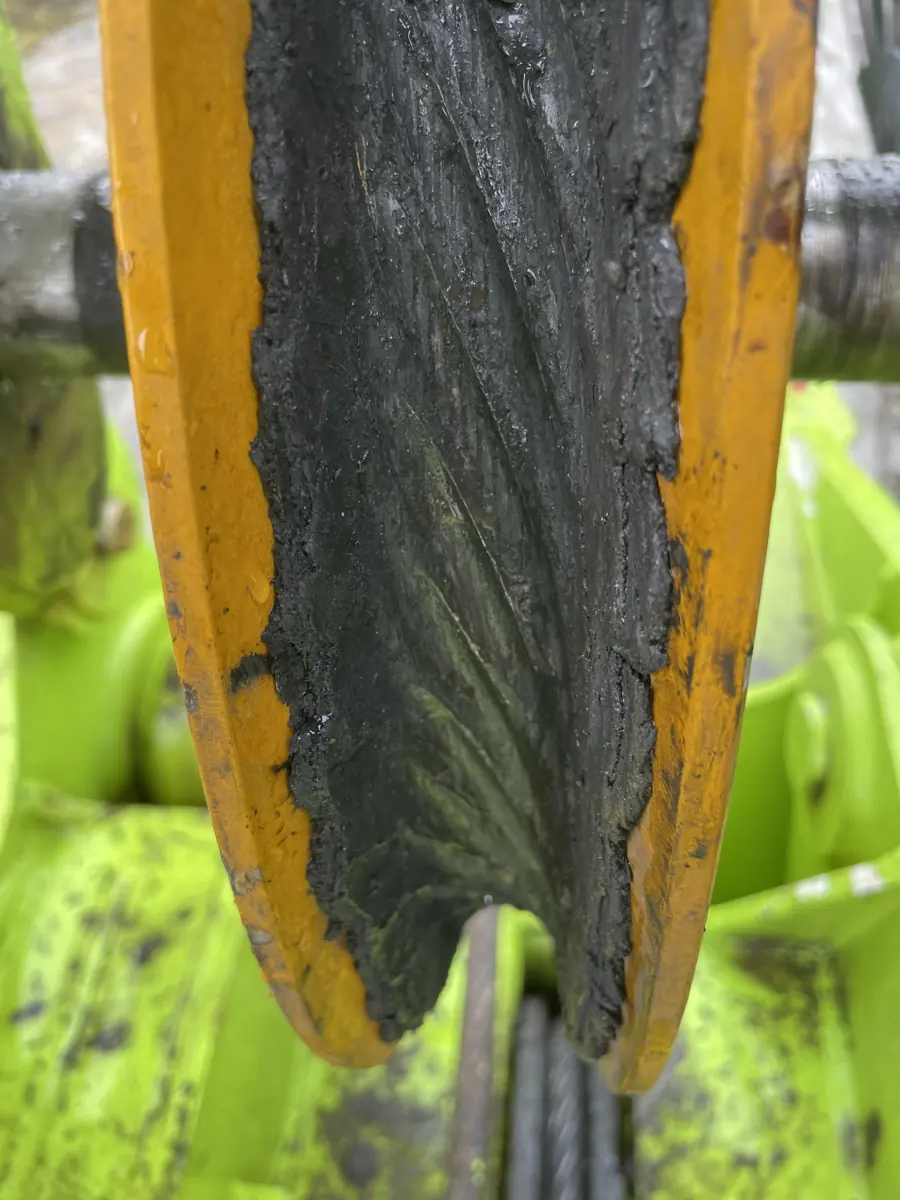
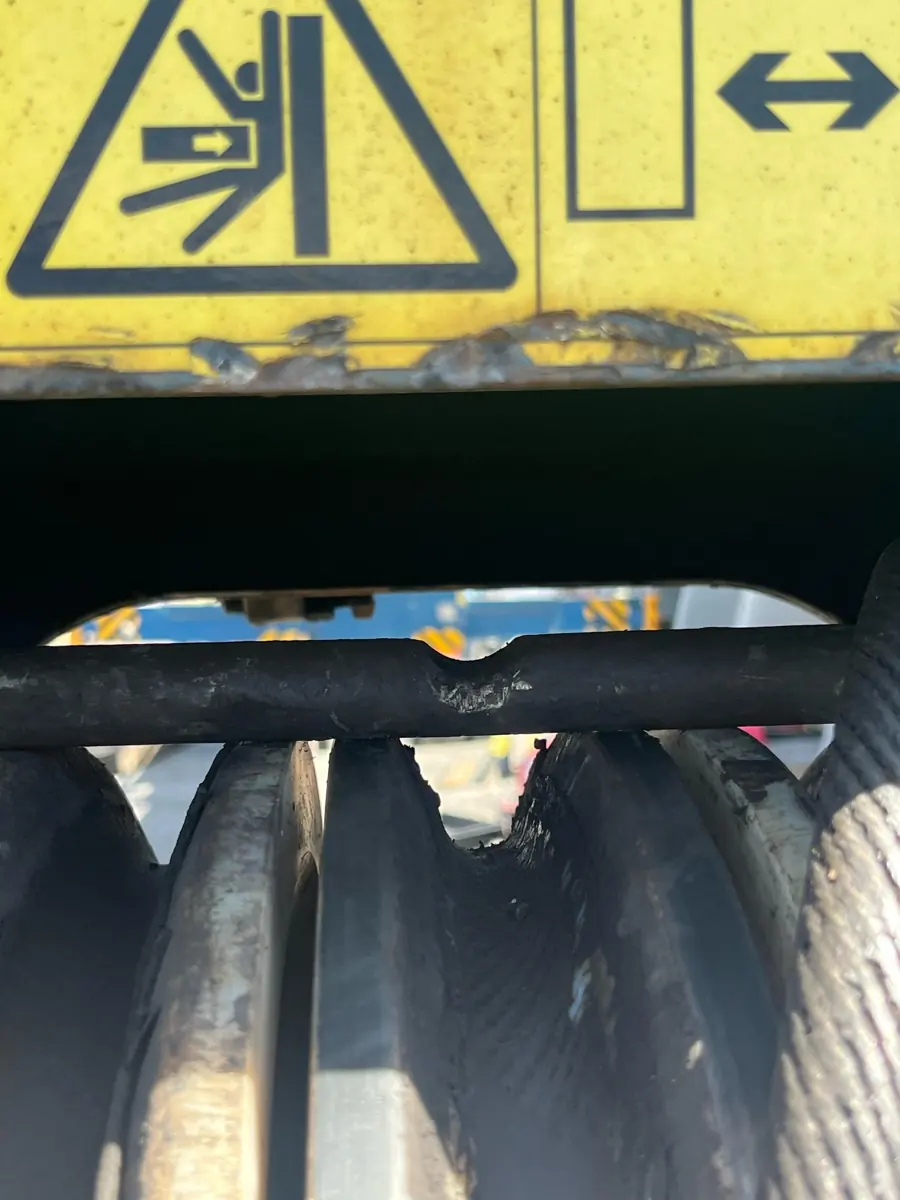
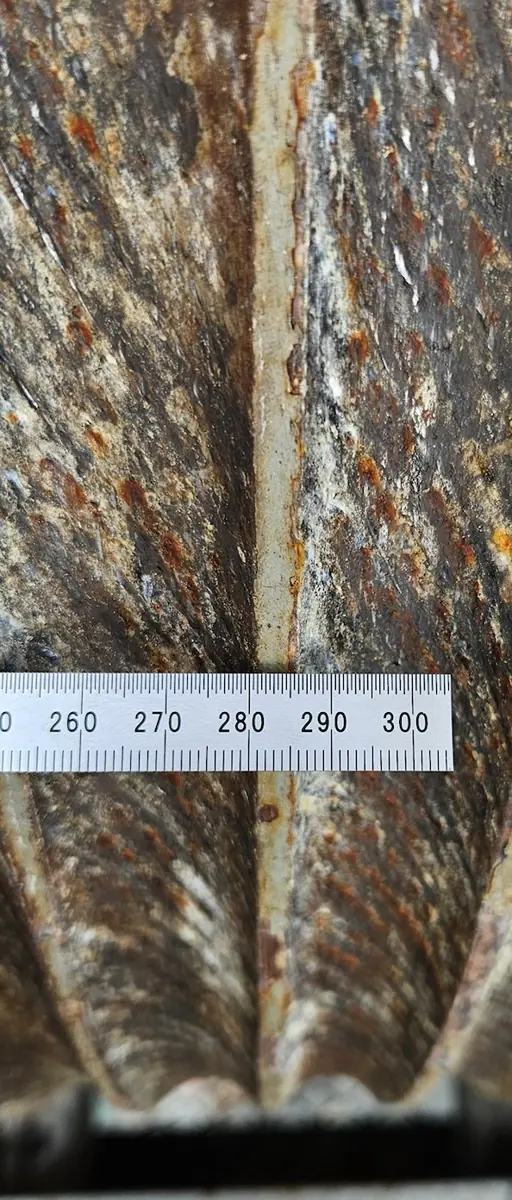
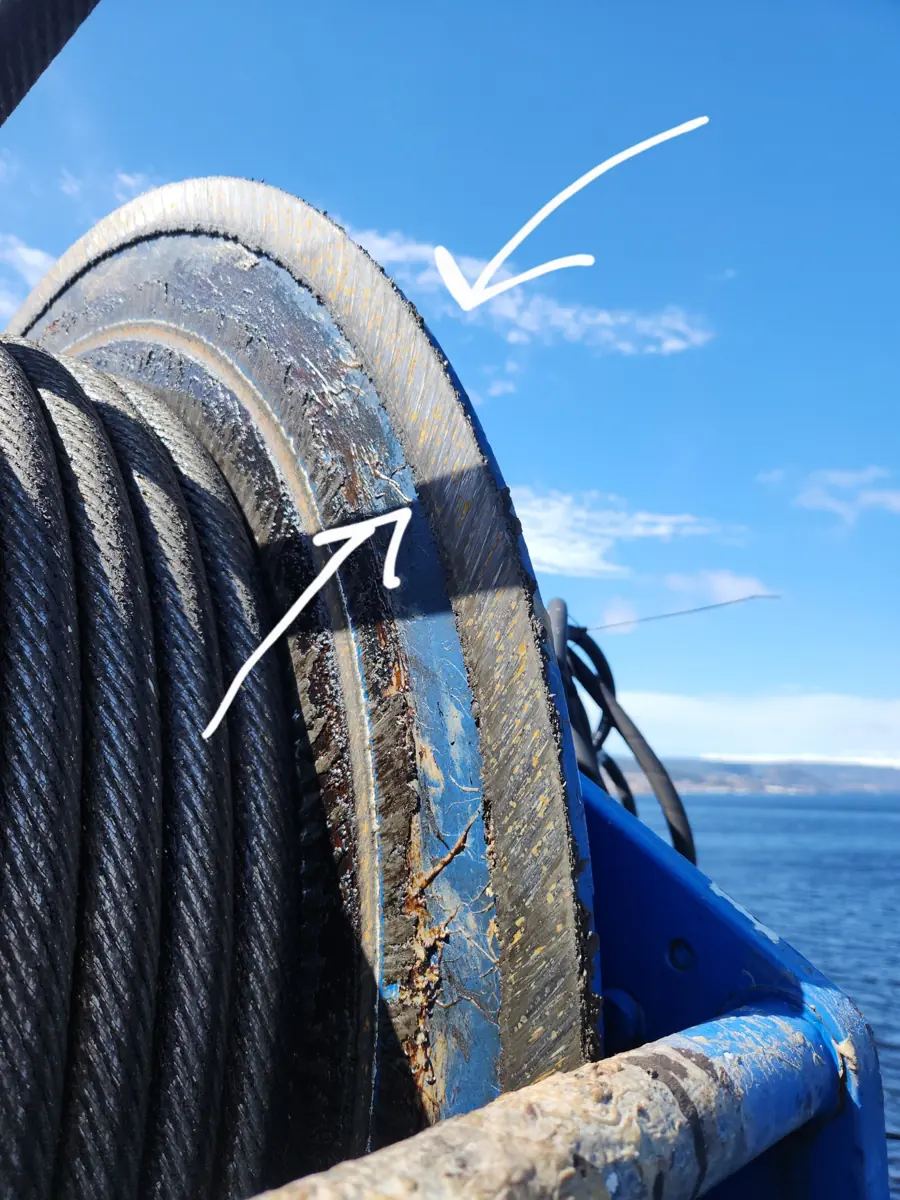
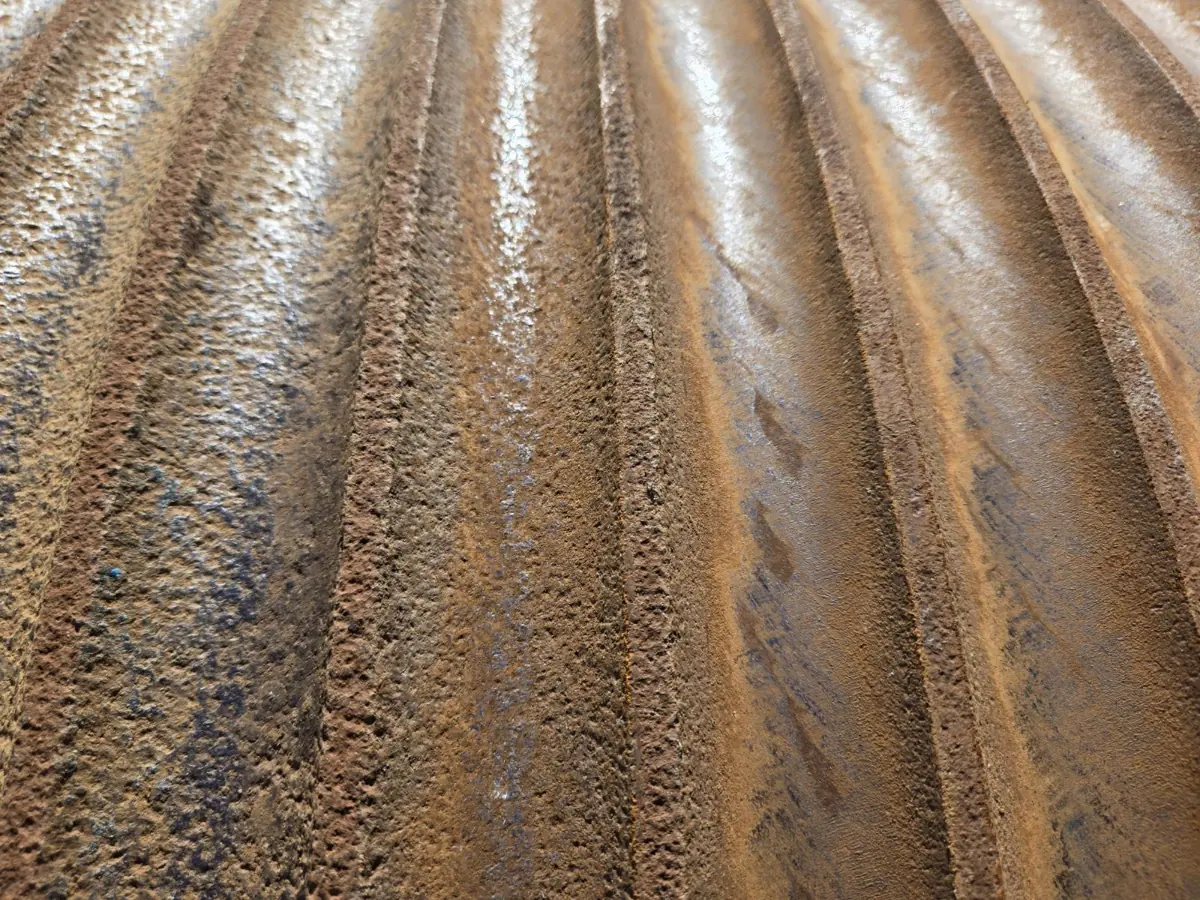
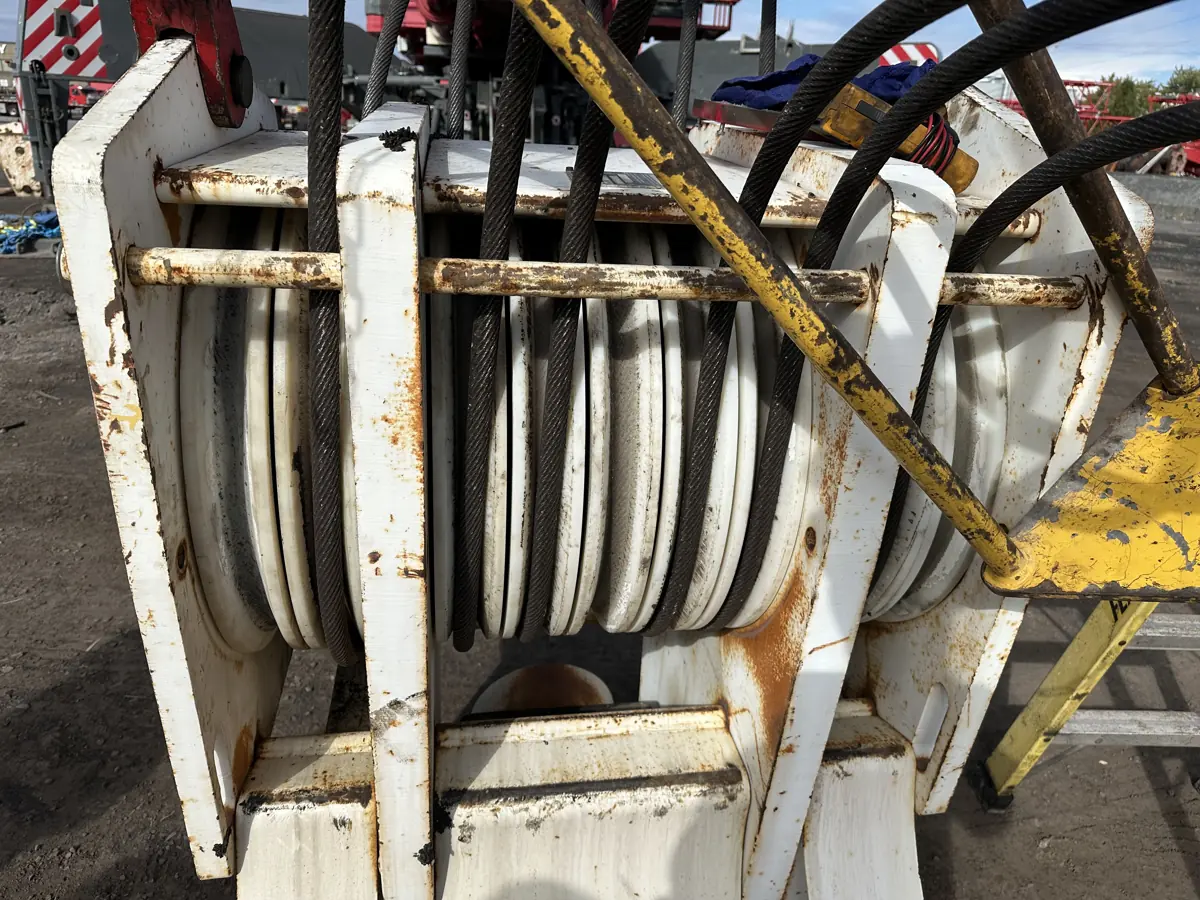
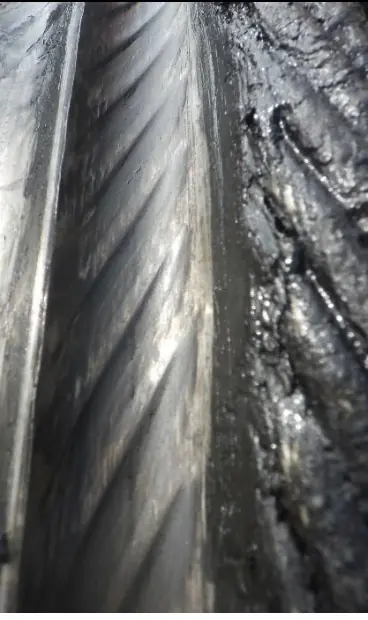
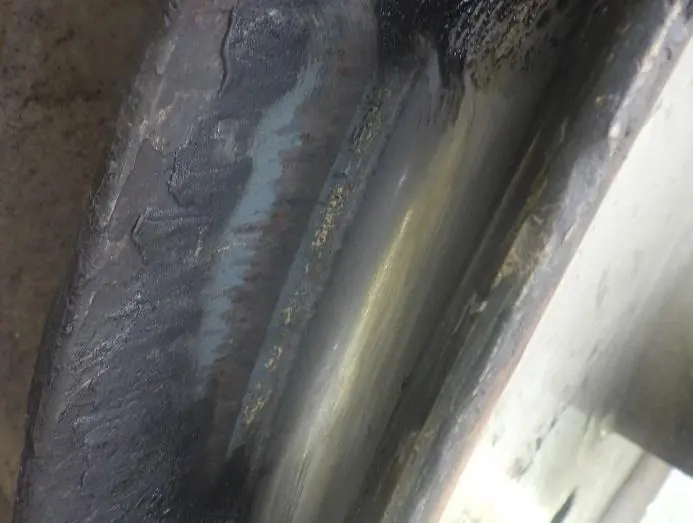
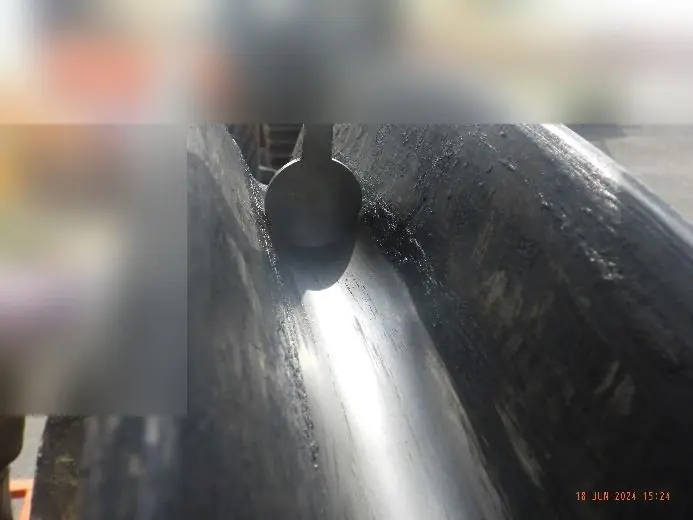
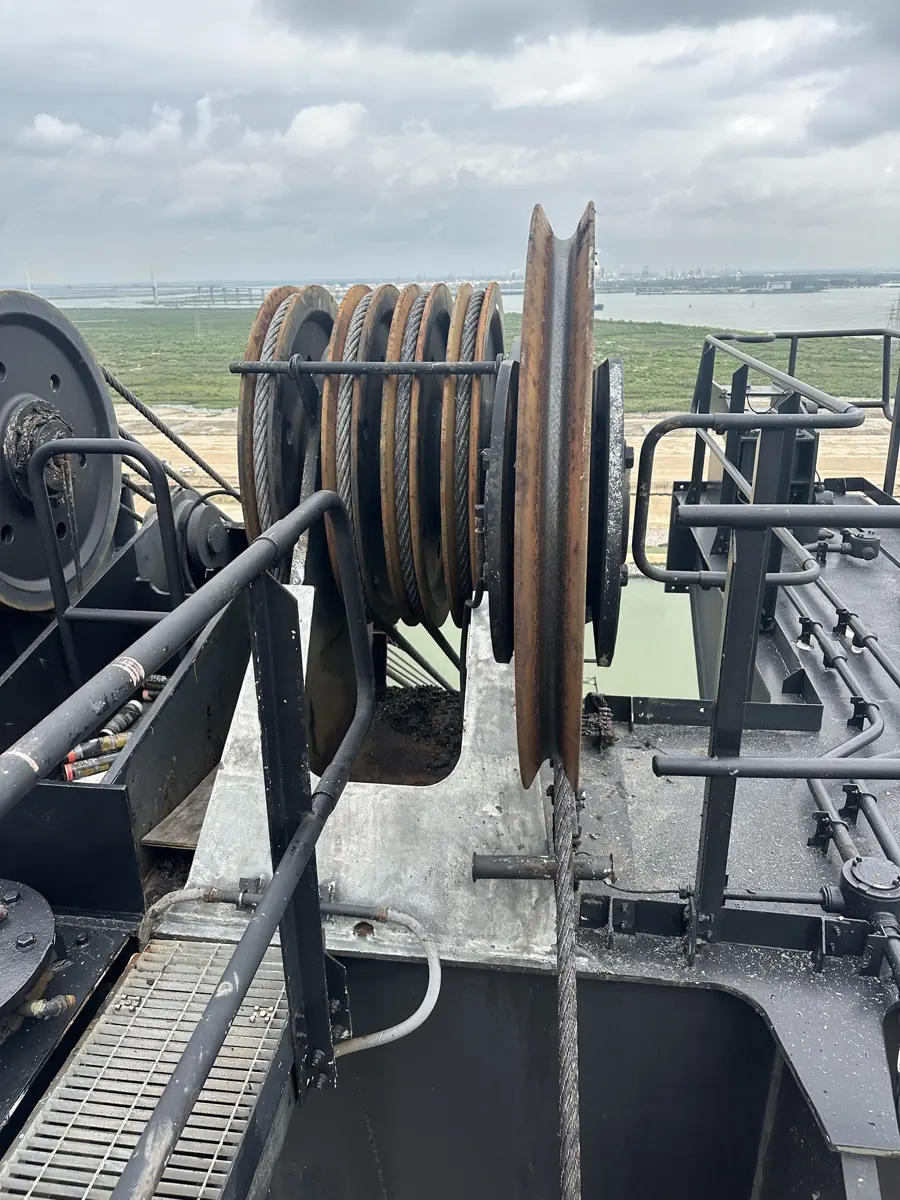
Manitowoc 4100 crawler crane, boom hoist sheaveA worn-out boom hoist sheave: the groove gauge no longer seats in the worn, rusty groove.ZPMC ship-to-shore container crane, hoist sheaveHardened grease built up in the hoist sheave groove.Jaso J380PA tower crane, nylon hoist sheave 3Negative rope imprints and a worn groove in a plastic (nylon) hoist sheave, checked with a 26 mm gauge.Jaso J380PA tower crane, luffing sheavesMinor pitting marked on luffing sheaves 3, 5 and 7.Bauer BG 45 drilling rig, fleeting sheaveNegative rope imprints and excess grease in the sheave groove. Replace a sheave like this before fitting new rope.Terex Explorer 5800, sheave keeper pinSheave keeper pin notched by the hoist rope after the rope was reeved over the pin.Potain MR 615 luffing tower crane, hoist drumMeasuring drum pitch to accurately specify diameter tolerance, improve spooling behaviour and increase rope life.Fixed port cargo crane, hoist winchWorn, gouged drum flange (arrows) from a bad fleet angle.Clyde boom hoist drum corrosionSevere corrosion and pitting in the boom hoist drum grooves.Overhead bridge craneSheave groove not matched to the rope diameter, checked with groove gauges.Overhead bridge craneNegative impressions on a steel sheave: the old rope's pattern is worn into the groove and will damage a new rope.Sheave gaugesVarious examples of steel and plastic sheave gauge designs and shapes.ZPMC ship-to-shore craneMeasuring drum pitch: the spacing of the drum grooves, checked with a steel rule.Liebherr LTM 1400-7.1 mobile craneSheave groove inspection on the hook block.Port RTG cranePort RTG crane with a wrong lay direction rope installed. The rope's pattern is worn into the drum as negative impressions.Liebherr P125L ship-to-shore craneTrim beam deflection sheave worn on the flange. Wear like this changes the groove profile and wears the rope's outer wires.Liebherr P125L ship-to-shore craneSpreader sheave groove worn down to the rope's nominal diameter. The gauge sits on the groove bottom with no clearance, so the rope is squeezed on every pass.Liebherr P125L ship-to-shore craneSlight negative rope imprints in a boom hoist deflection sheave. Caught early, the sheave can be replaced before it marks a new rope.Liebherr RTG craneNegative rope imprints worn into the hoist drum. A new rope laid into these grooves wears on the imprint edges.Liebherr RTG craneHoist sheave checked with a groove gauge: the groove is undersize for the rope, which wears the rope surface and shortens its life.Ship-to-shore container craneHeadblock sheave groove checked with a gauge. A correct groove supports the rope across its full width.Ship-to-shore container craneFleet angle issue at the boom sheaves. A rope that enters a sheave at too great an angle rubs on the flange and wears both the rope and the sheave.
Other damage
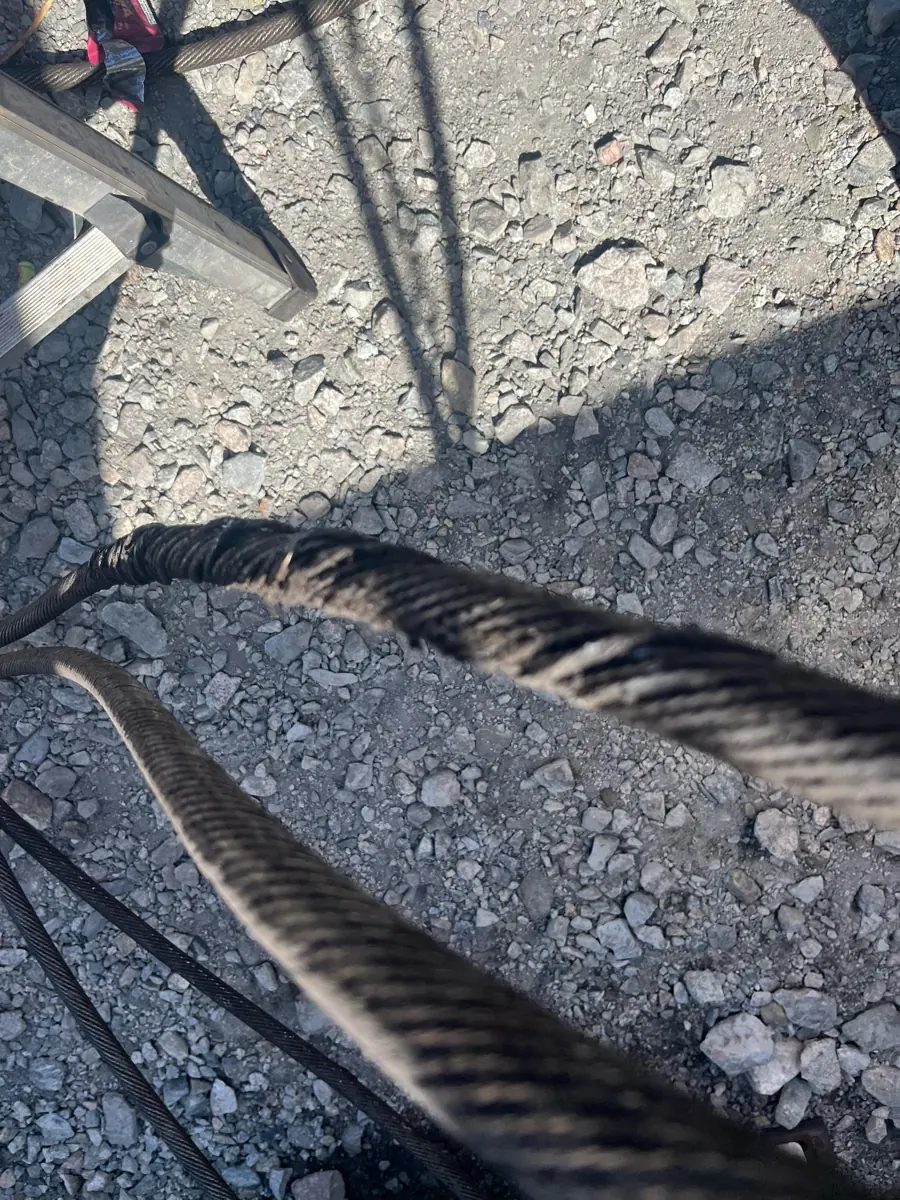
High strands, distortion from rope of the wrong lay direction, proud wires and a cabled hook block.
18x7 rotation-resistant ropeA high strand standing above the others, from mechanical damage.Mining rope shovel, hoist ropeDistorted hoist rope on a rope shovel, caused by fitting rope of the wrong lay direction.Mining rope shovel, hoist ropeClose-up of the same rope: the strands open up and the inner strands push out.Floating crane, hoist ropeProud wires: outer wires pushed up out of the rope by tight, undersized sheaves.Terex SK 575 tower crane, 26 mm hoist ropeCabling: the hoist rope falls twisted together above the hook block, from tight sheaves and the wrong rope for the job.LeTourneau RTG craneIncorrect rope selection: two right-hand lay ropes on a single-layer double drum. The two halves of the drum are grooved in opposite directions, so they need one right-hand and one left-hand lay rope.Konecranes quay craneHoist rope external damage from a container (marked): outer wires flattened and scraped where the rope was struck.Bauer BG 55 drilling rig, kelly winch ropeMechanical damage on a kelly winch rope after it jumped a sheave: a broken wire standing out of the strand, with rust along the damaged section.
All specifications must be verified before purchase and before installation. Rope specifications can change between machines of the same model and between model years. Confirm against your machine's logbook, reeving and the manufacturer's documentation before ordering. Inspection and discard decisions remain those of your competent person.