By Dean McDonald, founder, Crane Rope Solutions
On offshore cranes, whether it's Seatrax, Huisman, Sparrows or Oil States, the problems are usually the same: the luffing winch doesn't spool properly, or the wrong rope is on the hoist winch and it gets shock loaded.
Shimmable plain drums
Offshore cranes often use plain, shimmable drums. They're useful because, unlike Lebus-grooved drums, the drum width can be adjusted to suit different rope diameters: imperial or metric, two batches of rope that differ slightly in size, or a rope whose diameter has decreased through its service life, so it spools properly again.
The downside: every wrap on every layer crosses over the wrap beneath it and isn't supported by the layer below. That crushes the rope everywhere and reduces its diameter further. The value of shims also depends on actually adjusting them when spooling gets worse, and that job is often overlooked.
Hoist ropes and sea state
The biggest mistake I see is fitting the same hoist rope construction a tower crane would use. Offshore cranes deal with dynamic forces such as sea state. Even a gentle rolling sea can shock load the rope, and tower crane ropes aren't designed to tolerate that.
The best hoist rope design here is a rotation-resistant rope with plastic between the inner and outer layers and larger inner strands, which makes it much harder for wires and strands to come out of place.
From our inspections
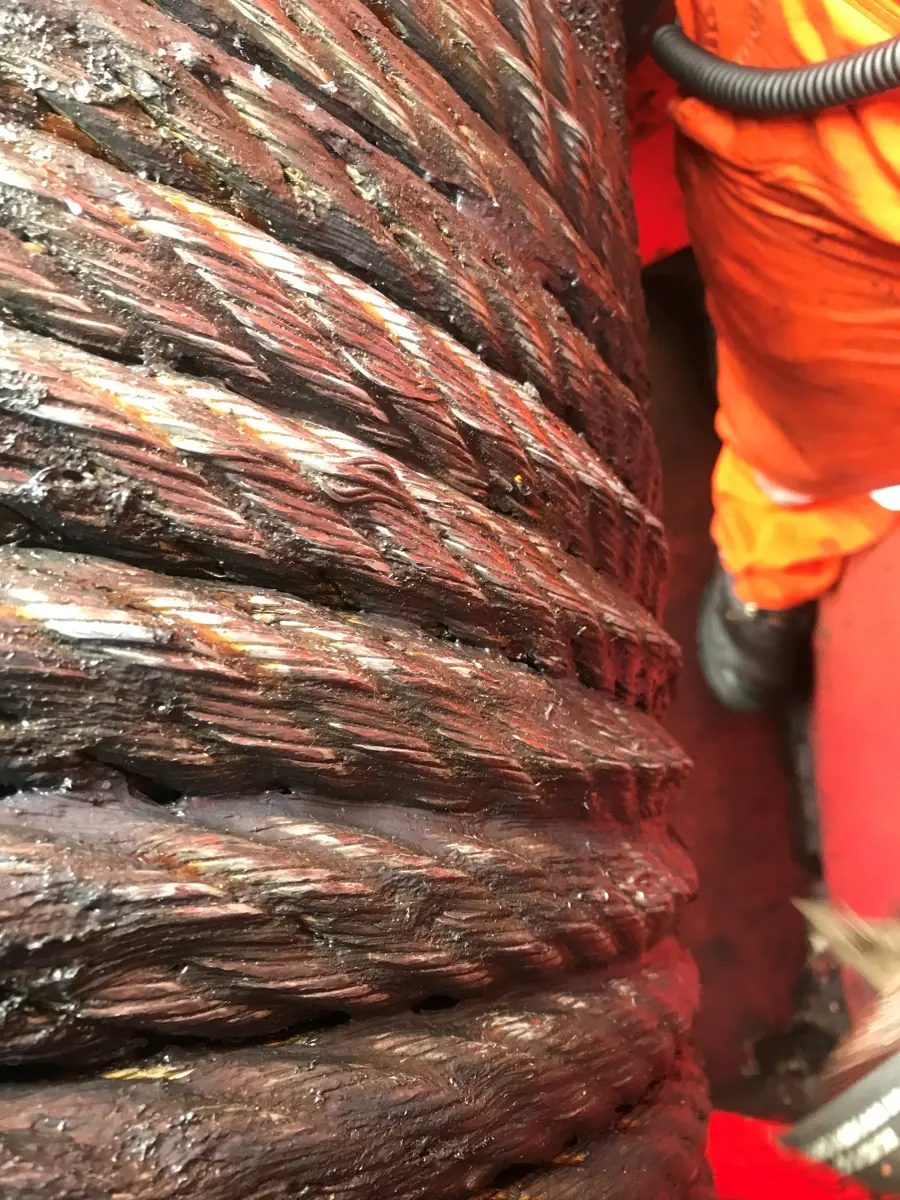
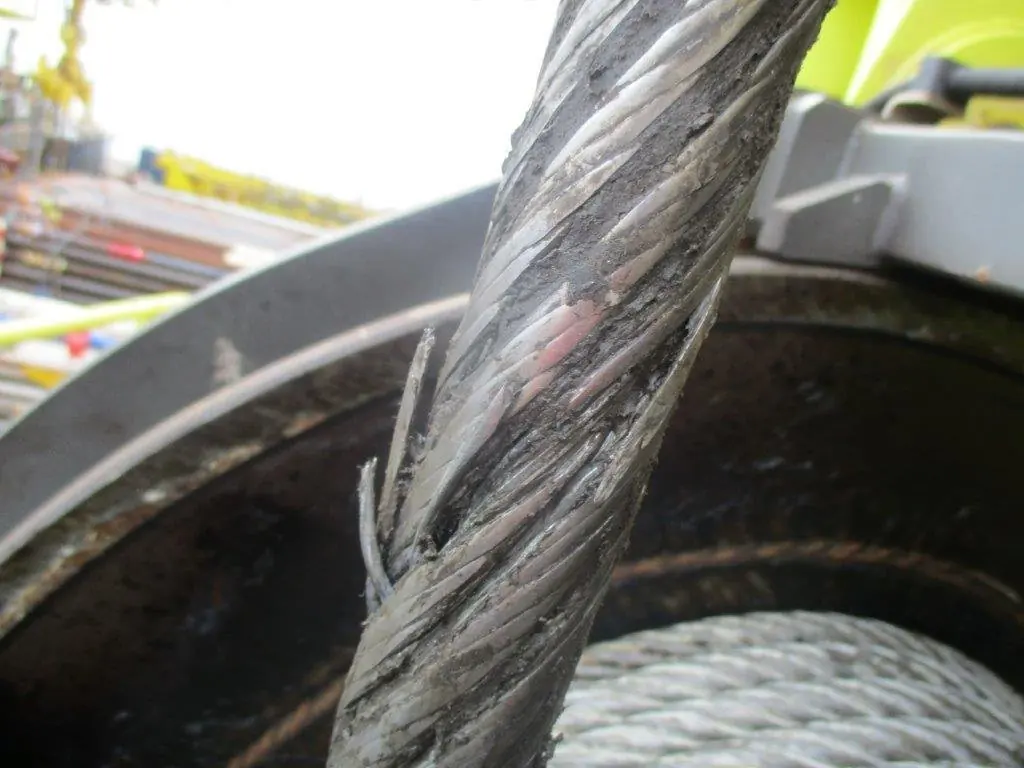
Case study: Offshore luffing ropes lasting 2 to 4 months: what we found
Related: API RP 2D inspection and removal criteria · Synthetic sheaves and rotation-resistant rope