By Dean McDonald, founder, Crane Rope Solutions
The situation
An operator’s newer offshore pedestal cranes were going through luffing ropes every 2 to 4 months. Their typical life was 6 to 8 months and their best was 12. The older cranes these replaced had managed 24 months, and that was the target.
The ropes were 42 mm compacted, galvanized Lang’s lay ropes on multi-layer drums. Maintenance was hand-greasing a few lower wraps every other month. The lower wraps were also hard to pre-tension to the full 10% with the spooler, for safety reasons. At a sister installation, using a pressure lubricator properly had doubled rope life.
Gathering the evidence
We asked for videos of where the breaks were, close-ups of the breaks both greased and cleaned, sheave measurements and lubrication intervals. We supplied sheave gauges from 30 to 50 mm so the crew could measure their own grooves.
“Please do your best to capture the actual wire breaks themselves as the wire ends are very important to us.” (Dean McDonald)
What was wearing the ropes out
The rope maker’s engineers explained the mechanism:
- As the rope wears, its diameter drops and the way it winds on the drum changes. The outer wires then wear faster and break.
- Greasing only delays this.
- Drum flange wear was being ignored and got worse with every rope change. A rope can’t wrap cleanly against a badly worn flange.
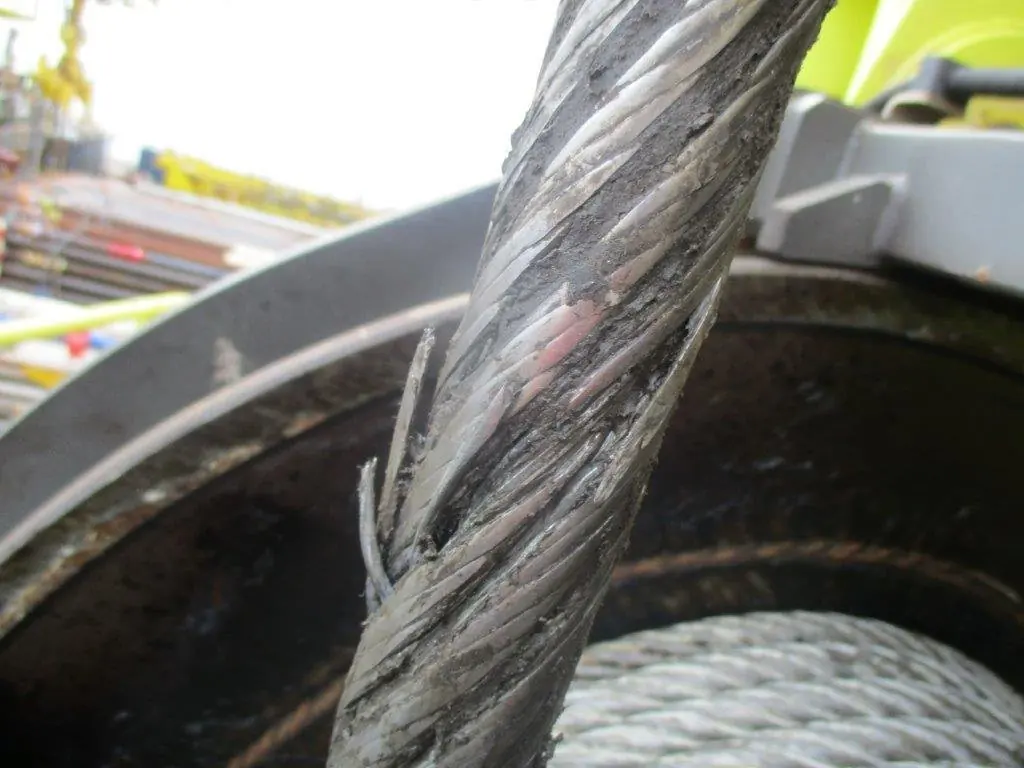
- The valley breaks came from diameter reduction and a shortening of the lay length (twist) caused by poor winding. That is why they clustered in the cross-over zones.
What changed
- Consistent cleaning and relubrication. One rope maker’s manual says a dry rope in bending fatigue may reach only about 30% of the life of a lubricated rope. See relubricating crane rope.
- Slip and cut before breaks appear, to move the cross-over zones to fresh rope.
- A larger diameter tolerance: from +2% to +4% up to +3.5% to +4.5% (unloaded), to suit the drum.
- Shim plates on the flanges and attention to flange wear.
The crews pointed out that the winch’s side-plate step is there by design, and that hot work for slip-and-cut is hard offshore. Both are real constraints, and they need planning, not just a recommendation.
The result, and the rope that went too far
By early 2026 the luffing rope on one crane had reached about 500 hours.
“This is around 2x the lifetime they were getting since we started working with them.” (Dean McDonald)
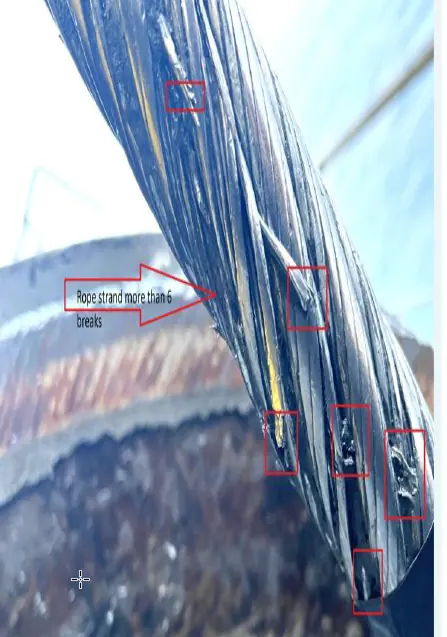
On another crane, a slip-and-cut recommended two months earlier hadn’t been done. That rope was found with broken wires 2 to 3 times over the ISO 4309 limit, including a cluster of 6 broken wires in one strand. The rope maker strongly advised against making any more lifts with it.
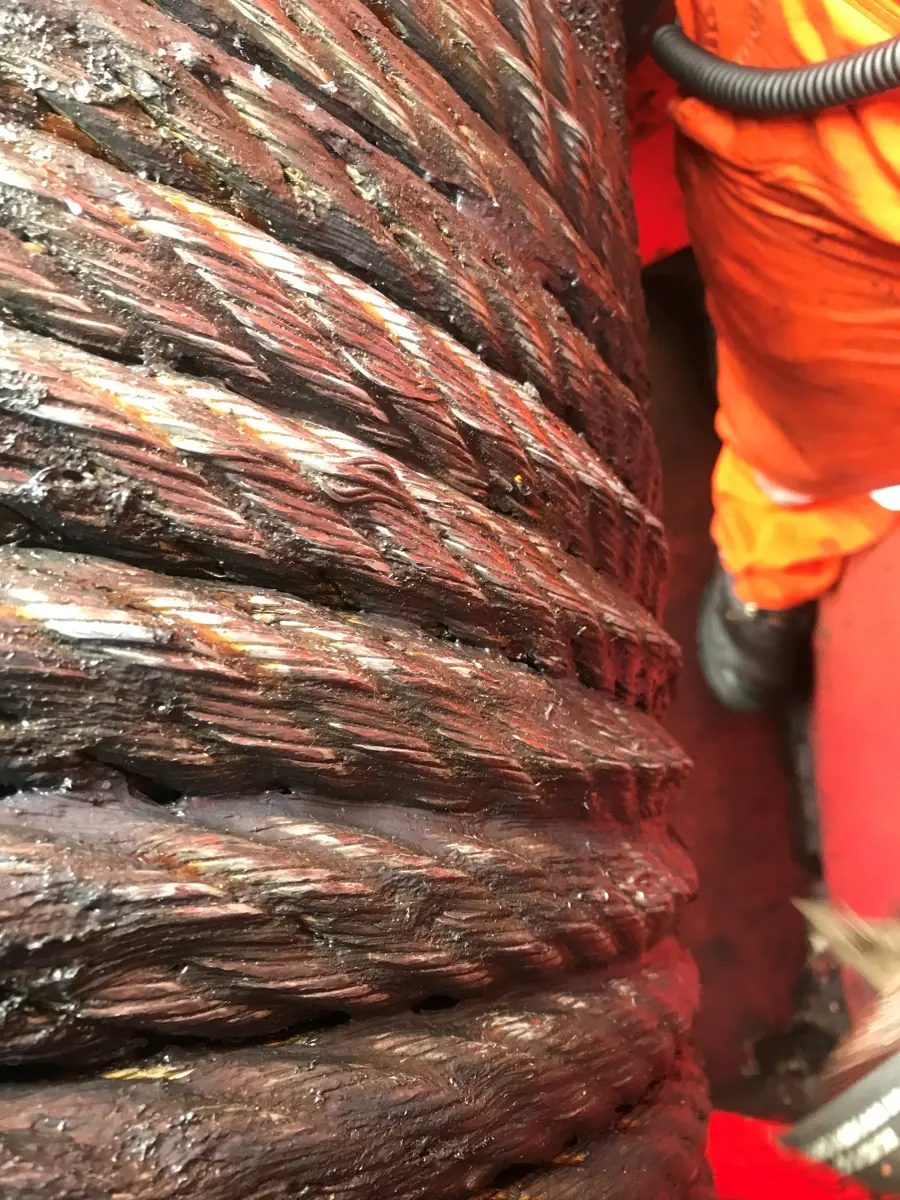
In a multi-layer cross-over zone, two loaded rope sections bear on each other in line or point contact. The pressure is very high, the lubricant film breaks down and the outer wires wear together, metal on metal. The first break is just the first visible sign of that shared wear, so the next breaks follow quickly.
Takeaways
- On multi-layer drums, slip-and-cut on schedule is cheaper than a rope.
- Measure and repair drum flanges. Each new rope inherits the old rope’s flange.
- Diameter tolerance and relubrication are both rope-life decisions, not just purchasing details.
- See also crown break or valley break?.
Photos
More from the field: all case studies