By Dean McDonald, founder, Crane Rope Solutions
Synthetic (nylon or composite) sheaves are a great invention. They cut weight at the boom tip, which can raise lifting capacity. They increase the rope's contact area, which can extend service life. They can even reduce the twisting effect of fleet angle.
Here's the catch. Most hoist ropes are rotation-resistant. In plain terms, the rope usually has three layers of strands laid in opposite directions, so the torque balances out and the rope doesn't want to spin or unwind.
Worn from the inside out
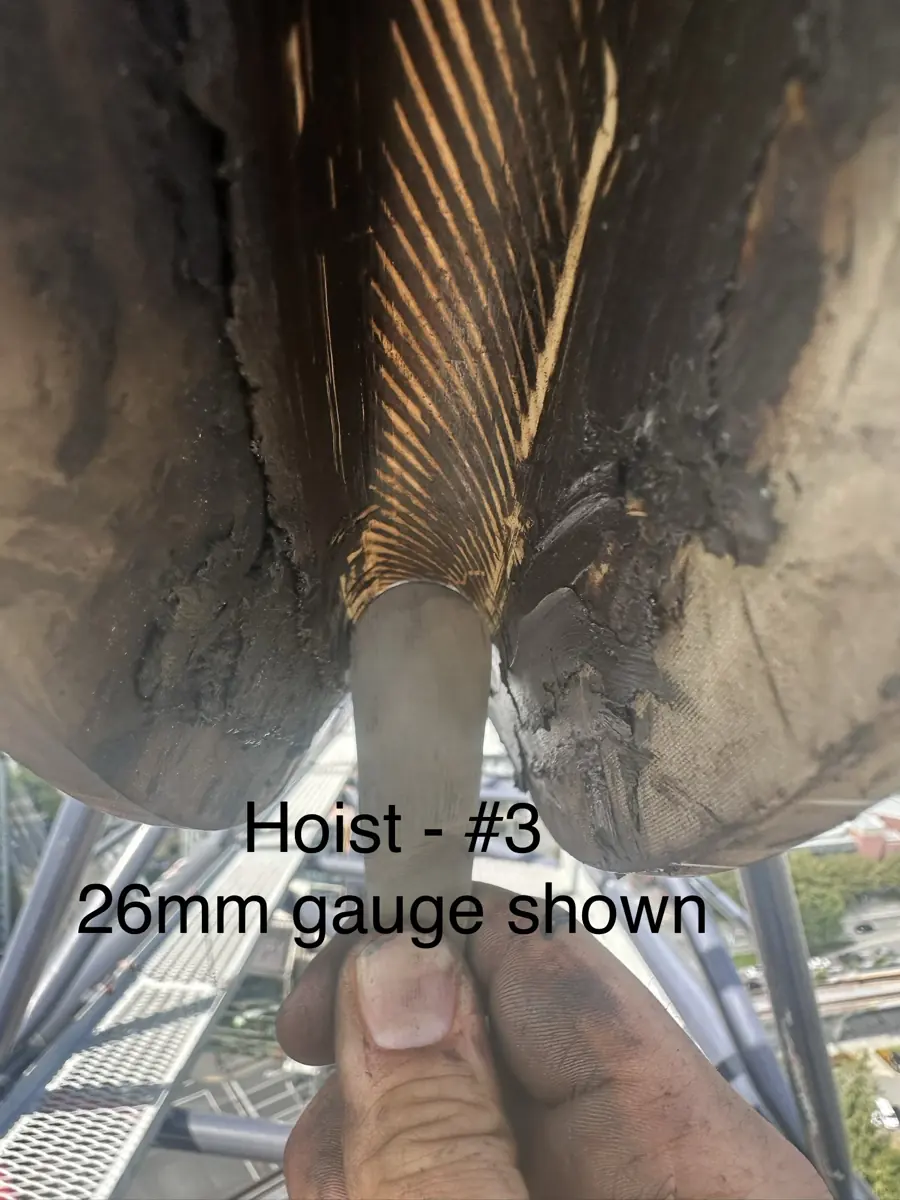
So now you have layers of steel, laid in opposite directions, running on a soft plastic sheave. Steel is harder than plastic, so the sheave wears, and the outer wires see very little wear. The inner layers, however, keep wearing against each other. Visual inspection for broken wires can then give a false pass: the rope has fatigued from the inside out, internal wear has let the lay length grow, and the rope is no longer rotation-resistant.
The standards recognise this. ISO 4309, CSA Z150 and CSA Z248 all note that where rope runs on synthetic or synthetic-lined sheaves, large numbers of wires can break inside the rope before any break shows on the outside (ISO 4309:2017 Clause 1 Note; CSA Z150:26 5.5.4.2 Note; CSA Z248:17 6.5.2.2).
Rope selection solves it
A high-quality three-layer rotation-resistant rope can be designed to wear from the outside first, but that's complex and expensive, and not as common as it should be. As rope technology has advanced, we now also see rotation-resistant ropes built with two layers, which are far more likely to show external wire breaks.
One caveat: some two-layer designs use uncompacted strands to improve bending. Where softer, uncompacted inner wires rub against compacted outer wires, the inner wires wear first, and that is what increases the lay length.
From our inspections
Related: Worn sheave grooves · Inspection standards