By Dean McDonald, founder, Crane Rope Solutions
What waviness is telling you
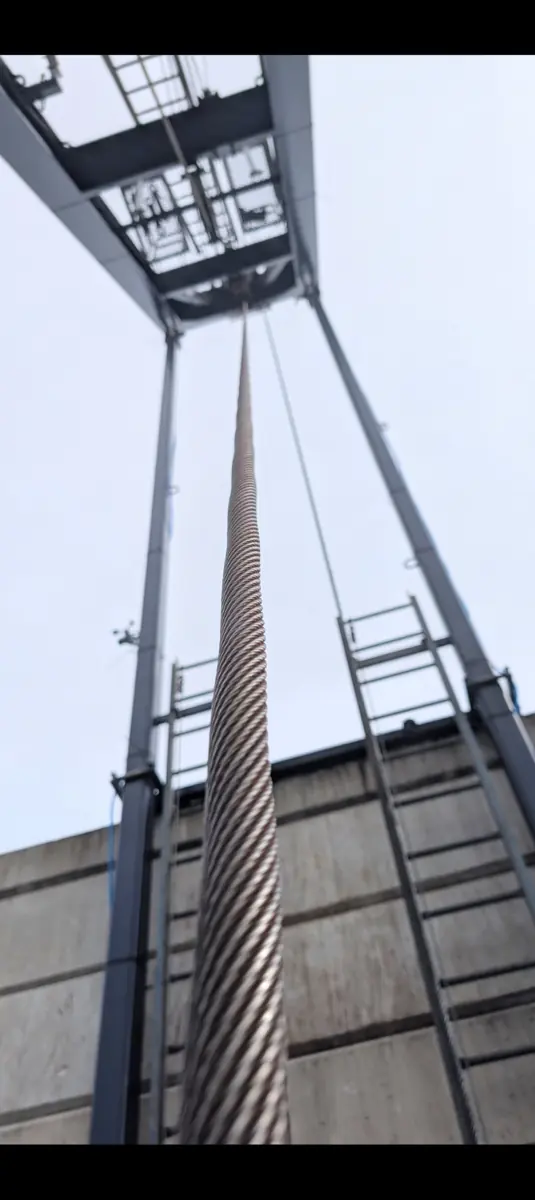
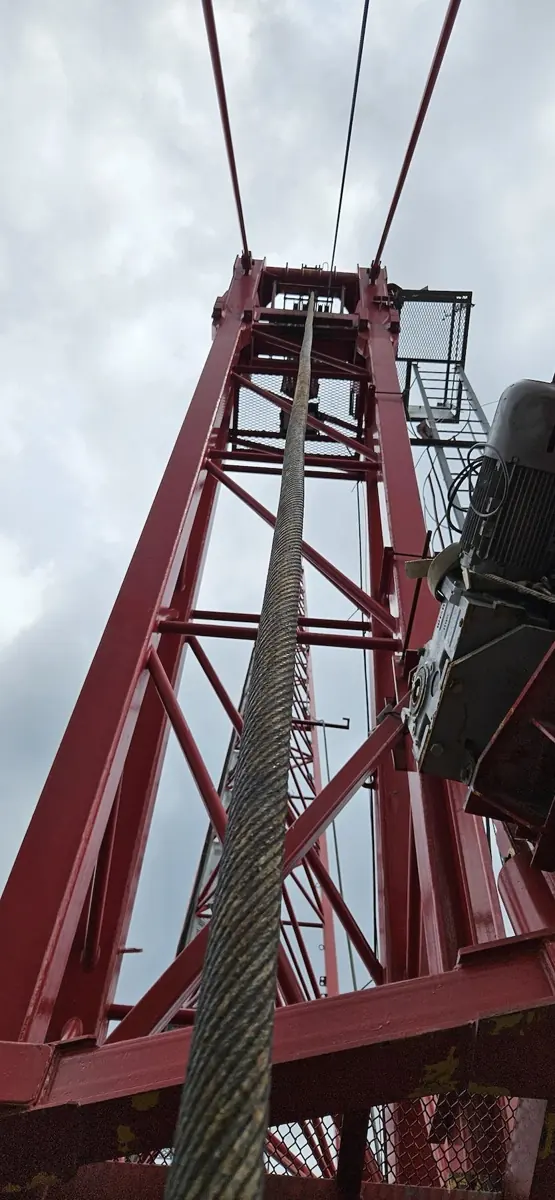
Waviness, or corkscrew, is damage that builds up as a rope repeatedly runs through a groove that is too tight. Rope makers we work with say the same thing: tighter grooves produce waviness faster. Once you see it, find the sheave.
The case
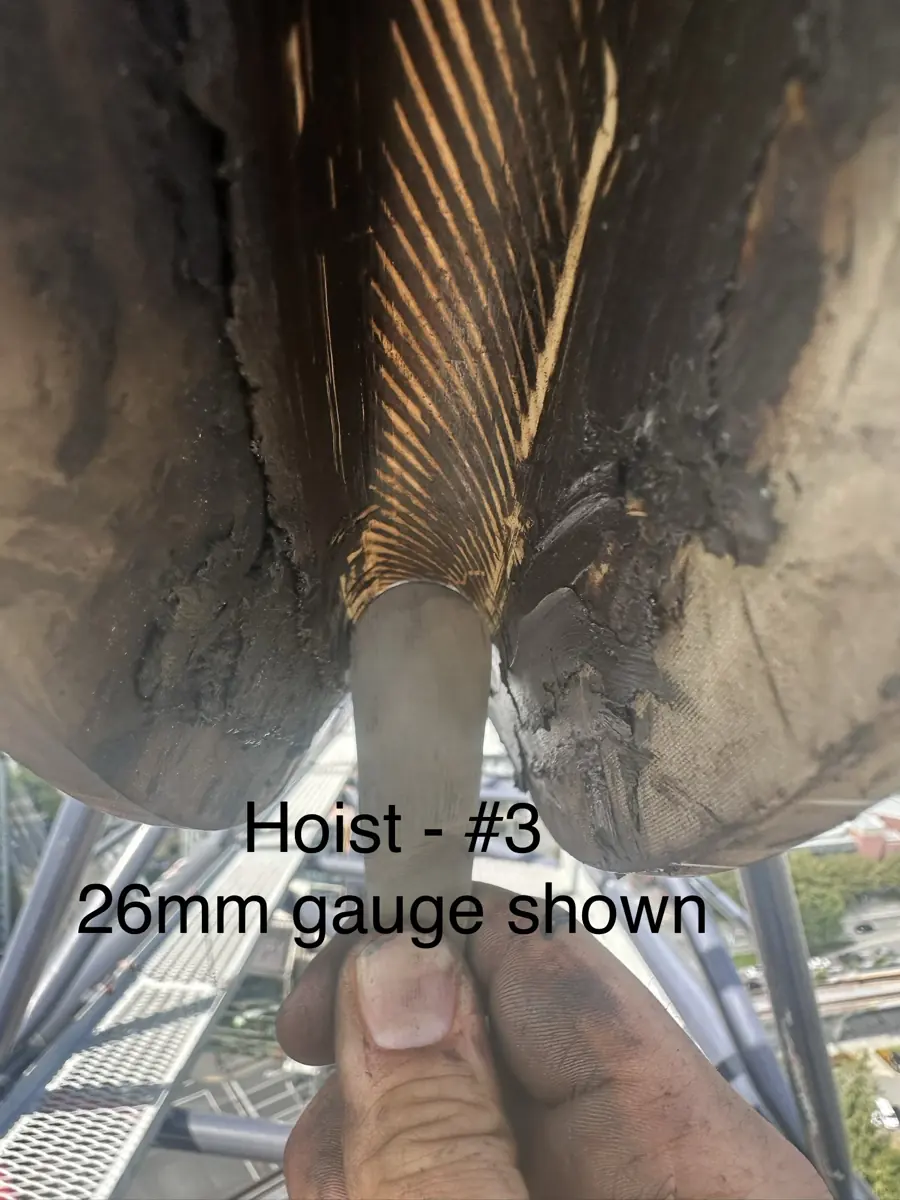
Hoist ropes on a set of Jaso luffing tower cranes showed waviness, and the hoist sheaves were worn. We gauged every sheave in the hoist reeving:
- Trolley and block sheaves: about 19 mm, just within the OEM tolerance.
- Apex sheave: just below 19 mm.
- Jib heel sheave: closer to 18 mm.
“The apex is just below 19mm and the jib heel is closer to 18mm. Those two are the likely culprits to the waviness.” (Dean McDonald)
The outside trolley sheave also showed uneven wear on one flange.
“This was likely caused by the rotation put into the rope from the tight sheaves and the rope is trying to escape through the swivel.” (Dean McDonald)
As it leaves, the rope rides up one side of the sheave.
Replacement priority
- Jib heel and apex sheaves: replace immediately.
- Outside trolley sheave: at the same time, if possible.
- Inner trolley and block sheaves: when you are able.
A second example: “no problems”, but the photos said otherwise
On a Potain MR 615, the owner reported no rope problems. The photos we were sent showed waviness in the hoist rope, and the drum showed slight negative imprints. The rope maker’s view was that the waviness was damage built up over time from running over a tight sheave, and that the faint drum imprints weren’t the root cause. Before the replacement rope went on, the sheave grooves had to be checked. See measuring drum pitch and rope tolerance.
How to check your own crane
- Gauge every sheave the rope passes over, including the apex, jib heel and trolley sheaves that are hard to reach.
- Photograph each gauge in its groove.
- Measure the rope diameter at the damaged section and at an undamaged section.
- Look for one-sided flange wear: it means the rope is rotating.
Our sheave gauges come in 0.25 mm steps, so you can see how tight a groove is rather than just pass or fail it.
Photos
More from the field: all case studies