By Dean McDonald, founder, Crane Rope Solutions
Why it matters
One rope maker’s manual says a dry rope in bending fatigue may reach only about 30% of the life of a lubricated rope. On one offshore installation, using a pressure lubricator properly doubled rope life. See the offshore luffing rope case.
“In Canada, we are starting a maintenance program with our end users where we clean and re-lubricate our customers’ ropes using a Viper wire rope lubricator.” (Dean McDonald)
Choosing the lubricant
- Consistency: pressure lubricators need a lubricant between NLGI 00 and NLGI 2 to apply it properly without making a mess. NLGI 2 is at the top of that range, so in winter it can be harder to push through. An NLGI 1 grease works well.
- Compatibility with the factory lubricant: the relube has to be compatible with what the rope was made with. Ask the rope maker which lubricant and which type (strand-only or full lubrication) your rope has. A different factory lubricant may need a different relube.
- Some factory lubricants can’t go through a pressure lubricator. One compacted parallel-lay rope we supply is made with a lubricant that has to be heated before it is applied. That would clog the lubricator’s hoses, so a compatible alternative is needed.
- If you’re not sure, test it. For one offshore operator, a sample of their field lubricant was sent to the rope maker for a lab compatibility test. A 50:50 blend with the factory grease was found compatible and stable, and an official report was issued.
- Switching products: if you change lubricant, remove the old grease fully first, unless the two have been tested as compatible.
“If you wish to proceed, ensure that the old grease is fully removed before changing products.” (Dean McDonald)
How often
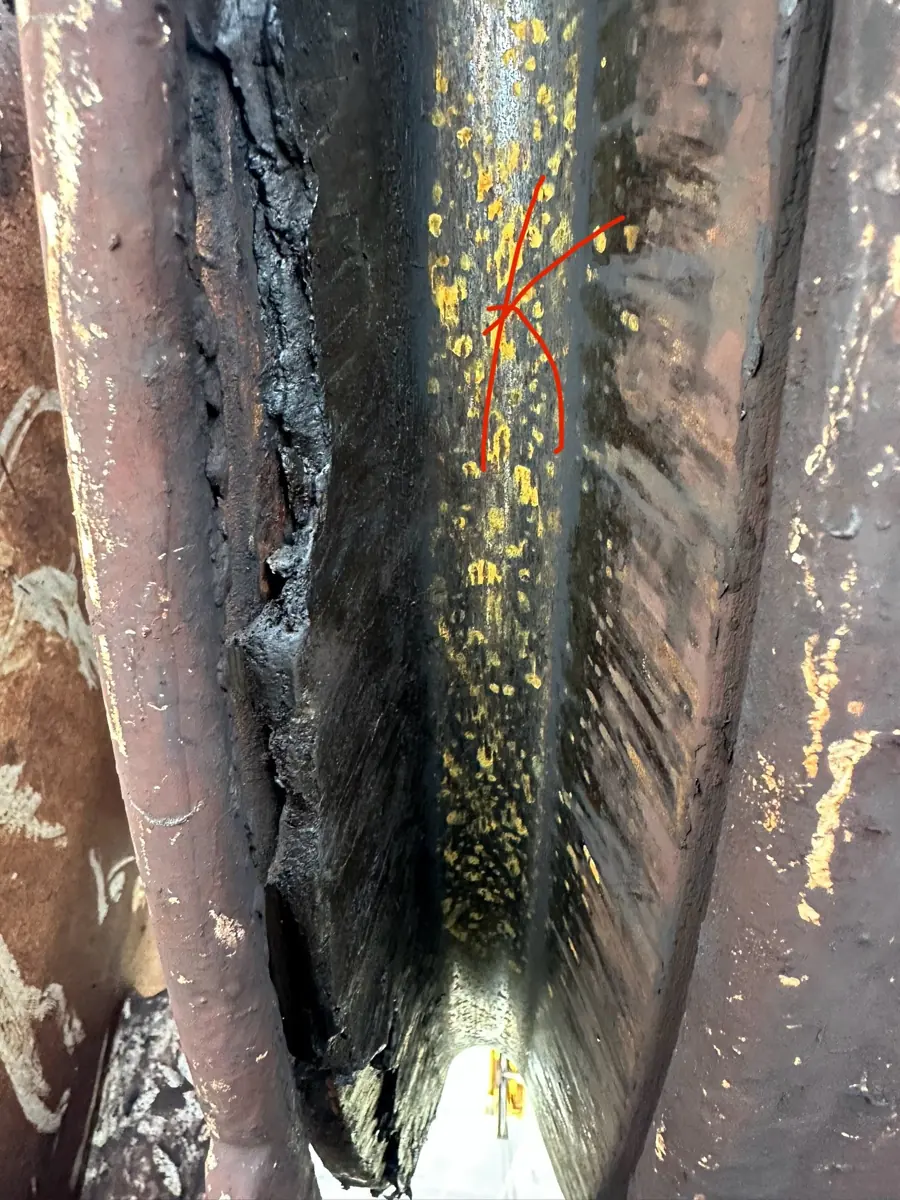
- Lubricate on a schedule, not “when it looks dry”. At one port, crews painted on lubricant only when ropes looked dry, and were scraping “gum” out of the sheaves.
- As a starting point, one rope maker suggests relubricating 2 to 4 times a year, adjusted for duty and environment. Harsh environments need shorter intervals.
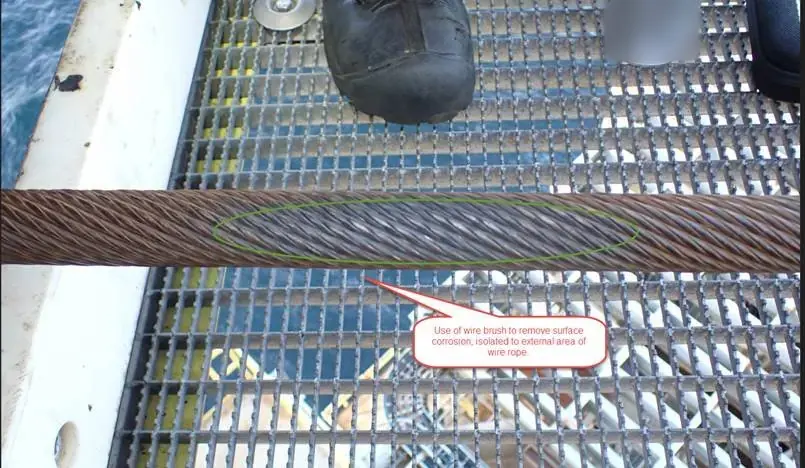
- Clean the rope before relubricating, and apply lubricant so it gets inside, not just on the surface. Pressure lubricators do this with seals sized to the rope’s diameter, construction and lay direction.
- A good relube shouldn’t stop an inspector seeing the rope. Non-drip products help.
Photos
More from the field: all case studies
Seeing something similar on your crane? Send us photos and the rope specification: dean@craneropesolutions.com or 604-813-9473.