By Dean McDonald, founder, Crane Rope Solutions
The situation
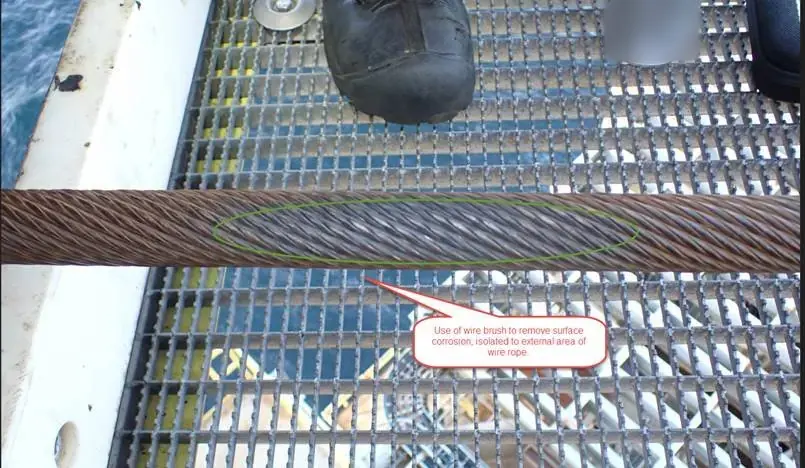
A third-party inspector reported that wire-brushing had removed surface rust from a 30 mm rotation-resistant auxiliary rope on an offshore pedestal crane. He concluded the rope had internal corrosion. The report also showed diameter reduction.
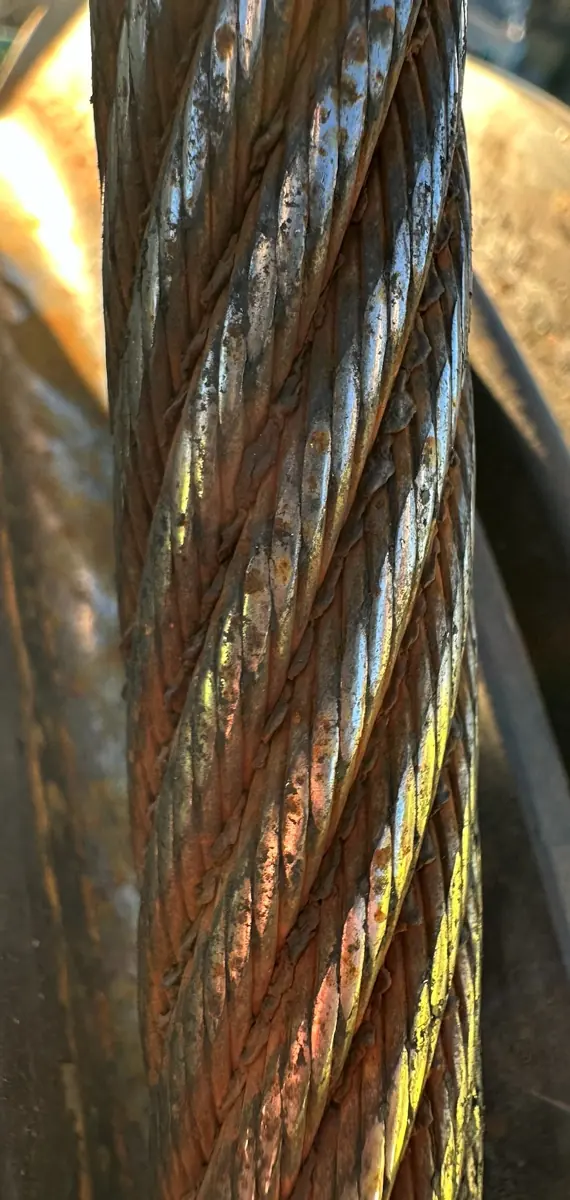
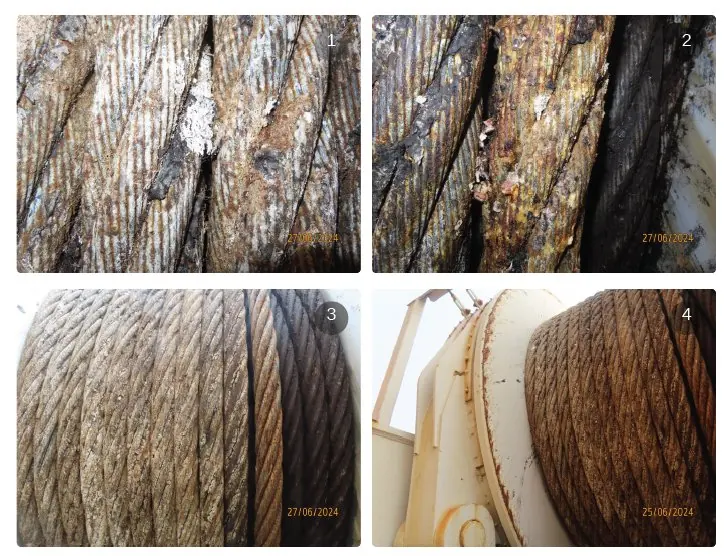
What the photos showed
We suspected the discoloration came from brake dust on the drum side, not from inside the rope. The rope maker’s engineers looked at the photos:
- It was external corrosion that wipes clean, worth roughly 20 to 40% severity from the photos alone. An exact grading needs someone on site.
- Internal corrosion would still show in the strand valleys after brushing.
- There was no lubricant left in the valleys, so cleaning and relubrication were overdue.
A second engineer added a point worth remembering: a 100% accurate corrosion analysis from pictures isn’t possible. Some images showed signs of internal corrosion and others didn’t.
Where you measure diameter matters
Under ISO 4309, a uniform drop in diameter is a discard criterion only on rope that runs over steel sheaves or spools on a single-layer drum, not on sections that spool on a multi-layer drum. Take the reference diameter after the rope has run in, on a section that doesn’t run over sheaves or the drum, or a couple of metres from the end fitting. If the reported diameters were from a section that doesn’t spool, the reduction was worth about 60% severity.
What we recommended
- Clean and relubricate regularly, with shorter intervals in harsh environments.
- Say where on the rope every diameter was measured.
- For ropes like this, train the crew on magnetic rope testing (MRT), which sees loss of metal inside the rope that eyes and photos can’t.
The operator’s own engineer took the practical line: clean the surfaces, check daily for internal rust being pushed to the surface, and change the rope as soon as possible.
Photos
More from the field: all case studies