By Dean McDonald, founder, Crane Rope Solutions
For the average mobile crane fleet, about 80% of annual rope spend goes on cranes of 400 t and larger, even though those cranes are usually only 10 to 20% of the fleet.
The wind industry has made a lot of people in the wire rope business rich.
Hoist ropes that rat's nest
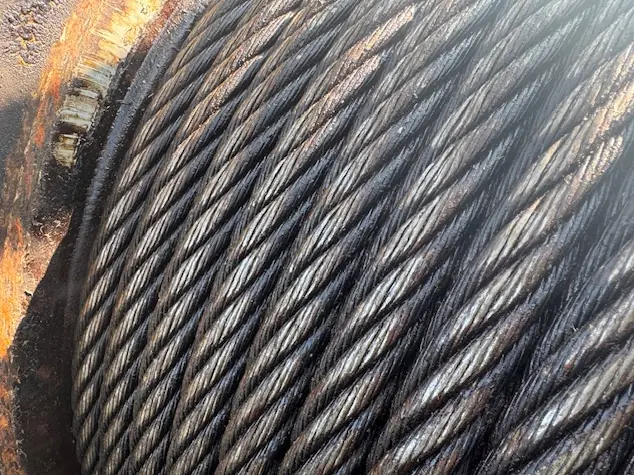
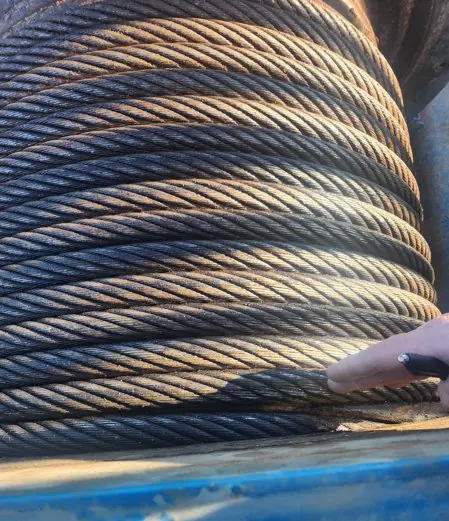
Maintaining hubs, nacelles and blades means hoisting the block very high, spooling the rope back onto the drum without tension, then lowering very heavy loads. The rope left on the drum comes loose and rat's nests. On top of that, where high-tension layers meet low-tension layers underneath, the uneven tension causes excessive wear on the crown wires and adds torque, which makes the rat's nest worse.
Boom ropes that crush
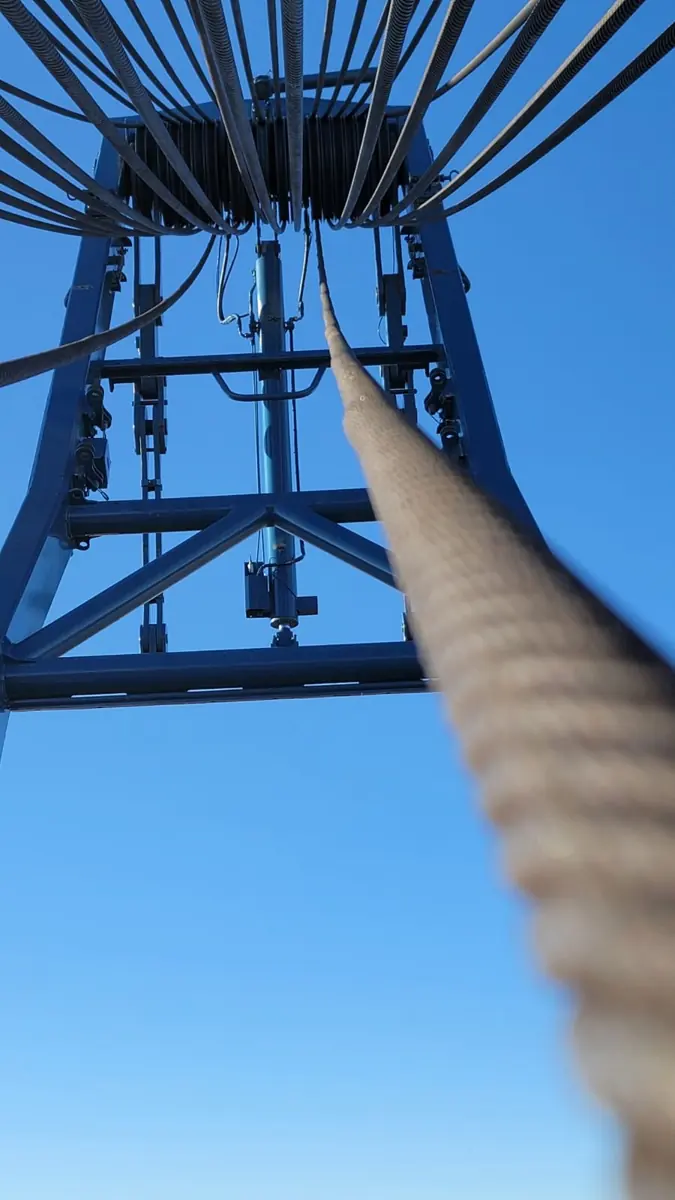
The boom rope on wind cranes such as the Liebherr LG 1750, LG 1800, LR 1700, LR 1600/2 and LR 11000 and the Manitowoc 16000 and 18000 is the most commonly replaced rope. Very long booms and repeated boom up and boom down between turbines, or for bad weather, give it the hardest job on the crane, and it faces some of the strictest discard criteria.
Several standards treat crushing as a removal criterion. CSA Z150:26, for example, lists crushing among the conditions that indicate replacement (5.5.4.2 f). ISO 4309 is more nuanced: flattening caused by multi-layer spooling need not mean discard, as long as the related broken wires stay within the table limits (6.7.7). Testing has shown that a surprisingly high amount of crushing, or ovalization, of rope in the bottom layer of the drum has minimal effect on the rope's catalogue breaking strength, and some crane manufacturers have set their own crushing and ovalization criteria that allow for some of it.
Keep the boom rope as short as possible
Boom ropes will crush; that's reality. What you can control is rope selection and rope length. Make the rope as short as it can be while still letting you build and erect the crane, plus enough for a slip and cut. Taking off even a couple of wraps, or half a wrap, makes a difference to the tension you hold through boom up and boom down, and it increases the rope's service life.
From our inspections
Related: The paint-line tension check · CSA Z150 removal criteria · ISO 4309 discard criteria